


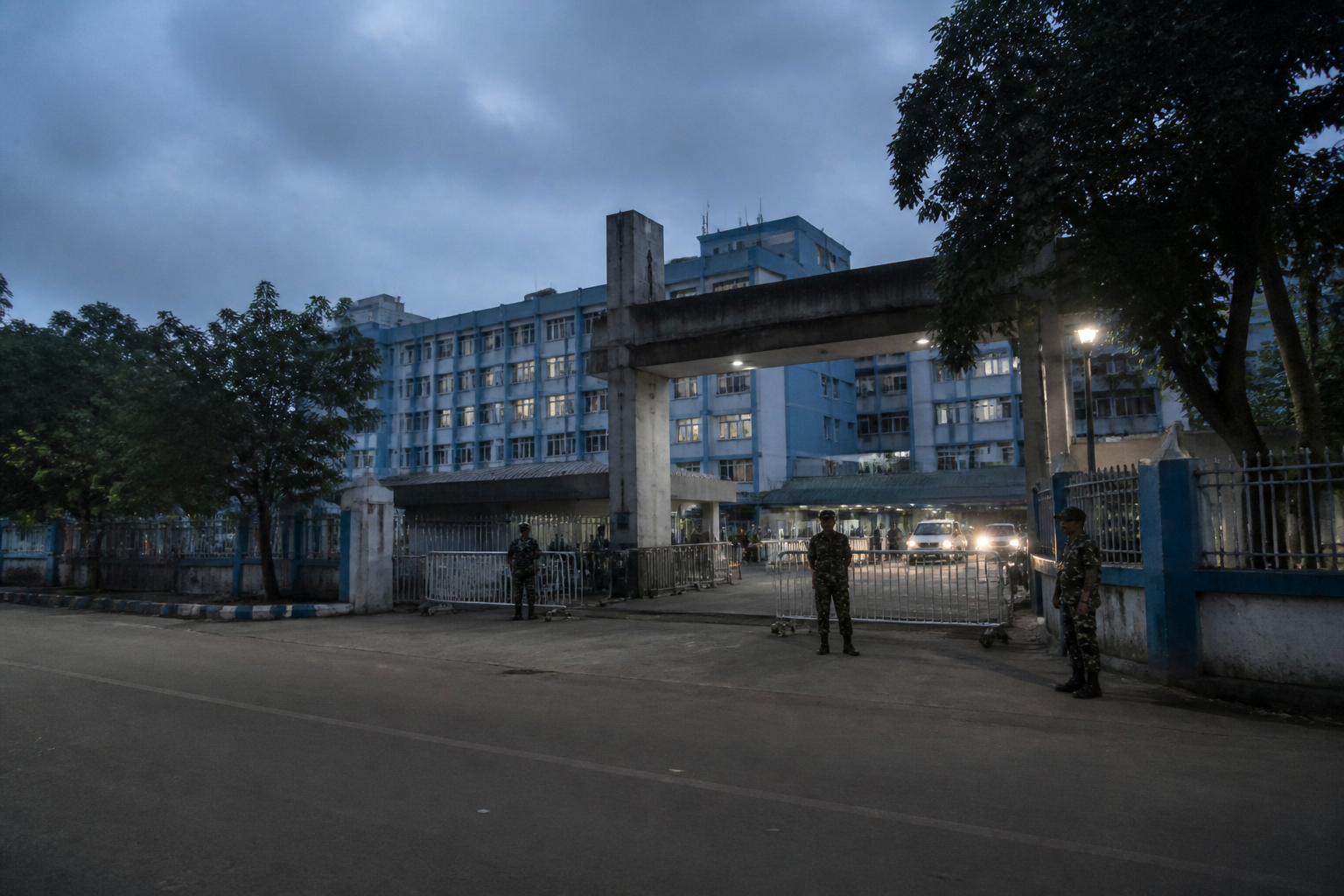
The CBI’s 13th status report in the RG Kar case has again placed the investigation’s pace and scope at the centre of public attention. Filed before the Sealdah court on Tuesday, the report says investigators examined CCTV footage and forensic evidence, spoke to people present at Panihati crematorium during the victim’s last rites, and questioned hospital personnel and the victim’s parents. Yet the family says the investigation is moving too slowly and has not answered the larger question of whether every person connected to the case has been properly examined.
That tension — between an agency reporting continuing investigative activity and a family waiting for a complete account of what happened — is now the defining institutional issue in the case. The CBI told the court that the investigation was still under way and that the case diary had been submitted. The victim’s family lawyer, however, said the agency had been repeating the same position for two years and questioned whether people who had so far been left out were included in the case diary.
The immediate development is therefore not a new arrest or a fresh charge. It is the submission of another status report in a case in which the investigation has already passed through multiple institutional stages. Kolkata Police initially investigated the matter and arrested Sanjay Roy, who was later convicted and sentenced to life imprisonment by the Sealdah court. The investigation was subsequently transferred to the CBI, which named Roy as the sole accused in its chargesheet.
The family remained dissatisfied with both the police and CBI investigations and approached the High Court. The court then directed the central agency to conduct a fresh investigation, after which the CBI formed a new special investigation team. The victim’s father said this team was doing more work than the earlier team, but added that the pace was still slower than it should be. His comments capture the unresolved gap between procedural activity and public confidence: an investigation can generate reports, case-diary entries and witness statements without convincing the affected family that its full scope has been pursued.
The details cited in the latest status report show that the CBI is examining more than the immediate crime scene. CCTV footage and forensic evidence are being reviewed, while investigators have spoken to people connected with the victim’s cremation and to hospital employees. The agency has also said that it spoke to the victim’s parents during the investigation. These steps indicate the breadth of the inquiry as described in court, but the supplied report does not establish what the evidence revealed, whether it changed the agency’s conclusions, or whether it led to any new suspect or charge.
That distinction matters. An investigation’s progress cannot be assessed only by the number of witnesses questioned or materials reviewed. The public-interest question is whether those steps resolve the central uncertainties identified by the family and whether the investigating agency can explain the basis for its conclusions. In this case, the family’s lawyer has specifically asked whether the case diary includes people who have allegedly not yet been fully examined. The court record, as described in the report, does not provide a public answer to that question.
The case also demonstrates how responsibility becomes layered when a serious incident occurs inside a public hospital. The original investigation was conducted by Kolkata Police, while the CBI later took charge. A fresh special investigation team was subsequently created after the family challenged the earlier investigation. Each transfer or reconstitution is intended to strengthen credibility, but it can also make accountability harder for the public to follow. Citizens are left asking which agency is responsible for the present stage, what remains unresolved, and when the investigation can be considered complete.
This institutional complexity has a direct bearing on public hospitals. RG Kar Medical College and Hospital is not only the setting of a criminal case; it is also a workplace and a public facility where doctors, nurses, patients and support staff depend on systems of security, access control, surveillance and administrative oversight. The supplied report does not establish failures in any particular system beyond the investigation-related issues described by the family and agencies. It does, however, show why accountability after an incident inside a hospital cannot be reduced to the conviction of one accused person if questions remain about the wider circumstances.
The court process is now functioning as the principal public checkpoint for the investigation. The CBI submits status reports, the family’s lawyers respond, and the court records the next stage of proceedings. This arrangement allows the court to monitor an investigation that remains active, but it also means that public understanding depends heavily on what is placed before the court and what can be disclosed without affecting the proceedings. The CBI’s statement that the case diary has been submitted indicates that material is before the court, but the report does not say that the contents have been made public.
The family’s response is significant because it combines continuing dissatisfaction with continued reliance on the investigative process. The victim’s father said he believed that those not yet arrested would be arrested soon and that they would be punished. He also said that the CBI would do what was necessary and that the state police would exercise the powers available to it. His position is neither a rejection of the institutions involved nor an endorsement of the pace at which they are operating. It is a demand for an investigation that is both credible and complete.
The wider urban question is how public institutions retain legitimacy after a grave incident. Hospitals depend on public confidence not only for treatment but also for their role as workplaces and essential civic infrastructure. When an investigation appears prolonged, fragmented or insufficiently explained, the damage extends beyond a single case. It affects how staff perceive safety, how families perceive institutional protection and how citizens assess the ability of public authorities to respond to violence within a state-run facility.
At the same time, the available evidence does not support conclusions about individuals who have not been formally accused, nor does it establish that the CBI has failed to examine any particular person. The family’s lawyer has raised that concern in court, while the CBI has maintained that the special investigation team is examining the matter in full. Those positions must remain distinct until the court record or a formal investigative finding provides further clarity.
The next scheduled hearing in the case is on 20 November at the Sealdah court. Until then, the confirmed position is that the CBI investigation remains continuing, a 13th status report has been filed, and the family remains dissatisfied with its pace while retaining faith that the process can deliver justice. The significance of the next stage will lie not simply in another declaration that the investigation is under way, but in whether the proceedings clarify what has been examined, what remains unresolved and how the agency intends to proceed.
