


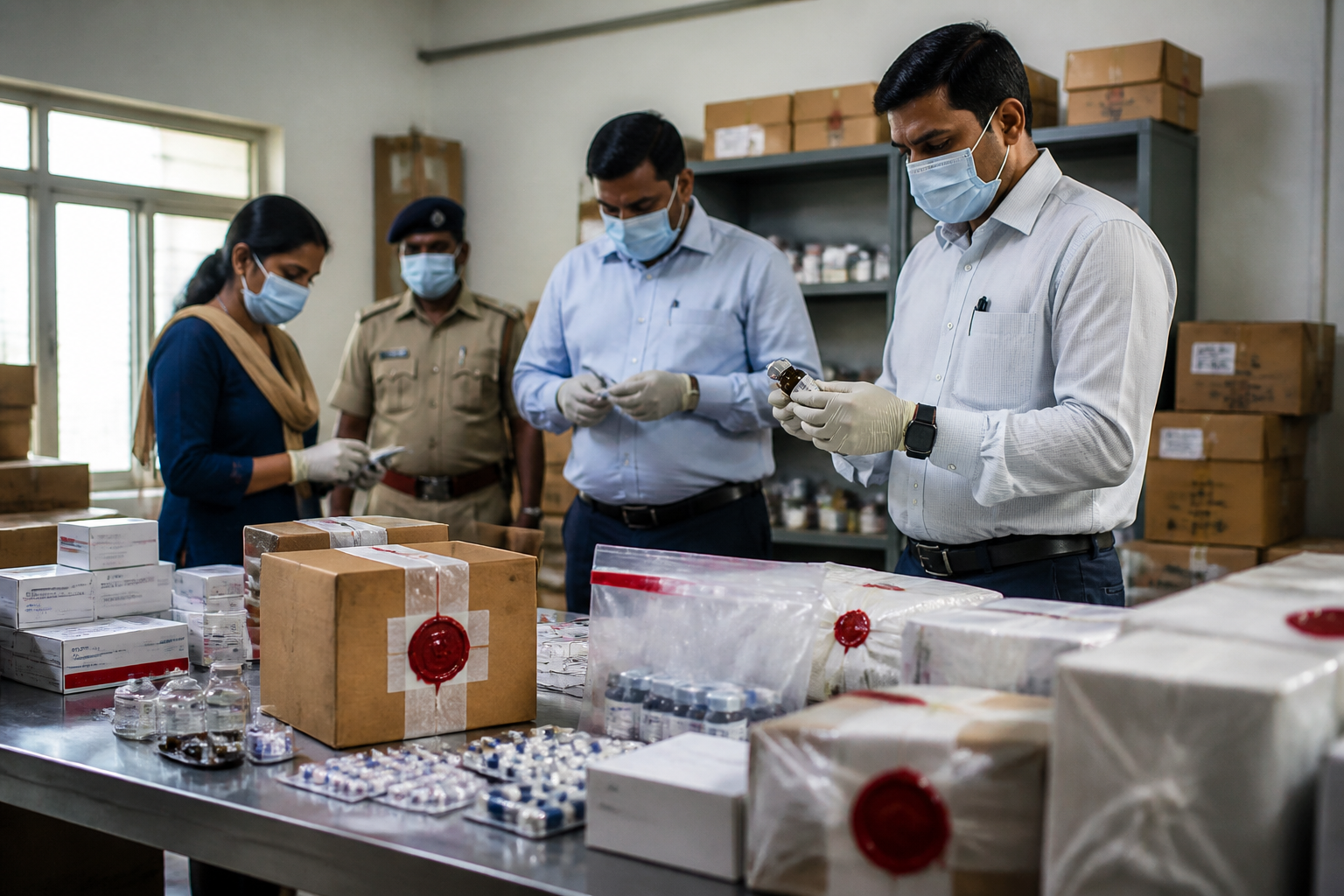
Karnataka is considering handing over to the Central Bureau of Investigation the probe into a counterfeit medicine racket involving drugs worth more than Rs 5 crore, after investigators uncovered suspected inter-state links in the manufacture and distribution of fake medicines.
Health and Family Welfare Minister UT Khader said in Mangaluru on Tuesday that the state would refer the case to the CBI for a comprehensive investigation because the suspected network involved multiple states. Most of the medicines under investigation are believed to be antibiotics, while officials are also examining whether counterfeit and substandard drugs were supplied to hospitals and pharmacies.
The development follows the seizure of medicines valued at over Rs 5 crore near Ramanagara in August. Preliminary investigations by multiple agencies indicated that the drugs had allegedly been manufactured in neighbouring states before being distributed locally. The state government subsequently handed the investigation to a Special Investigation Team, which has arrested eight people so far.
The latest arrest was that of Veeresh Kumar Jain, proprietor of Krupa Health Care and a suspected kingpin in the racket. The SIT arrested him after raiding his unit near Minerva Circle in Bengaluru last week. Another prime suspect, R Prashant, is currently in Azerbaijan. According to the report, he told investigators that immigration authorities had seized his passport, making it difficult for him to return to India.
The suspected operation involved an illegal repackaging and relabelling facility at a farmhouse near Bidadi and Hejjala in Ramanagara, in Bengaluru South district. Investigators allege that operators sourced cheap, substandard or expired medicines from illegal manufacturing units in states including Himachal Pradesh and Telangana, transferred them into new vials and attached forged labels and stamps of major pharmaceutical brands, including Pfizer.
The medicines, described as critical-care, intensive-care and cancer drugs, were allegedly sold to hospitals and pharmacies at discounts of about 50% below market prices. The report said the suspected supply chain created risks for patients, particularly those receiving intensive-care treatment. However, police and health department officials said they had not yet received laboratory findings confirming reports that the racket also involved counterfeit cancer medicines. Samples have been sent for testing.
Khader said he would urge the Union government to introduce stricter legal provisions for manufacturing and selling counterfeit medicines. He argued that existing penalties, which can include licence cancellation and fines, were inadequate and allowed offenders to shift operations to other locations or establish businesses in relatives’ names. The minister said offences involving fake medicines should attract provisions as stringent as those for attempted murder because of the potential threat to public health.
The proposed CBI referral would move the investigation beyond the state-level operation already being conducted by the SIT. Its next step, as described by the minister, is a formal reference to the central agency. Laboratory results on the seized medicines and further action against suspects will determine the extent of the alleged inter-state network.

