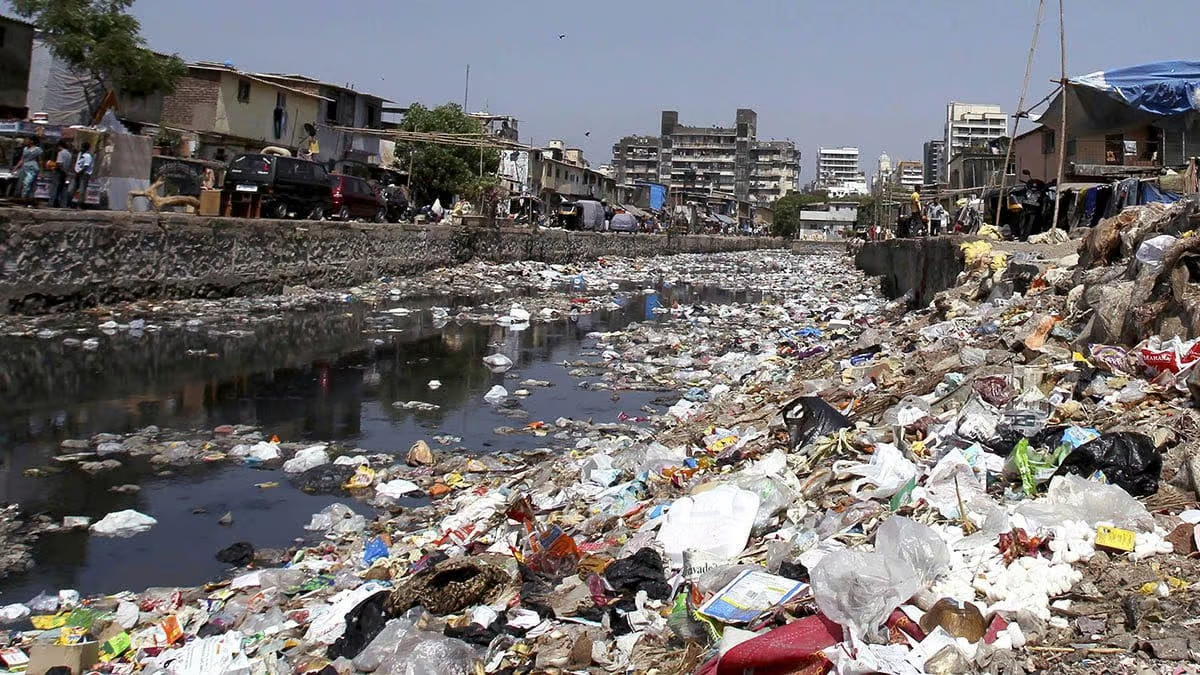
Mumbai’s long-running struggle with landfill pollution has returned to the spotlight after the Bombay High Court sought answers from civic and environmental authorities over a renewed wave of foul odour linked to the Kanjurmarg dumping ground. The episode has intensified concerns around waste governance, air quality monitoring and public health in the city’s densely populated eastern suburbs. The court intervention follows complaints from residents in Vikhroli and adjoining neighbourhoods who reported a sharp rise in unpleasant odours spreading several kilometres from the landfill zone earlier this week. The incident comes despite repeated assurances by agencies that conditions at the site had stabilised following recent mitigation measures.
During the hearing, the bench questioned officials from the Brihanmumbai Municipal Corporation and the Maharashtra Pollution Control Board on the apparent failure to anticipate or immediately identify the source of the emissions. Judges also indicated that sporadic odour spikes could point to operational lapses within the landfill ecosystem, including waste handling, methane release or processing disruptions. The Kanjurmarg landfill has remained a critical pressure point in Mumbai’s solid waste management network for years, receiving thousands of tonnes of municipal waste daily. Urban planners and environmental observers have repeatedly warned that ageing landfill infrastructure combined with growing waste volumes poses escalating risks for nearby communities, especially in high-density residential corridors such as Bhandup, Mulund and Vikhroli. The latest hearing placed significant emphasis on methane management and occupational safety. Experts note that unmanaged landfill gases not only contribute to odour pollution but also increase long-term climate and fire risks in rapidly urbanising regions. Methane is considered substantially more harmful than carbon dioxide in terms of short-term global warming impact, making landfill emissions a growing urban climate concern.
The court also pushed for tighter digital surveillance and environmental tracking at the site, including wider CCTV coverage and continuous ambient air quality assessment. Such measures are increasingly becoming standard practice in global cities attempting to modernise waste infrastructure while reducing public exposure to toxic emissions. Equally significant was the scrutiny directed at the state pollution regulator. The bench questioned whether monitoring mechanisms were functioning effectively and asked authorities to establish a dedicated committee to independently examine operational practices at the landfill. The criticism reflects a broader governance challenge facing Indian cities, where enforcement agencies are often accused of reacting to environmental crises rather than preventing them. Residents’ groups meanwhile highlighted the lack of accessible complaint systems during environmental emergencies. Citizen advocates argued that lengthy reporting procedures discourage public participation and delay rapid response, particularly when air quality incidents occur during early morning or late-night hours.
Mumbai’s landfill debate increasingly reflects a larger urban transition challenge: how to sustain economic growth and rising consumption without overwhelming ageing waste systems. Policy experts say the city’s long-term solution will depend on decentralised waste processing, scientific landfill remediation and stronger integration of climate resilience into municipal planning. The court is expected to review fresh submissions from authorities in the coming hearings, with pressure mounting for measurable action rather than temporary containment measures.