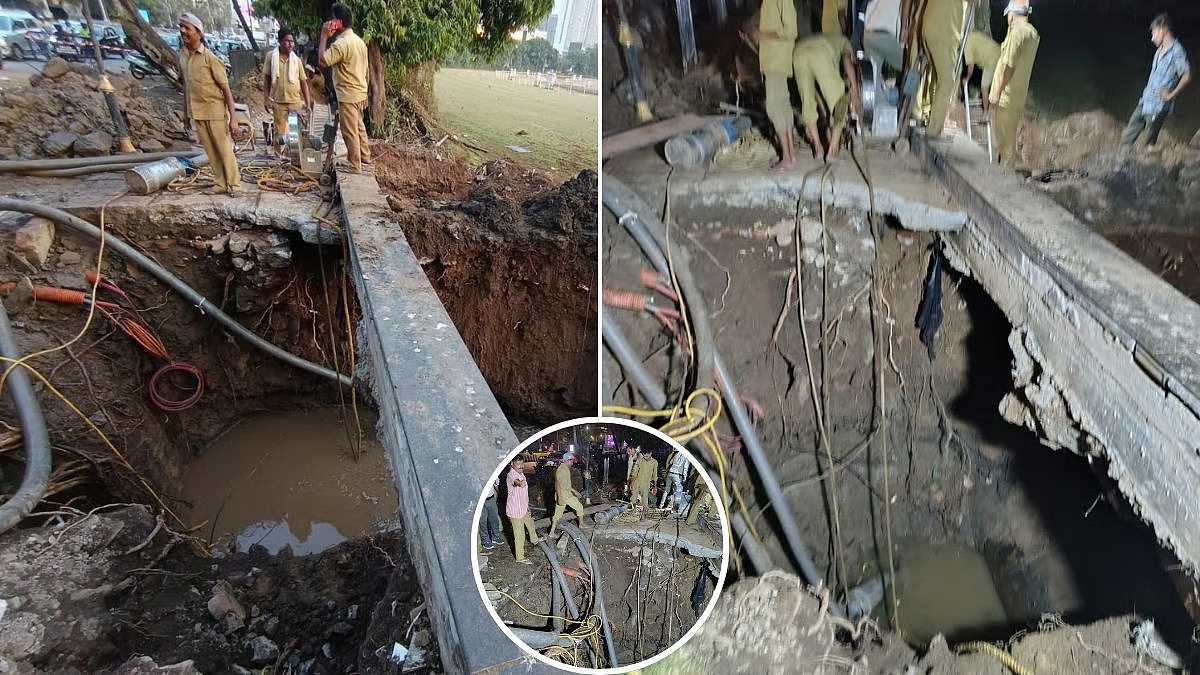
Large parts of south and central Mumbai are set to experience disrupted water supply after a major pipeline failure on Dr E Moses Road forced emergency repair operations on one of the city’s key distribution lines. The disruption has once again highlighted the vulnerability of Mumbai’s ageing underground infrastructure amid rising urban demand and mounting climate pressures. Civic officials confirmed that a high-capacity water main running beneath the Worli corridor developed a severe rupture earlier this week, triggering substantial leakage and requiring immediate intervention. The damaged pipeline forms part of a critical supply network feeding several densely populated residential and commercial zones in south Mumbai.
As repair teams continued restoration work through Thursday, authorities announced scheduled supply restrictions across D, E and G South administrative wards on May 8. Several neighbourhoods are expected to face either complete shutdowns or significantly reduced water pressure during the maintenance period. Among the affected localities are Tardeo, Grant Road East, Lamington Road and Mumbai Central, alongside parts of Agripada, Nagpada, Kamathipura and Worli. Hospitals, transport-linked districts and mixed-use residential areas are also expected to witness disruptions, raising concerns over water access during peak daytime consumption hours. Urban infrastructure experts say the latest failure underlines the growing challenge of maintaining legacy utility systems in a city where underground networks are operating under continuous stress. Mumbai’s water distribution infrastructure in several areas dates back decades and was originally designed for a significantly smaller population footprint. Rapid densification, real estate expansion and climate-linked weather variability have further intensified pressure on the network.
The current incident also draws attention to the broader issue of non-revenue water losses in Indian cities. Pipeline bursts and leakages contribute to millions of litres of treated water being lost before reaching consumers, affecting both resource efficiency and municipal finances. In a coastal megacity increasingly exposed to climate uncertainty, reducing water wastage is becoming central to long-term resilience planning. Urban planners note that recurring failures in large-diameter pipelines can also disrupt local mobility, increase maintenance costs and strain emergency response systems. Dr E Moses Road, one of Mumbai’s key transport corridors connecting commercial and industrial districts, has already experienced intermittent traffic movement due to the repair activity. Residents in affected areas have been advised to conserve stored water and avoid unnecessary usage until supply stabilises. Commercial establishments and healthcare facilities are also expected to rely on contingency storage and tanker arrangements during the shutdown window. Infrastructure analysts argue that such incidents reinforce the need for predictive maintenance systems, digital monitoring technologies and phased replacement of ageing pipelines across Mumbai’s utility network.
Several global cities are increasingly deploying smart sensors and pressure-monitoring systems to detect vulnerabilities before major failures occur. While civic teams aim to restore normal supply at the earliest, the episode has renewed debate around whether India’s financial capital is investing quickly enough in climate-resilient urban infrastructure capable of supporting future growth without repeated service disruptions.