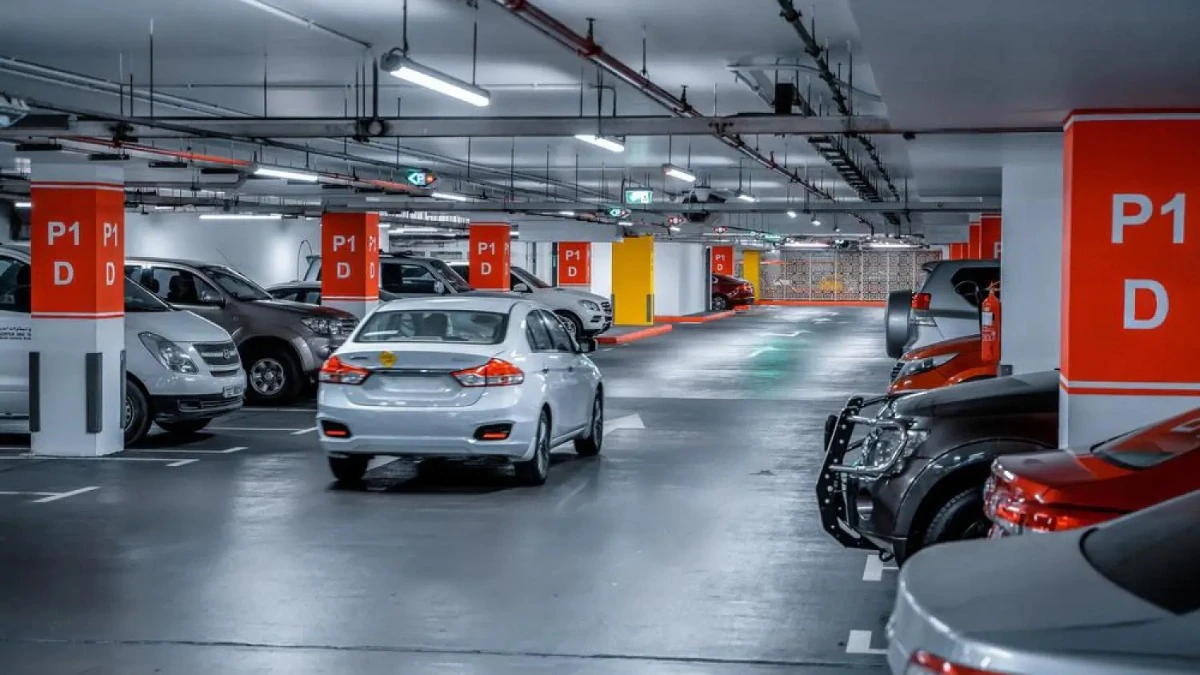
Mumbai is preparing to revive its long-delayed smart parking initiative as mounting vehicle density and shrinking road capacity continue to strain mobility across the financial capital. The Brihanmumbai Municipal Corporation is moving ahead with plans to appoint a consultant for a citywide digital parking platform aimed at improving parking access, reducing traffic congestion and optimising underused urban land. The proposed system is expected to integrate municipal parking facilities with privately managed spaces across commercial complexes, malls and business districts through a unified digital interface. Civic officials indicated that motorists would eventually be able to track available parking slots in real time and reserve spaces through a mobile application and web-based platform.
The renewed push comes at a time when Mumbai’s transport infrastructure is facing growing pressure from rapid vehicle growth. According to transport department estimates, the city continues to record one of the highest vehicle densities among Indian metropolitan regions, with registrations increasing steadily despite ongoing investments in metro rail, coastal roads and suburban mobility projects. Urban planners argue that unmanaged parking demand has evolved into a major economic and environmental challenge for Mumbai. Vehicles searching for parking often contribute significantly to local congestion, fuel wastage and roadside emissions, particularly in mixed-use commercial areas. Experts say a digitally managed parking ecosystem could help reduce idle traffic movement while improving utilisation of existing infrastructure. The civic administration is understood to be exploring a shared-use model in which unused parking capacity within residential complexes and commercial properties may be temporarily opened for public use during specific hours. Such an approach, already tested in parts of Europe and East Asia, is increasingly being viewed as a cost-efficient alternative to constructing new standalone parking structures in land-constrained cities.
Industry observers note that the initiative also reflects a broader shift towards data-driven urban management. Smart parking systems can generate real-time mobility insights that support better transport planning, traffic forecasting and public space allocation. For Mumbai, where road space remains severely limited, efficient parking management is increasingly tied to larger questions around sustainable urban mobility and equitable street usage. The project is expected to begin with pilot implementation across selected civic wards spanning south Mumbai and suburban zones before wider deployment across the metropolitan area. Municipal authorities have earmarked preliminary funding for the platform’s planning and design phase, with implementation likely to unfold over the next year. However, mobility researchers caution that technology alone may not solve Mumbai’s parking crisis unless accompanied by broader transport reforms. They argue that smart parking should function alongside stronger public transport integration, pedestrian-friendly street design and policies discouraging excessive private vehicle dependence in congested corridors.
The initiative also raises important governance questions around pricing, access equity and enforcement. Urban policy specialists say transparent regulation will be critical to ensure that digitally enabled parking systems do not disproportionately favour commercial interests over community mobility needs. As Mumbai attempts to modernise its transport ecosystem, the success of the smart parking project may ultimately depend on whether it supports cleaner, more efficient and less land-intensive urban movement rather than simply accommodating rising car ownership.