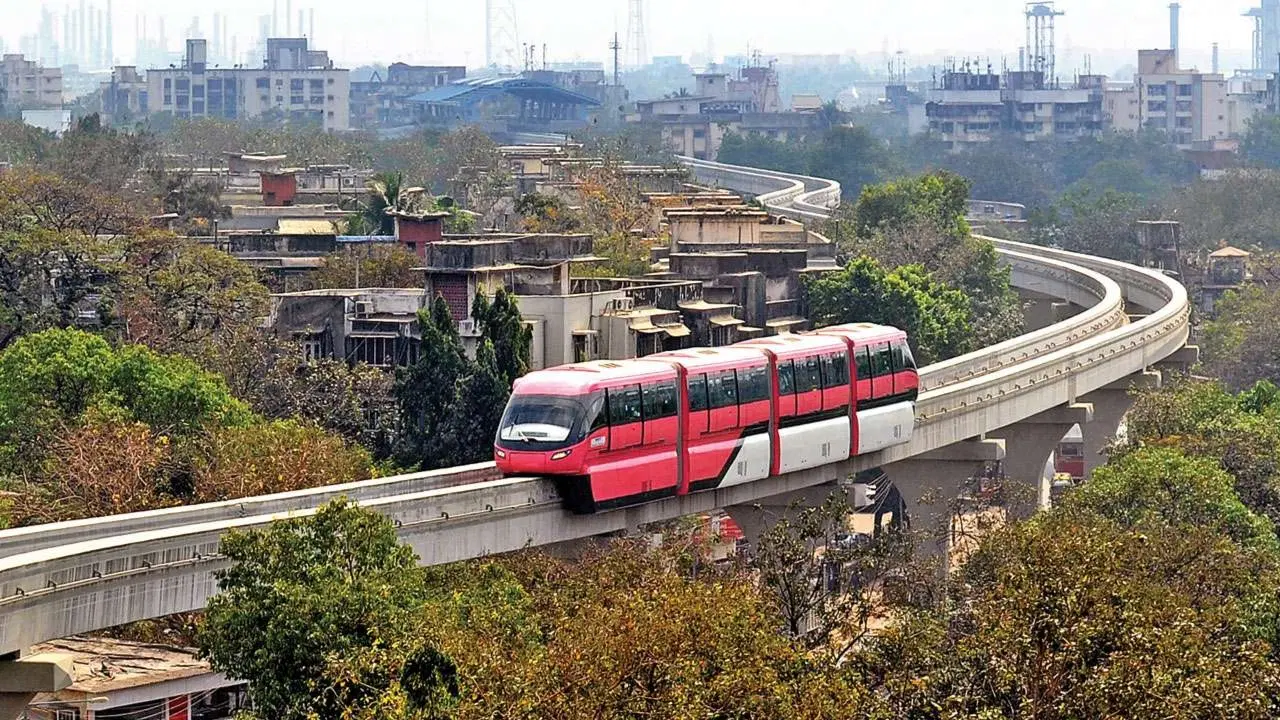
Mumbai’s suspended monorail network could return to passenger operations during the upcoming monsoon season as transport authorities move towards completing final safety clearances and integrating the corridor with the expanding metro rail system. The planned revival marks a crucial test for the city’s efforts to strengthen multimodal public transport connectivity across its eastern suburbs. Officials associated with the Mumbai Metropolitan Region Development Authority indicated that statutory inspections for the nearly 20-kilometre Mumbai Monorail corridor are expected to conclude later this month. The process follows months of technical upgrades, rolling stock refurbishment and signalling modernisation carried out after operations were halted due to repeated service failures and safety concerns.
A parallel development expected to influence ridership recovery is the proposed operational integration between the Mumbai Monorail and Metro Line 2B through the addition of a key interchange station in Chembur. Transport planners believe the interchange could significantly improve commuter accessibility by linking the monorail network to the metro corridor serving eastern suburban neighbourhoods. The Mumbai Monorail, once envisioned as an alternative elevated transit system for congested urban corridors, has struggled with low passenger numbers, maintenance issues and operational disruptions since its launch. Frequent breakdowns and long service suspensions had weakened public confidence in the network and raised broader questions around planning efficiency and long-term viability of standalone transit systems. Authorities have since undertaken extensive infrastructure upgrades, including the deployment of new domestically manufactured train sets and installation of communications-based train control technology intended to improve operational reliability and safety monitoring. Existing trains have also undergone refurbishment as part of the system-wide modernisation effort.
Urban mobility experts say the future of the Mumbai Monorail may depend less on the standalone system itself and more on how effectively it integrates with the city’s wider transport ecosystem. Global experience suggests that secondary transit systems perform best when functioning as feeder and interchange networks connected seamlessly to high-capacity metro and suburban rail infrastructure. The proposed Chembur interchange is therefore being viewed as a strategic attempt to reposition the monorail within Mumbai’s expanding multimodal transit framework. Improved network integration could help reduce first-mile and last-mile connectivity gaps while distributing commuter loads more evenly across the eastern transport corridor. Transport analysts also note that reviving existing public infrastructure is economically and environmentally preferable to allowing underutilised systems to deteriorate. Extending the operational life of mass transit assets can help reduce urban carbon emissions by encouraging public transport adoption and lowering dependence on private vehicles. However, experts caution that sustained passenger trust will depend on reliable service frequency, operational transparency and maintenance standards. Previous disruptions had left commuters stranded for extended periods, highlighting the importance of consistent system performance in dense urban transit environments.
Authorities expect trains to operate at shorter intervals once services resume, although final timelines remain subject to safety approvals. As Mumbai continues investing heavily in metro expansion, the successful reintegration of the Mumbai Monorail could offer lessons on how legacy transit systems can adapt within rapidly evolving urban mobility networks.