


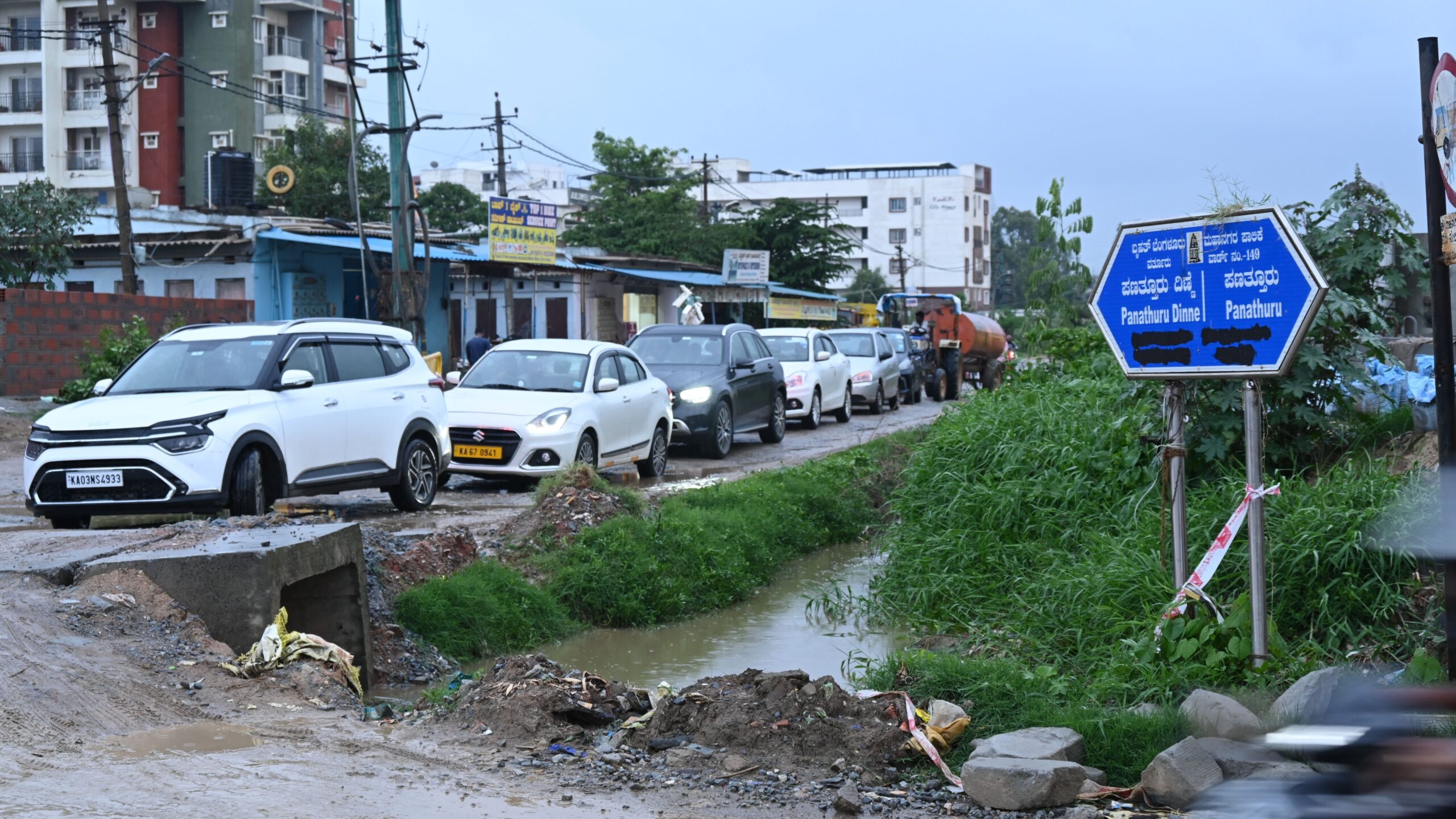
Construction activity on Bengaluru’s Wind Tunnel Road underpass has begun to reshape traffic movement across one of the city’s critical eastern mobility corridors, with commuters facing mounting delays as infrastructure works intensify in the high-density stretch.The project, aimed at easing long-term congestion near a major airport-bound route, is expected to improve traffic flow once completed.
However, ongoing excavation, lane restrictions and diversions have already slowed vehicle movement significantly, exposing the delicate balance between infrastructure expansion and day-to-day urban mobility in rapidly growing cities.The Bengaluru underpass construction forms part of wider efforts to address chronic traffic bottlenecks linked to the city’s expanding residential and commercial footprint. Eastern Bengaluru, home to major technology parks and mixed-use developments, has experienced sustained increases in vehicle volumes over the past decade, placing heavy pressure on road networks originally designed for lower-density movement.Urban mobility experts note that while underpasses and grade separators can improve junction efficiency, construction phases often create severe short-term disruptions in cities with limited alternate routes and weak public transport substitution capacity. Bengaluru’s dependence on private vehicles and app-based mobility services further amplifies congestion during infrastructure execution periods.Commuters travelling through the corridor have reported extended travel times, irregular traffic flow and difficulties navigating diversions during peak office hours. Transport analysts say such disruptions carry economic implications beyond commuter inconvenience, affecting fuel consumption, logistics efficiency and workforce productivity in one of India’s largest technology-driven urban economies.
The Bengaluru underpass construction also highlights a recurring challenge in Indian metropolitan infrastructure planning: delivering mobility upgrades without paralysing existing transport systems. Experts argue that construction sequencing, real-time traffic management and stronger coordination between civic agencies are increasingly essential as cities undertake simultaneous infrastructure projects.Environmental planners warn that prolonged congestion caused by roadworks can contribute to rising transport emissions and deteriorating local air quality. Vehicle idling and slow-moving traffic increase fuel burn rates, complicating broader sustainability goals tied to cleaner urban mobility systems.At the same time, mobility specialists caution against viewing road engineering projects as standalone solutions to Bengaluru’s congestion crisis. Long-term traffic reduction, they argue, will depend on expanding mass transit usage, strengthening pedestrian infrastructure and improving multimodal integration rather than continuously widening road capacity.The corridor’s strategic importance has increased in recent years due to growing airport connectivity demand and expanding commercial activity in eastern Bengaluru.
Infrastructure economists say improving movement efficiency along such routes remains critical for maintaining economic competitiveness and reducing urban transport costs.Authorities are expected to continue phased construction and traffic management interventions over the coming months. For Bengaluru, the progress of the project may become another indicator of whether the city can successfully modernise infrastructure while preserving commuter accessibility and advancing toward more sustainable mobility planning.
Also Read:Karnataka MGNREGA Works Face Legal Continuity Push
