


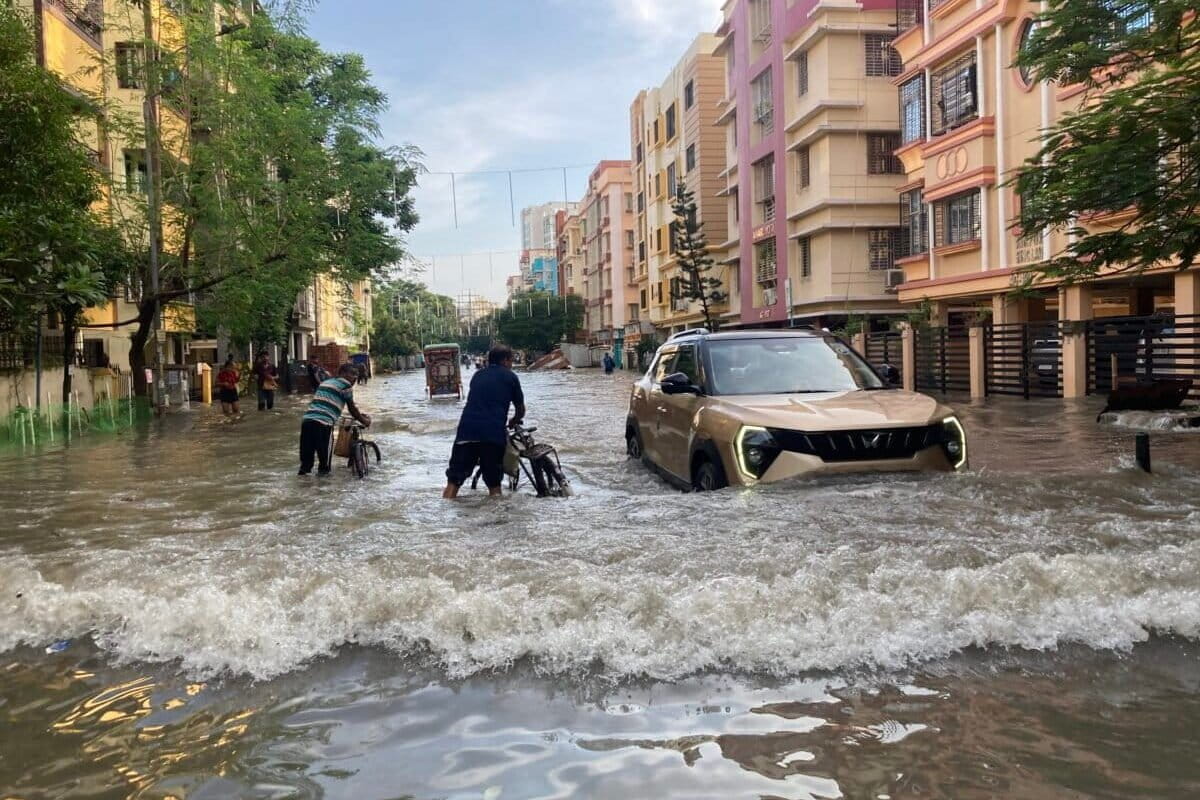
Kolkata is experiencing intense heatwave conditions even as northern districts of West Bengal receive steady rainfall, exposing a growing regional imbalance in weather patterns that has implications for urban resilience and infrastructure planning.
The divergence highlights how climate variability is increasingly shaping daily life and long-term development challenges across the state.In the southern belt, including Kolkata, rising temperatures and dry conditions have intensified heat stress, affecting outdoor workers, transport systems, and energy demand. Meanwhile, districts in North Bengal are witnessing rainfall activity, underscoring a fragmented monsoon pattern that experts say is becoming more frequent due to shifting climatic systems.Meteorologists attribute this contrast to atmospheric instability and changing wind patterns, which are disrupting traditional weather cycles. For cities like Kolkata, prolonged heatwaves are not only a public health concern but also a strain on urban infrastructure. Increased electricity consumption for cooling, pressure on water supply systems, and reduced productivity are among the immediate impacts.Urban planners warn that such extreme variations demand a rethinking of city design and preparedness. Heat-resilient infrastructure—such as shaded public spaces, reflective building materials, and improved ventilation in dense neighbourhoods—is becoming essential. At the same time, the uneven distribution of rainfall raises concerns about water management, as some regions face excess precipitation while others grapple with scarcity.
The situation also highlights vulnerabilities in informal settlements, where access to cooling, water, and healthcare is limited.Experts note that climate disparities tend to disproportionately affect low-income communities, reinforcing the need for inclusive adaptation strategies. Ensuring equitable access to basic services during extreme weather events is increasingly seen as a priority for sustainable urban governance.From an economic perspective, weather volatility can disrupt sectors ranging from agriculture in northern districts to services and construction in urban centres like Kolkata.Businesses dependent on stable climatic conditions are being forced to adapt, while city administrations must account for these fluctuations in planning and budgeting.Environmental analysts suggest that the contrasting weather patterns are part of a broader trend linked to climate change, where localised extremes replace more uniform seasonal behaviour. This makes forecasting more complex and increases the importance of real-time data and responsive governance systems.For Kolkata, the ongoing heatwave serves as a reminder of the urgent need to integrate climate resilience into urban development strategies. Measures such as expanding green cover, improving drainage systems, and adopting energy-efficient technologies can help mitigate the impact of extreme weather.
As West Bengal navigates these contrasting conditions, the focus is likely to shift toward building adaptive systems that can handle variability rather than relying on predictable seasonal patterns. Strengthening coordination between regional and urban planning will be critical to ensuring that cities like Kolkata remain liveable amid growing climate uncertainty.
Also Read:Kolkata Kitchen Appliance Premiumisation And Urban Demand
