


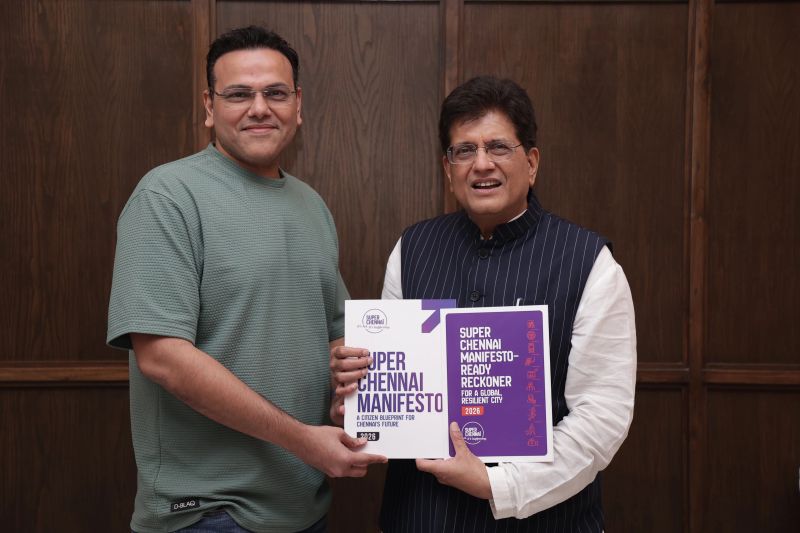
A newly released Chennai city manifesto has outlined a comprehensive roadmap for urban development, placing infrastructure upgrades, service delivery, and inclusive growth at the centre of policy priorities.
The blueprint comes at a time when Chennai is grappling with rapid urbanisation, climate vulnerabilities, and rising demand for efficient civic systems.The Chennai city manifesto focuses on strengthening core infrastructure, including water supply, waste management, and public transport networks. With the city facing recurring challenges such as flooding and water scarcity, the emphasis on integrated urban planning reflects a growing recognition of the need for climate-resilient systems.Experts note that aligning infrastructure investments with environmental realities will be critical for long-term sustainability.Housing and urban accessibility form another key component of the plan. As Chennai expands, ensuring affordable housing and reducing spatial inequalities have become pressing concerns. Urban planners highlight that inclusive zoning policies and improved connectivity can help bridge gaps between different socio-economic groups, making the city more equitable and liveable.The manifesto also signals a push toward digitisation and governance reforms aimed at improving service delivery. Streamlined administrative processes and data-driven decision-making are expected to enhance transparency and efficiency. However, analysts caution that successful implementation will depend on institutional capacity and coordination across multiple agencies.
Economic development is positioned as a parallel priority, with the plan seeking to attract investment while supporting local enterprises. Strengthening employment opportunities, particularly in emerging sectors, is seen as essential for sustaining urban growth. At the same time, balancing industrial expansion with environmental safeguards remains a key challenge for policymakers.From a sustainability perspective, the Chennai city manifesto underscores the importance of green infrastructure and resource efficiency.Initiatives aimed at expanding urban green spaces, promoting renewable energy, and improving waste management systems are aligned with broader goals of reducing the city’s carbon footprint. Experts argue that such measures must be integrated into everyday planning rather than treated as standalone projects.The document also touches on mobility, with proposals to enhance public transport and reduce congestion. Efficient transit systems are increasingly viewed as a cornerstone of sustainable urban development, helping to lower emissions while improving accessibility for residents across income groups.For Chennai, the manifesto represents an attempt to address complex urban challenges through a structured policy framework. Its success will depend not only on the scope of proposals but also on execution, funding, and public engagement. As the city continues to evolve, translating policy intent into tangible improvements will be crucial.
Looking ahead, the Chennai city manifesto sets the stage for a more coordinated approach to urban governance. If implemented effectively, it could contribute to building a resilient, inclusive, and environmentally sustainable city, while offering insights for other rapidly growing urban centres across India.
Also Read:Kolkata Heatwave And Bengal Weather Imbalance Impact
