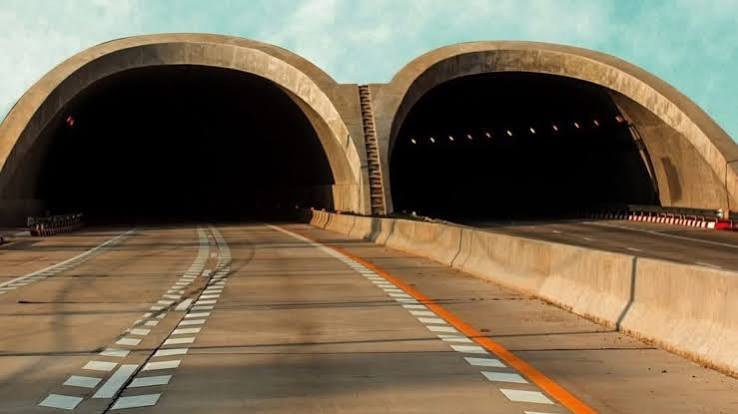
Bengaluru Tunnel Road Faces Fresh Cost And Traffic Questions
Bengaluru’s proposed north-south tunnel corridor is facing renewed scrutiny over its cost, traffic capacity and environmental footprint, after questions were raised about whether the project can deliver meaningful congestion relief. The debate is increasingly shifting from simply building more road space to deciding which form of infrastructure can move the largest number of people while protecting the city’s limited public assets.
The proposed Bengaluru Tunnel Road would connect the Hebbal and Silk Board areas through an underground corridor of roughly 17 kilometres. The project has an estimated government cost of ₹17,698 crore, while the lowest financial bid received was reported at ₹22,267 crore, creating a substantial gap that has added to questions over its financial viability. At a Bengaluru infrastructure discussion, an opposition parliamentarian argued that the tunnel would primarily serve private vehicles and would have limited impact on the city’s broader congestion problem. He referred to traffic modelling attributed to the Indian Institute of Science and argued that a comparable investment in mass transit could carry substantially more passengers. These remain claims made by the opposition and should be assessed against the project’s detailed technical studies before being treated as settled conclusions.The wider mobility question is significant. Bengaluru has expanded rapidly while road space has struggled to keep pace with population and vehicle growth.
Adding underground capacity may improve movement along a specific corridor, but it does not automatically reduce traffic across the wider network. International urban experience also suggests that road expansion works best when combined with strong public transport, demand management and efficient last-mile connections. Cost is another critical consideration. The current bid is about ₹4,569 crore above the state’s original estimate. Under the proposed financial structure, the government would provide viability-gap support while the private developer would finance the remaining share, making the eventual project cost and user charges important questions for public finances and commuters. Environmental concerns further complicate the project. Opposition has focused on the reported requirement for land associated with Lalbagh, one of Bengaluru’s most important urban green spaces. Claims regarding the exact extent and permanence of land acquisition remain contested, but any diversion of established parkland would require particularly careful assessment because such spaces provide shade, biodiversity, recreation and climate resilience in a dense city.
The Bengaluru Tunnel Road therefore needs to be evaluated not only on construction feasibility but also on passenger capacity, lifecycle cost, toll affordability, land impact and its relationship with metro, bus and suburban rail expansion. For a city struggling with congestion and rising travel demand, the stronger investment is ultimately the one that improves mobility for the greatest number of residents without creating disproportionate financial or environmental costs.