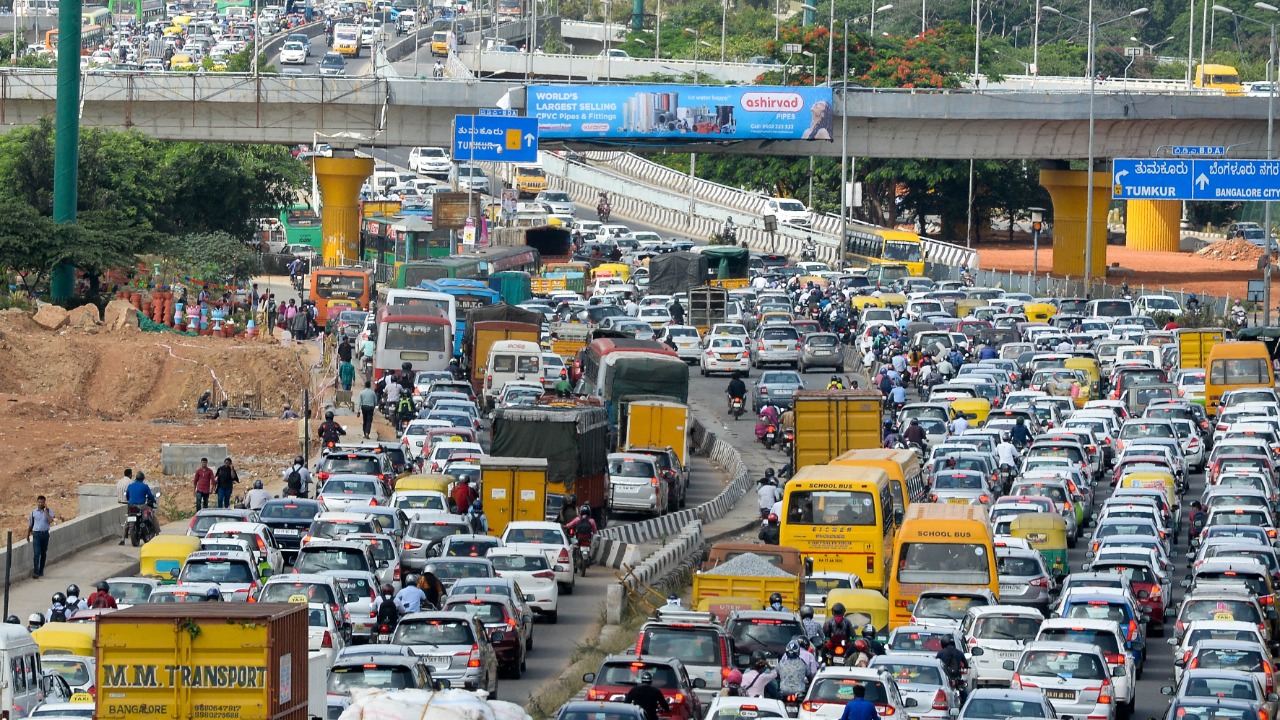
Bengaluru Hebbal Tunnel May Offer Temporary Traffic Relief
Bengaluru’s proposed short tunnel near Hebbal may provide an initial reduction in congestion but is unlikely to deliver lasting relief as traffic volumes continue to rise, according to an Indian Institute of Science assessment. The findings add to a larger debate over whether isolated road projects can keep pace with Bengaluru’s vehicle growth without stronger investment in public transport and traffic management.
The Bengaluru Hebbal tunnel is being considered as a local intervention around one of the city’s most persistent traffic bottlenecks. The wider Hebbal corridor carries substantial airport-bound, residential and employment-related traffic, making it particularly sensitive to changes in road capacity. The IISc analysis is significant because it evaluates traffic impacts rather than simply the engineering feasibility of a tunnel. Research associated with the institute has previously examined proposed tunnel-road scenarios and their effects on Bengaluru’s metropolitan transport system.The concern is familiar in Bengaluru: adding road capacity can improve movement initially, but rising vehicle demand can gradually absorb the additional space. Earlier IISc-linked assessments of the Hebbal corridor have similarly warned that capacity enhancements could provide only short-term benefits as airport traffic, North Bengaluru development and private vehicle ownership expand. That makes the Bengaluru Hebbal tunnel less a standalone congestion solution and more a test of how the city manages transport demand. If additional road capacity encourages more private vehicle trips, congestion can eventually return at the tunnel’s exits, connecting junctions or other parts of the network.
There are lower-cost measures that can also influence traffic flow. IISc transportation research has highlighted lane channelisation, improved signal timing and better separation of competing traffic movements as ways to increase junction throughput without major construction. At Hebbal, separating airport-bound movements from traffic continuing towards other destinations has already demonstrated how relatively small operational changes can improve flow. The longer-term question is therefore about the mix of infrastructure. A tunnel may address a particular bottleneck, but mass transit can move substantially more people within the same urban footprint. Bengaluru’s transport planning will need to integrate road projects with metro, bus and suburban rail networks rather than treating each corridor as an independent congestion problem. For residents and businesses, the measure of success should ultimately be reliable journey times rather than the number of kilometres of new road capacity.
If the tunnel proceeds, transparent traffic modelling, performance monitoring and coordinated junction management will be essential. The Hebbal debate reinforces a broader lesson for Bengaluru: road infrastructure can support mobility, but lasting congestion relief requires managing demand, improving public transport and making better use of the network already in place.