


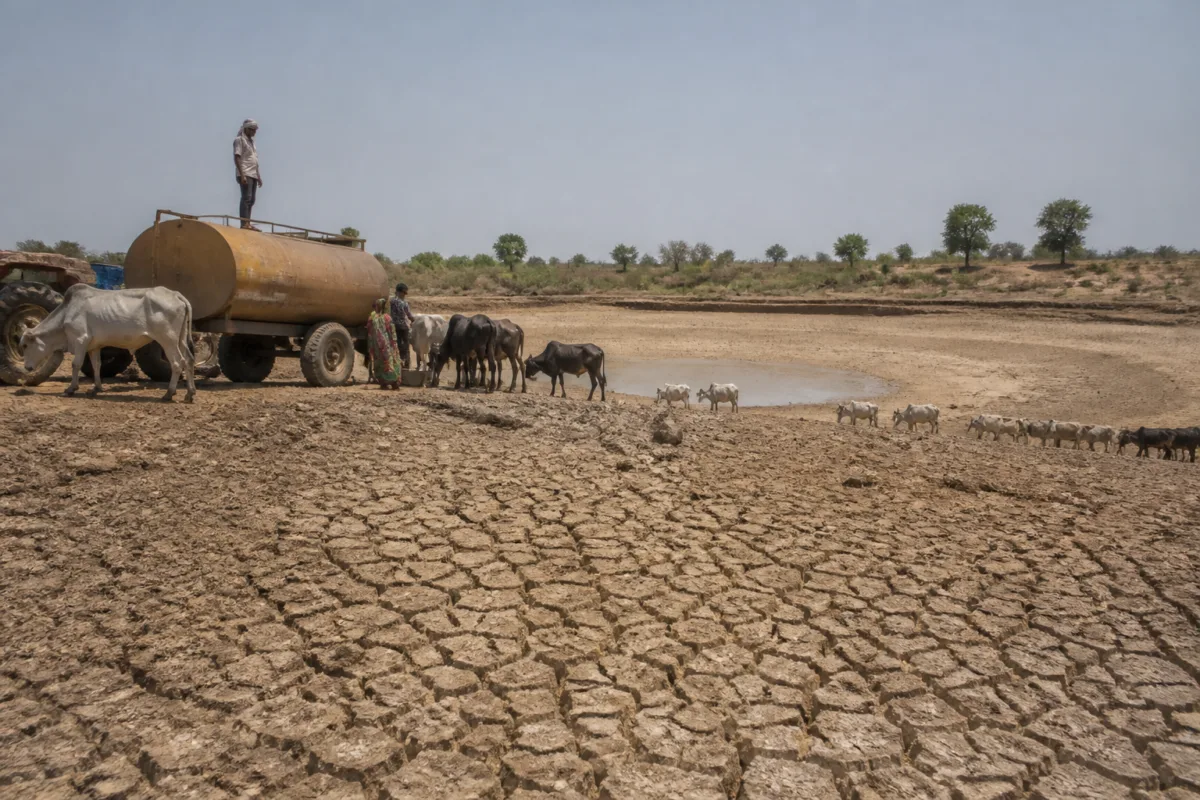
The Gujarat government has declared Devbhumi Dwarka, Porbandar, Kutch and Jamnagar drought-hit after a weak monsoon and reported water shortages, with farmers in the four districts set to receive assistance of Rs 8,500 per hectare, subject to a two-hectare limit.
Chief Minister Bhupendra Patel said Gujarat received 89% of its expected rainfall this year and that the four districts had recorded inadequate rainfall. The declaration is intended to support farmers facing crop losses as water availability worsens across parts of Saurashtra and Kutch.
According to the report, the assistance will be provided against crop damage. The announcement comes amid reports of falling water levels in rivers, lakes and dams, along with growing pressure on drinking water and agricultural supplies. The state’s Narmada dam has also reportedly recorded a decline in its water level.
The situation has affected the operation of the Sauni Yojana, through which water is supplied to parts of Saurashtra. The report said water supply under the scheme had to be stopped, disrupting availability across several districts. The government has been discussing arrangements to manage water supplies until the next monsoon.
The shortage has also created difficulties for livestock owners and pastoral communities. Natural fodder and water have become scarce in several parts of Saurashtra, while higher market prices have made it difficult for families dependent on daily earnings and animal husbandry to feed their cattle.
Some pastoralists have reportedly been forced to migrate with their livestock in search of fodder and water. Representatives of the Maldhari community and other livestock owners had sought an immediate special relief package, subsidised fodder through municipal bodies and district and taluka panchayats, and the creation of cattle camps in affected areas.
Their demands also included drinking water arrangements through tankers in villages facing shortages, along with fodder and veterinary services at cattle camps. Livestock owners had warned that failure to take prompt action could threaten the survival of pastoral households whose livelihoods depend on their animals.
The state government has assured that arrangements for fodder will be made for livestock. The immediate implementation details for the farmer assistance, including the process for identifying eligible beneficiaries and disbursing the money, were not specified in the supplied report.

