


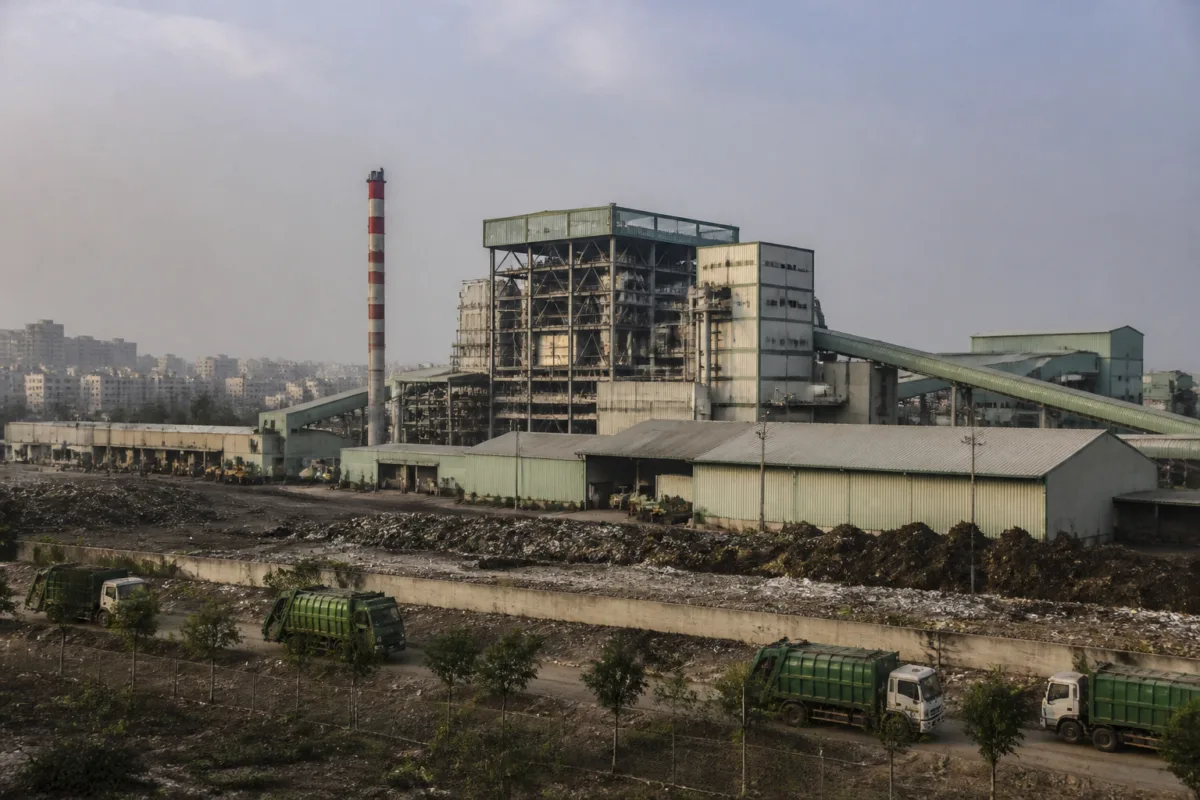
Ahmedabad’s waste-to-energy plant at Gyaspur is reported to process 1,000 tonnes of municipal solid waste a day, while generating electricity and using treated sewage water in its operations. However, the report’s description of the plant’s output contains a material unit discrepancy that requires clarification from the Ahmedabad Municipal Corporation and the project operator.
According to a report by Nav Gujarat Samay, the plant is operating near Pirana under a public-private partnership. The report says the facility burns, or incinerates, about 1,000 tonnes of waste every day. The heat is used to boil water and produce steam, which drives a turbine for electricity generation.
The report states that the plant produces 15 MW of electricity per hour and also describes its daily average output as 360 MW. These are not interchangeable measurements. MW measures the rate of power generation, while daily electricity production is normally expressed in megawatt-hours. If a plant operated continuously at 15 MW for 24 hours, the corresponding energy generation would be 360 megawatt-hours, subject to actual operating conditions. The supplied report does not clarify whether its reference to 360 MW is intended to mean 360 megawatt-hours, nor does it provide generation logs or the plant’s declared capacity.
The distinction is important because the electricity figure is central to the report’s assessment of the project. The report says the electricity is purchased by the state government at a prescribed tariff. It also claims that producing the reported daily output avoids the use of about 360 metric tonnes of coal. That comparison cannot be independently assessed from the supplied material without verified generation data, the applicable coal-consumption benchmark and details of the plant’s operating efficiency.
The facility was established after municipal officials visited a private waste-to-energy plant in Delhi during 2023-24, according to the report. The Ahmedabad Municipal Corporation subsequently invited the private company to establish a facility near Pirana at Gyaspur. The plant was inaugurated in November 2024 by Union Home Minister Amit Shah, the report states.
The project is linked to the long-running waste-management problems around Pirana. The report says thousands of tonnes of different kinds of waste have historically been deposited in the area, contributing to methane and other gases, foul odour and air pollution. It identifies Pirana as one of Ahmedabad’s most polluted locations, while also noting that municipal authorities have undertaken systematic efforts in recent years to address the city’s large waste heaps.
The facility is intended to handle waste that cannot be put to another use, following the Centre’s stated direction to pursue waste-to-energy projects for such residual waste, according to the report. That distinction matters for municipal solid-waste management: electricity generation does not replace segregation, recycling or material recovery, and the supplied report does not provide data on the composition of the waste being sent to the incinerator or the quantity diverted for reuse.
Water use is another significant feature of the project. The report says the plant uses treated sewage water rather than fresh water to generate the large volumes of steam required to run its turbine. It claims that approximately 3 million litres of treated water are used each day under a recycle-and-reuse approach. The report also says this arrangement generates annual revenue of Rs 50 lakh for the municipal corporation and reduces the load on sewage-treatment infrastructure.
The water claim also requires documentary confirmation, including the source and quality of the treated water, the quantity supplied each day, the tariff charged and the basis for the reported annual revenue. The supplied article does not identify the sewage-treatment plant, the operator responsible for water supply or the contractual terms governing this part of the project.
The report says the plant has created employment for 250 people. It describes the arrangement as a public-private partnership in which the municipal corporation provided land while the private company built the facility using its own funds. No contract, concession agreement, project-cost statement or performance guarantee is included in the supplied material.
This distinction is relevant because the report contrasts the Gyaspur facility with other projects that are described as public-private partnerships even when municipal land and public funds are both provided. The comparison is presented as an assessment by the report and its sources; the supplied material does not provide documents or named officials to substantiate the broader claim about other projects.
For Ahmedabad, the project brings together three municipal systems that are usually managed separately: solid-waste disposal, electricity generation and treated-water reuse. Its performance therefore cannot be assessed only through the amount of electricity reported. A complete evaluation would also need verified information on waste composition, plant availability, emissions controls, ash disposal, electricity actually supplied to the grid, water consumption and the financial obligations of each partner.
The supplied report establishes that the Gyaspur plant is described as operational and that it is intended to process 1,000 tonnes of waste a day. It does not establish the precise electricity output in technically consistent units, the plant’s actual daily operating record or its environmental performance. Confirmation of those figures from the Ahmedabad Municipal Corporation, the operator and the relevant electricity purchaser remains necessary before the project’s claimed benefits can be treated as verified.

