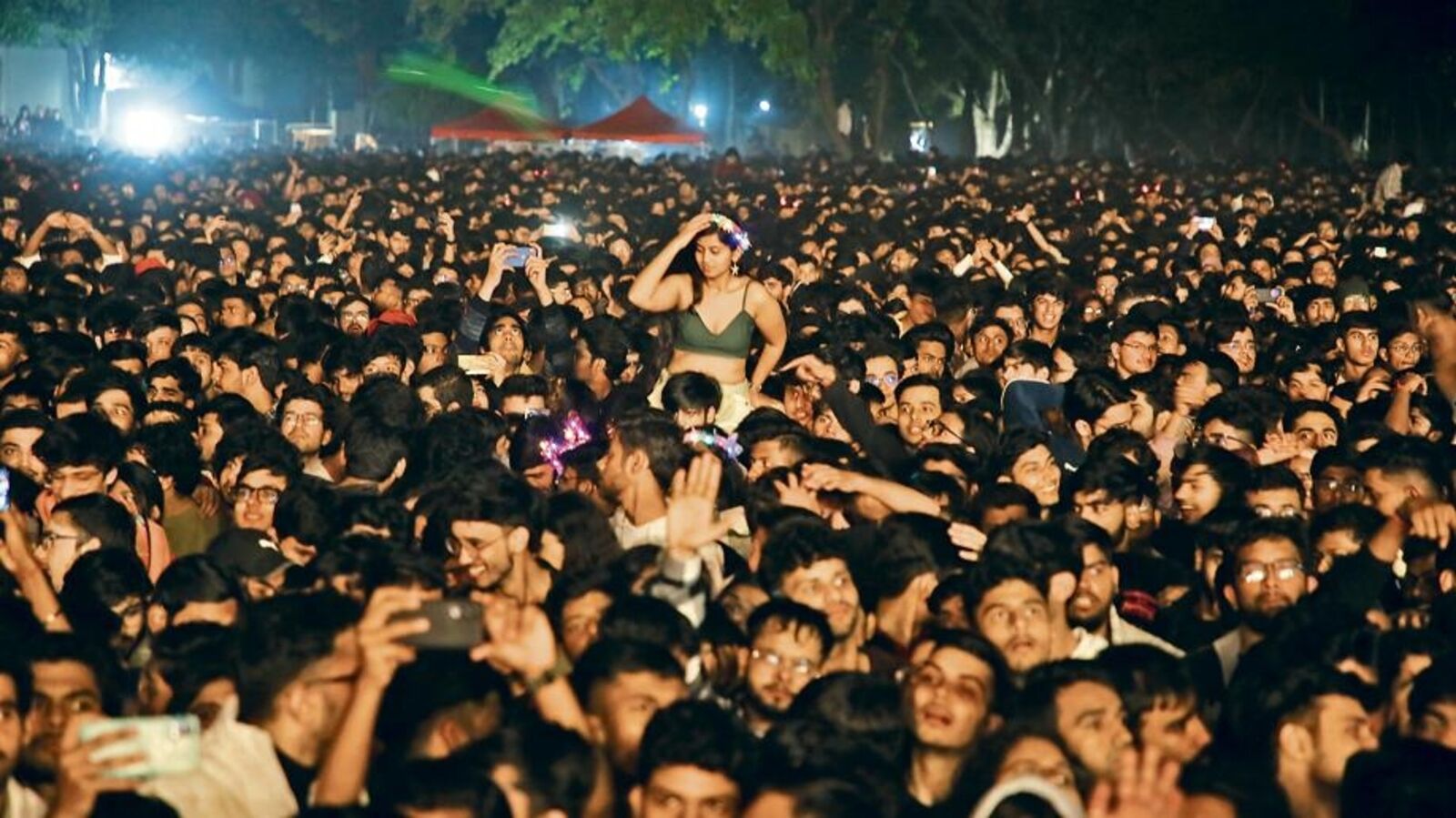
Delhi University Festival Draws Crowds And Traffic Impact
A large-scale student cultural festival at Delhi University’s Kirori Mal College drew thousands to the North Campus this week, highlighting the growing role of campus-led events in shaping the city’s cultural economy and urban movement patterns. The two-day event, held in mid-April, brought together performances, competitions, and student-led initiatives, but also triggered traffic congestion and civic management challenges in surrounding areas.
The annual festival, hosted within one of Delhi’s densest academic clusters, saw significant footfall, with estimates suggesting attendance in the range of several thousand participants across both days. This surge in activity reflects how university festivals are evolving into large urban events, extending beyond campus boundaries to influence local transport systems, public spaces, and neighbourhood dynamics. While such gatherings offer platforms for creative expression and youth engagement, they also test the city’s ability to manage temporary spikes in population density. Traffic advisories were issued for key arterial roads around North Campus, indicating expected congestion and the need for diversions. For a city already dealing with high baseline traffic volumes, even short-duration events can strain mobility networks if not integrated into broader urban planning frameworks. The Delhi University festival ecosystem has expanded considerably in recent years, with multiple colleges hosting high-profile events that attract participants from across the National Capital Region.
These festivals contribute to the informal cultural economy—supporting vendors, performers, and temporary service providers—while also reinforcing the city’s identity as a youth and education hub. However, urban planners note that such events expose gaps in event management infrastructure. Limited parking, inadequate pedestrian pathways, and pressure on public transport nodes are recurring issues during peak festival periods. In dense institutional zones like North Campus, where academic infrastructure coexists with residential and commercial activity, managing these overlaps requires coordinated planning between civic agencies, universities, and traffic authorities. Environmental considerations are also gaining attention. Large gatherings often generate significant waste and increase energy consumption, raising questions about how campus events can align with sustainability goals. Experts suggest that integrating waste segregation, reusable materials, and low-carbon event practices could help reduce the ecological footprint of such festivals.
At a broader level, the rise of the Delhi University festival culture reflects a shift in how urban public spaces are used. Campuses are no longer isolated academic zones; they function as cultural nodes that shape city life, especially for younger populations. This evolution presents an opportunity for cities to formalise event planning frameworks that balance vibrancy with liveability. As Delhi continues to position itself as a knowledge and cultural hub, the challenge lies in scaling such events responsibly. Ensuring smoother mobility, minimising environmental impact, and safeguarding surrounding communities will be key to sustaining the growth of campus-driven urban culture without compromising the city’s everyday functioning.