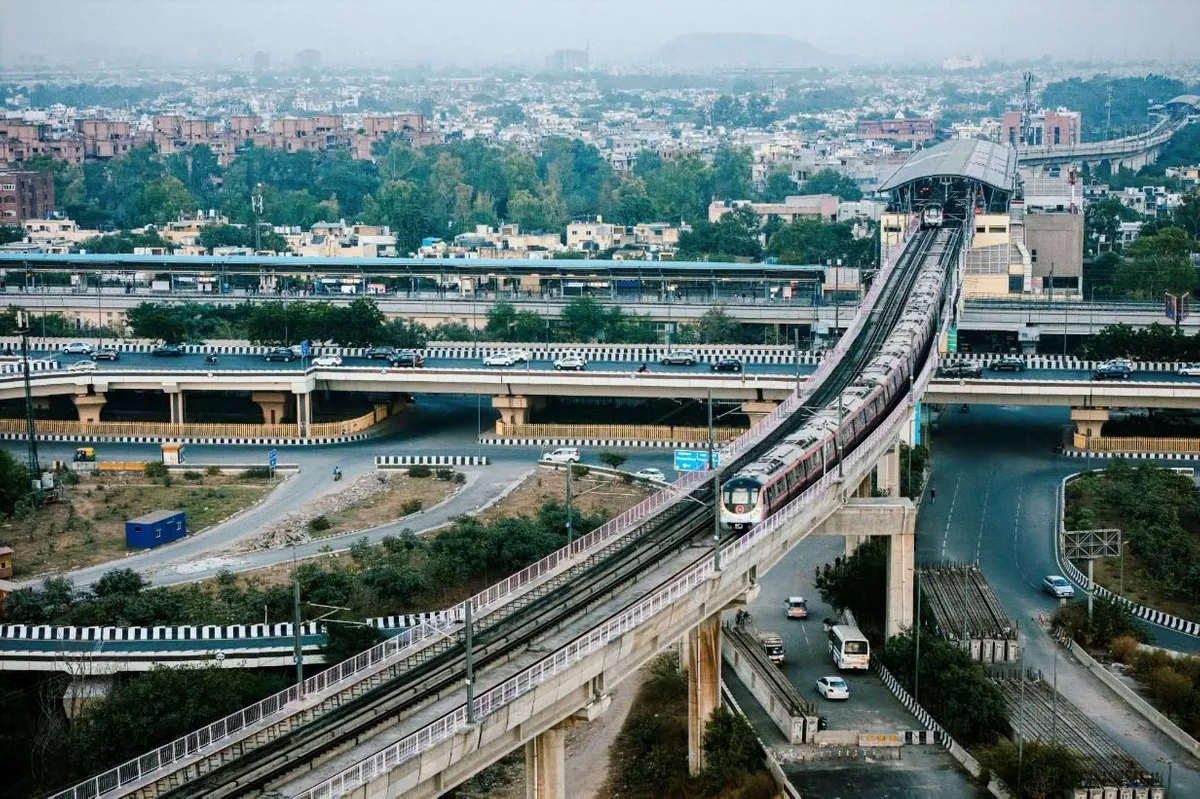
Delhi’s expanding metro network is preparing for a major operational shift as two of the capital’s busiest transit hubs are set to become the city’s first four-line interchange stations. The planned upgrades at Central Secretariat and Lajpat Nagar are expected to significantly alter commuting patterns across the National Capital Region while easing passenger pressure on existing junctions such as Kashmere Gate.
The transition is tied to upcoming metro corridors proposed under later phases of Delhi Metro expansion, including projects under Phase IV and the proposed Phase V network. Urban mobility experts say the move reflects a broader transition towards multi-nodal public transport systems designed to reduce travel times, lower road congestion and improve connectivity between residential, commercial and institutional districts. At present, Delhi Metro operates one of the country’s largest urban rail systems with more than 370 kilometres of operational network across the capital. However, passenger movement remains heavily concentrated at a few interchange points. Kashmere Gate currently serves as the only triple-line interchange station in Delhi, connecting the Red, Yellow and Violet corridors. That concentration has increasingly highlighted the need for decentralised interchange infrastructure as the metropolitan region continues to expand outward into newer residential and employment zones. Transport planners note that distributing passenger transfers across multiple stations can improve system efficiency, reduce crowding risks and support safer commuter movement during peak hours.
Under the ongoing expansion plans, Lajpat Nagar is expected to evolve into a critical east-south transit connector. The station already links the Pink and Violet lines. With the planned Golden Line extension connecting Saket G Block to Lajpat Nagar, the interchange will gain a third corridor. A proposed additional corridor under the next metro phase could eventually make it a four-line interchange node. Similarly, Central Secretariat a key administrative district station is expected to gain expanded interchange capacity through the extension of the Magenta Line and another future corridor connecting central Delhi to the southern edge of the city. Once operational, commuters travelling between government districts, business centres and peripheral neighbourhoods may experience shorter transfer times and fewer interchange bottlenecks. Urban development analysts say the importance of these projects extends beyond transport convenience. Large-scale metro integration often shapes land use patterns, commercial activity and real estate demand around stations.
Multi-corridor interchanges tend to attract mixed-use development, pedestrian infrastructure upgrades and higher-density housing, particularly in transit-oriented zones. The expansion also arrives at a time when Delhi faces mounting pressure to reduce transport-related emissions and dependence on private vehicles. Strengthening interchange capacity is considered essential for increasing metro ridership and supporting cleaner urban mobility across NCR. While timelines for several future corridors remain subject to approvals and funding clearances, the planned four-line interchange model signals a new phase in Delhi’s urban transport strategy one increasingly focused on network resilience, commuter accessibility and sustainable metropolitan growth.