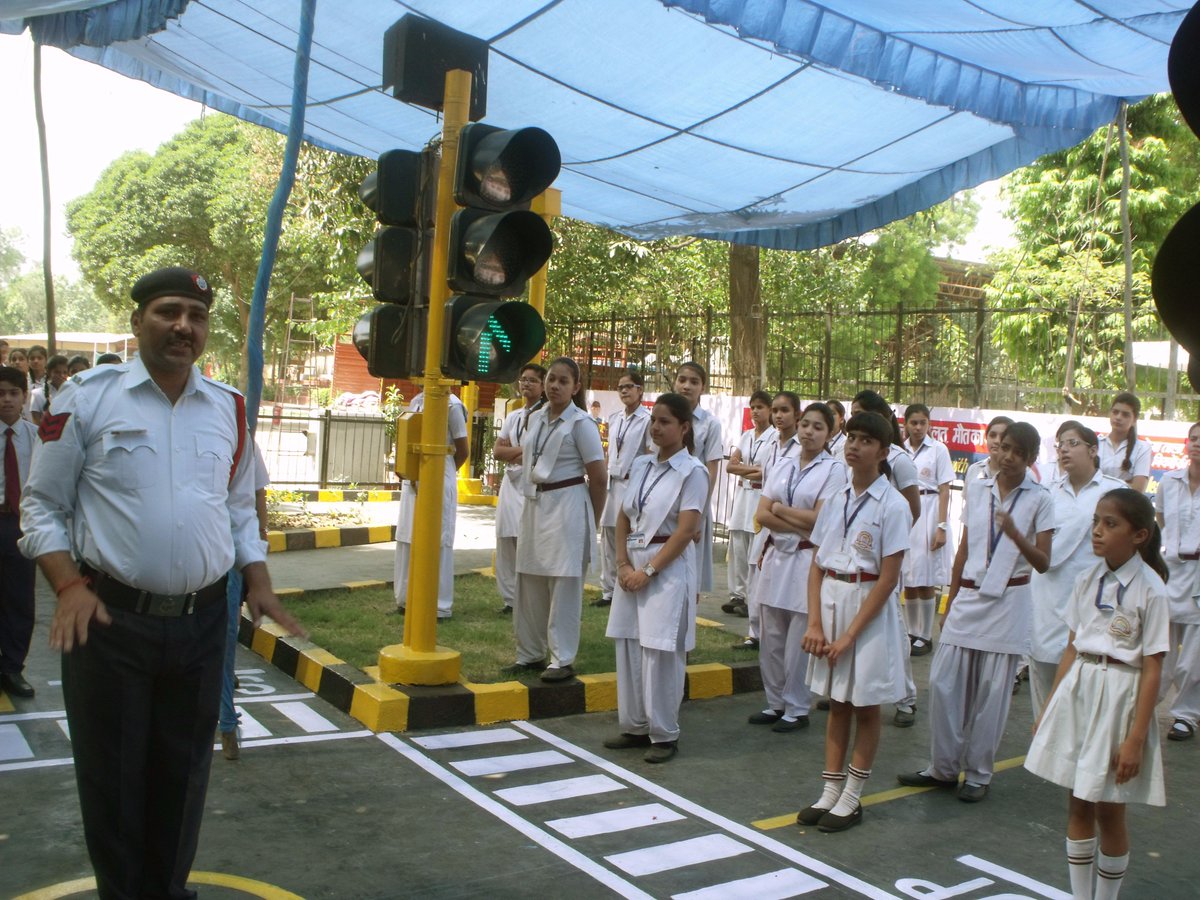
Delhi is expanding its road safety outreach among schoolchildren through a citywide summer awareness initiative that combines traffic education with cyber safety, self-defence and emergency response training. The programme, led by the city’s traffic enforcement authorities, signals a broader shift in urban governance where public safety education is increasingly being treated as essential civic infrastructure in a rapidly growing metropolitan region.
The latest awareness drive, hosted at the police headquarters in the national capital, connected nearly one lakh students digitally, while hundreds attended in person from schools across the city. Officials used the platform to discuss safe commuting behaviour, pedestrian awareness and the risks associated with speeding and distracted driving issues that continue to contribute significantly to urban road fatalities in India. The initiative arrives at a time when Delhi and neighbouring NCR cities are facing mounting pressure to make streets safer for children, cyclists and non-motorised commuters. According to transport planners, road safety can no longer remain limited to enforcement campaigns alone, particularly in dense urban corridors where mixed traffic movement and rising vehicle ownership are increasing risks for vulnerable road users. As part of the programme, students were introduced to practical aspects of road discipline, including correct helmet and seatbelt usage, safer school travel practices and emergency response measures such as first aid and CPR. Audio-visual learning modules and interactive sessions were also incorporated to improve engagement among younger audiences.
Beginning 18 May, authorities plan to extend the exercise through multi-phase summer camps at traffic training parks across Delhi until early June. The camps will integrate modules on cyber awareness, gender sensitivity and personal safety alongside road safety training. Urban policy experts say this integrated approach reflects a changing understanding of public safety in cities, where mobility, digital exposure and community resilience are increasingly interconnected. The road safety programme also carries economic and public health implications. Traffic crashes impose a substantial financial burden on Indian cities through healthcare costs, productivity losses and infrastructure strain. For a city like Delhi, where congestion and vehicular density remain among the highest in the country, preventive awareness initiatives targeting younger citizens are viewed as a long-term investment in safer urban mobility systems.
Urban development specialists note that children are emerging as critical stakeholders in conversations around sustainable and people-first transport planning. By embedding behavioural awareness at the school level, city authorities may gradually strengthen compliance culture and reduce dependence on punitive enforcement mechanisms alone. The effectiveness of the road safety programme, however, will depend on whether educational outreach is matched by safer street design, improved pedestrian infrastructure and stronger traffic calming measures near schools and residential zones. As Delhi continues to expand its transport network and urban footprint, experts argue that citizen awareness and infrastructure reform must evolve together to create safer and more climate-resilient cities.