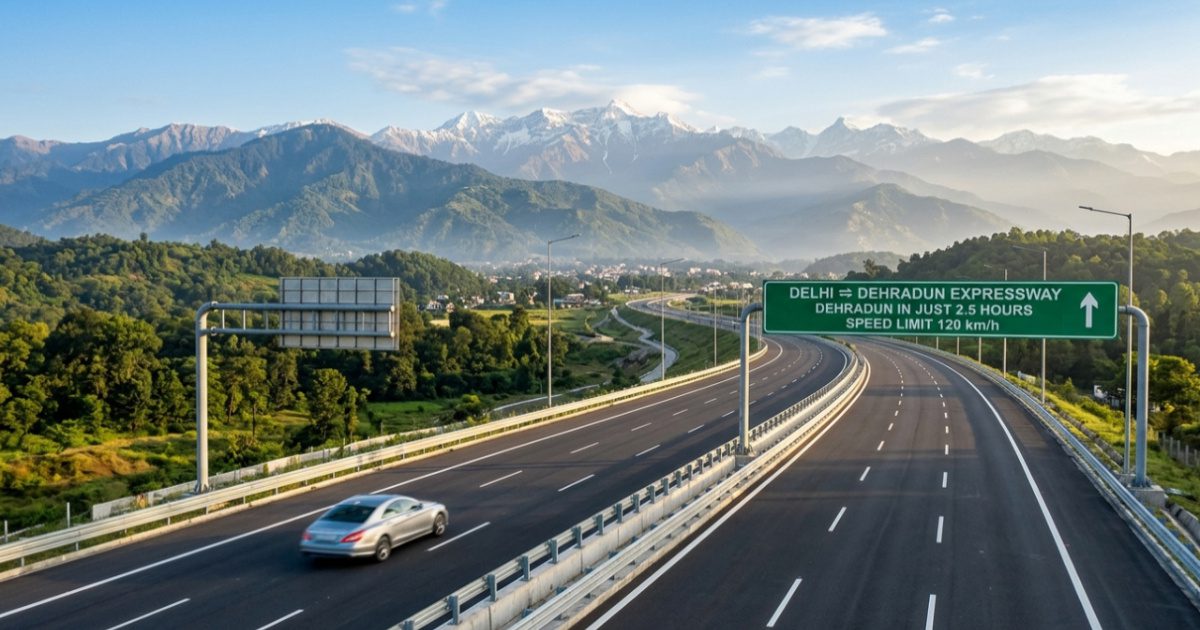
A high-speed road corridor connecting Delhi with Uttarakhand is set to alter trade flows and regional development patterns, with the Delhi Dehradun Expressway expected to significantly improve logistics efficiency and market access. The project is emerging as a key enabler for micro, small and medium enterprises, while also triggering shifts in real estate and supply chain infrastructure across northern India. By compressing travel time between the two cities to under three hours, the Delhi Dehradun Expressway introduces greater predictability into freight movement. For MSMEs, which often operate on tight margins, reduced transit durations can translate into lower fuel consumption, fewer delays, and more efficient inventory cycles. This is particularly relevant for sectors dependent on timely deliveries, including food processing, light manufacturing, and retail distribution.
Industry observers note that improved connectivity could extend the reach of smaller businesses beyond their immediate geographies. As transport barriers reduce, firms in Tier 2 and Tier 3 locations gain closer access to metropolitan markets, enabling them to scale operations and diversify customer bases. This alignment of regional economies with urban demand centres is seen as a critical step towards more balanced economic growth. The Delhi Dehradun Expressway is also expected to catalyse investment in logistics infrastructure along its route. Strategic nodes may witness the development of warehousing hubs, cold storage facilities, and distribution centres, strengthening supply chains and supporting employment generation. Such infrastructure is increasingly vital in building resilient urban economies, particularly as consumption patterns evolve and e-commerce demand grows. Real estate activity in adjoining areas is already reflecting the impact of improved connectivity. Enhanced accessibility often leads to rising land values and encourages new residential and commercial developments.
Urban planners suggest that peripheral zones within commuting distance of Delhi could transition into integrated growth centres, provided development is aligned with sustainable planning principles. Tourism-linked businesses are likely to see parallel gains. Faster road access to Uttarakhand’s hill regions may encourage short-duration travel, supporting local hospitality and service sectors. This could offer a steady economic boost to communities that rely heavily on seasonal tourism. However, the long-term outcomes of such infrastructure investments depend on how growth is managed. Experts caution that without careful planning, improved connectivity can lead to unregulated expansion, increasing pressure on natural resources and local ecosystems. Integrating land use planning, public transport connectivity, and environmental safeguards will be essential to ensure that development remains sustainable.
From a broader perspective, corridors like the Delhi Dehradun Expressway are redefining how cities interact with their hinterlands. By distributing economic activity across regions, they can reduce congestion in core urban areas while creating new opportunities for businesses and communities. The challenge will lie in aligning infrastructure expansion with climate resilience and inclusive growth objectives, ensuring that the benefits are widely shared.