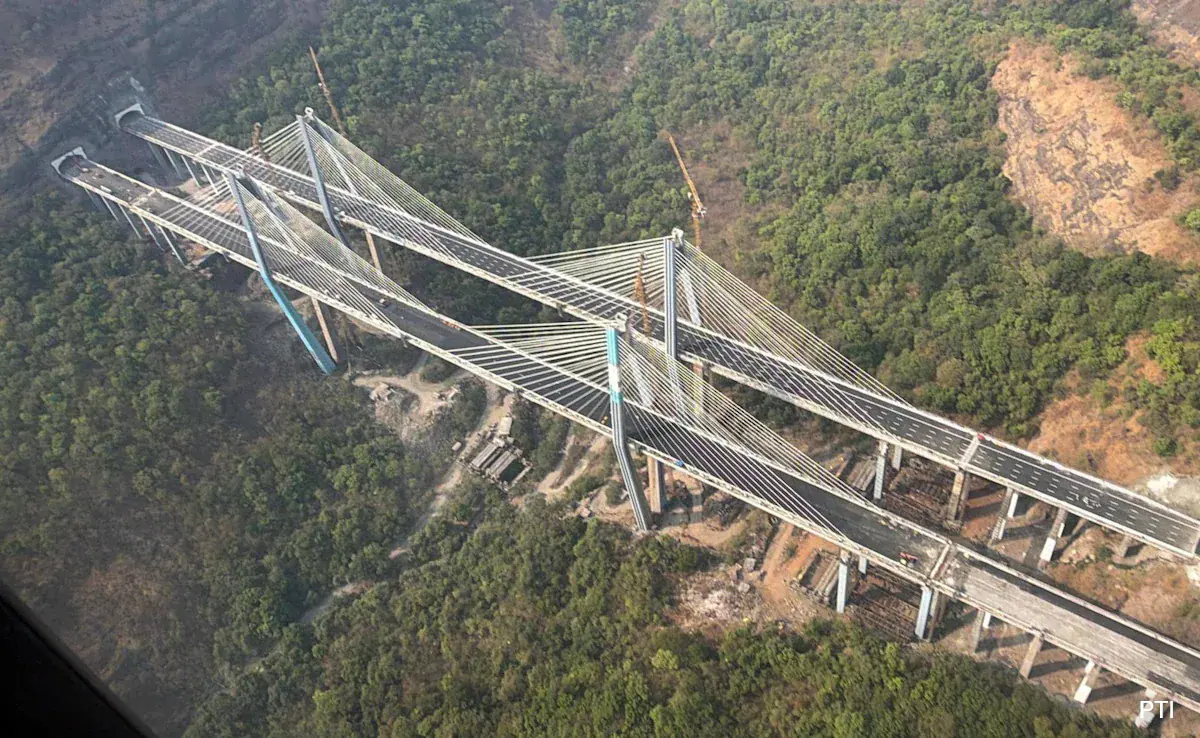
Mumbai Pune Expressway adds cable stayed bridge to cut travel time, improve safety, and support efficient regional connectivity and growth.
A major expressway upgrade connecting Mumbai and Pune is nearing a pivotal stage, with the Mumbai Pune Missing Link project expected to significantly alter regional mobility and reshape development patterns across western Maharashtra. By reducing travel time and bypassing a heavily congested ghat section, the project is poised to influence commuting behaviour, logistics efficiency, and real estate dynamics across multiple urban centres. The new alignment, featuring long tunnels and elevated structures, is designed to streamline movement along one of India’s busiest economic corridors. Transport planners indicate that the intervention will cut travel duration between the two cities by a substantial margin, while also improving journey reliability—an often overlooked but critical factor for both daily commuters and freight operators.
The implications extend beyond transport efficiency. Improved connectivity through the Mumbai Pune Missing Link is expected to encourage a more distributed pattern of urban growth, easing pressure on saturated city cores. Peripheral zones such as Navi Mumbai and emerging nodes near Panvel are likely to see increased residential and commercial interest as accessibility improves. Analysts tracking metropolitan expansion note that such infrastructure can accelerate the transition towards multi-nodal urban regions. For the real estate sector, the corridor presents both opportunity and caution. Enhanced connectivity typically drives demand for housing in relatively affordable locations, enabling households to consider inter-city or extended suburban living. At the same time, commercial occupiers—particularly in technology and logistics sectors—may explore decentralised office strategies, leveraging improved road connectivity to access a wider workforce base. Logistics and warehousing are expected to be among the earliest beneficiaries. Faster transit times can reduce operational costs and improve supply chain reliability, strengthening the case for large-scale distribution hubs along the corridor.
This is particularly relevant in the context of growing e-commerce activity and regional manufacturing networks. However, urban planners emphasise that infrastructure-led growth must be carefully managed to avoid unsustainable sprawl. While the Mumbai Pune Missing Link enhances physical connectivity, it also raises questions around land use planning, environmental impact, and the integration of public transport systems. Without coordinated planning, there is a risk of car-dependent expansion that could undermine long-term climate goals. Another key dimension is the project’s role in supporting emerging infrastructure such as the Navi Mumbai international airport. Improved road access is expected to widen the airport’s catchment area, potentially strengthening its viability as a regional aviation hub. This, in turn, could influence business location decisions and regional investment flows.
In the broader context of urban development, the corridor aligns with the concept of a more connected “Mumbai 3.0” region—where growth is spread across multiple centres rather than concentrated in a single core. This approach is increasingly seen as essential for balancing economic expansion with liveability and environmental sustainability. As the project progresses towards completion, its long-term success will depend not just on reduced travel time, but on how effectively it is integrated into a wider framework of sustainable mobility, land use regulation, and inclusive urban planning.