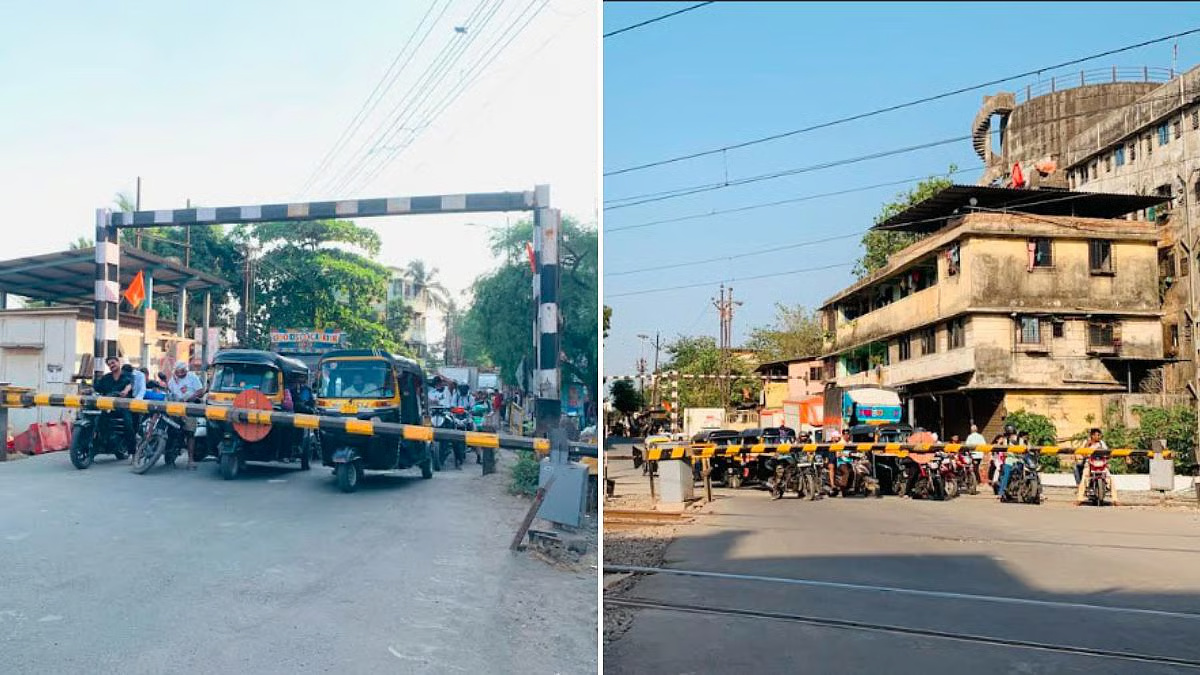
A critical mobility upgrade in the Kalyan-Dombivli belt has moved forward with authorities initiating the procurement process for a long-delayed Dombivli railway overbridge, signalling a potential breakthrough in easing one of the region’s most persistent traffic bottlenecks. The proposed structure, to be built along Retibandar Road, is expected to improve east-west connectivity and reduce prolonged wait times at a busy rail crossing that has constrained daily movement for years. The project envisions a four-lane elevated corridor replacing an at-grade railway gate that frequently halts vehicular traffic for extended periods. Commuters travelling between residential and commercial zones in Dombivli often encounter delays of up to half an hour during peak rail operations, affecting work commutes, school travel, and access to essential services. Urban mobility experts note that such choke points are increasingly unsustainable in rapidly densifying suburban clusters.
Officials involved in the planning indicate that the Dombivli railway overbridge will be delivered within a two-year construction window once work begins. The design expansion from an earlier two-lane concept to a four-lane facility reflects rising traffic demand and the need for future-ready infrastructure. While the revision is expected to enhance capacity, it also underscores how delayed execution can lead to cost escalations and design recalibrations. From a civic perspective, the intervention is likely to have immediate benefits for emergency response systems. Ambulances and fire services, which currently face uncertainty at the crossing, are expected to gain uninterrupted passage once the grade separation is operational. This improvement in response reliability is particularly relevant in high-density neighbourhoods where timely access can be critical. Beyond commuter convenience, the project has broader environmental and economic implications. Prolonged idling at railway gates contributes to fuel wastage and localised air pollution—issues that cities across India are increasingly attempting to address.
By enabling smoother traffic flow, the overbridge could marginally reduce vehicular emissions and improve corridor-level air quality, aligning with wider climate resilience goals. However, urban planners caution that isolated infrastructure upgrades must be integrated into a larger transport strategy. Without parallel investments in public transport, pedestrian access, and traffic management systems, flyovers alone may offer only temporary relief. “Grade separators solve immediate congestion, but long-term sustainability depends on reducing overall vehicle dependency,” said a transport analyst familiar with suburban planning challenges. The Dombivli railway overbridge also reflects the evolving dynamics of peri-urban growth in the Mumbai Metropolitan Region, where expanding residential developments are placing new pressure on legacy infrastructure. Improved connectivity can enhance land values and unlock economic activity, but it also necessitates careful planning to ensure inclusive and balanced urban expansion.
As the project progresses from tendering to execution, attention will likely turn to timelines, construction management, and minimising disruption during the build phase. For residents, the success of this long-awaited intervention will ultimately be measured not just in reduced travel time, but in how effectively it contributes to a safer, more efficient, and environmentally responsive urban transport network.