Mumbai Pune Missing Link Boosts Safer Connectivity
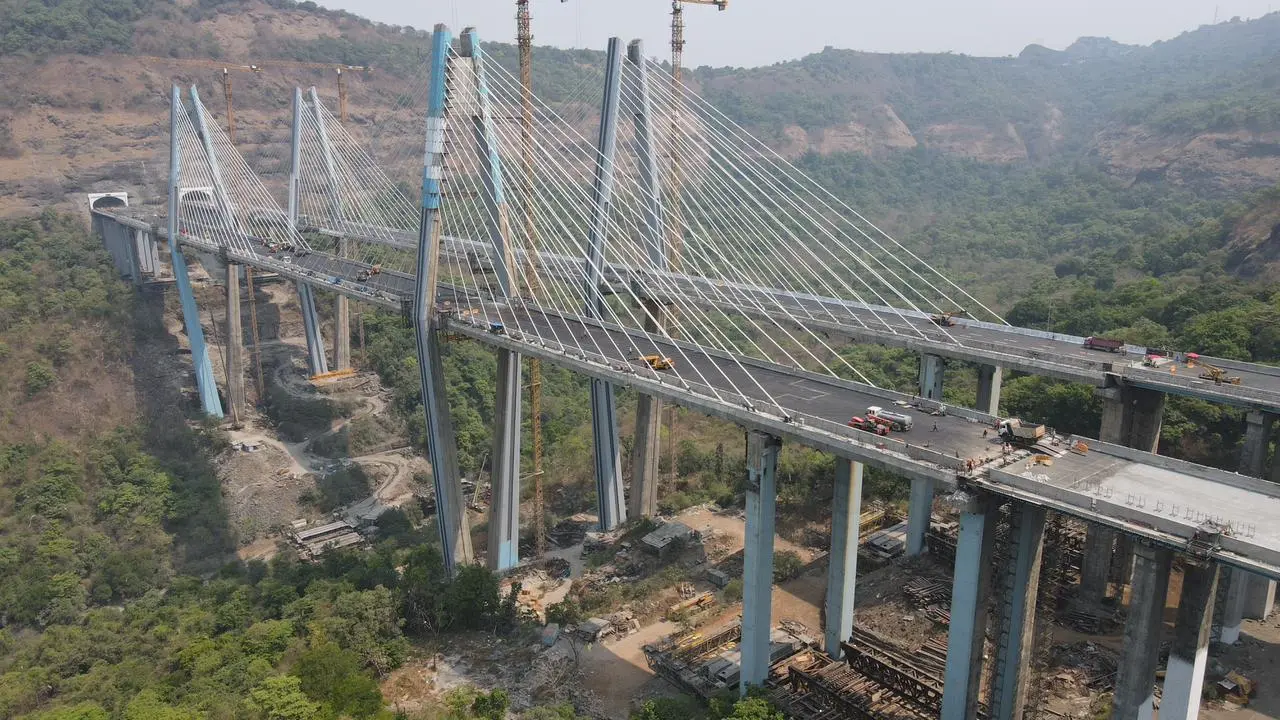
A major upgrade to the Mumbai–Pune corridor has been opened to traffic, promising faster and safer journeys between two of Maharashtra’s most economically significant cities. The newly operational stretch, known as the Mumbai Pune Missing Link, introduces an alternative alignment that bypasses the accident-prone ghat section, cutting travel time and easing long-standing congestion bottlenecks. The infrastructure intervention reduces the overall travel distance while enabling higher driving speeds through a combination of tunnels and elevated bridges. For commuters and freight operators, the Mumbai Pune Missing Link is expected to shorten journey duration by up to half an hour, a shift that could significantly improve logistics efficiency along one of India’s busiest intercity routes.
The existing expressway alignment, particularly in the hilly sections near Lonavala and Khandala, has historically faced capacity constraints. Traffic from multiple corridors converges along a narrow stretch, leading to frequent slowdowns. Seasonal challenges such as landslides and heavy rainfall have further complicated travel, often resulting in disruptions that ripple across regional supply chains. Urban mobility experts suggest that the new alignment addresses both safety and reliability concerns. By diverting a portion of traffic through tunnels carved beneath the Western Ghats, the project reduces exposure to sharp curves, steep gradients, and weather-related risks. Elevated sections spanning valleys have also been designed to minimise environmental disturbance, although long-term ecological monitoring will remain crucial. From an economic perspective, improved connectivity between Mumbai and Pune strengthens a critical growth axis that supports industries ranging from manufacturing to information technology.
Reduced travel times can enhance labour mobility, support tourism flows, and lower transportation costs for goods. Over time, such infrastructure upgrades may influence real estate patterns, encouraging development along emerging nodes connected by the corridor. However, the project also raises questions about balancing infrastructure expansion with environmental sustainability. The Western Ghats, a sensitive ecological zone, requires careful management to ensure that construction and increased traffic do not adversely affect biodiversity or natural drainage systems. Experts emphasise the need for continuous monitoring, especially during monsoon months when the region is most vulnerable. The Mumbai Pune Missing Link also reflects a broader shift towards engineering-intensive solutions in urban transport planning. While such projects deliver immediate gains in speed and capacity, planners argue that they must be complemented by investments in public transport and multimodal systems to ensure long-term sustainability.
As the new stretch becomes fully integrated into daily traffic patterns, its impact will be closely observed by policymakers and industry stakeholders. If successful, it could serve as a model for addressing similar bottlenecks across India’s expanding highway network, where efficiency, safety, and environmental considerations increasingly intersect.