


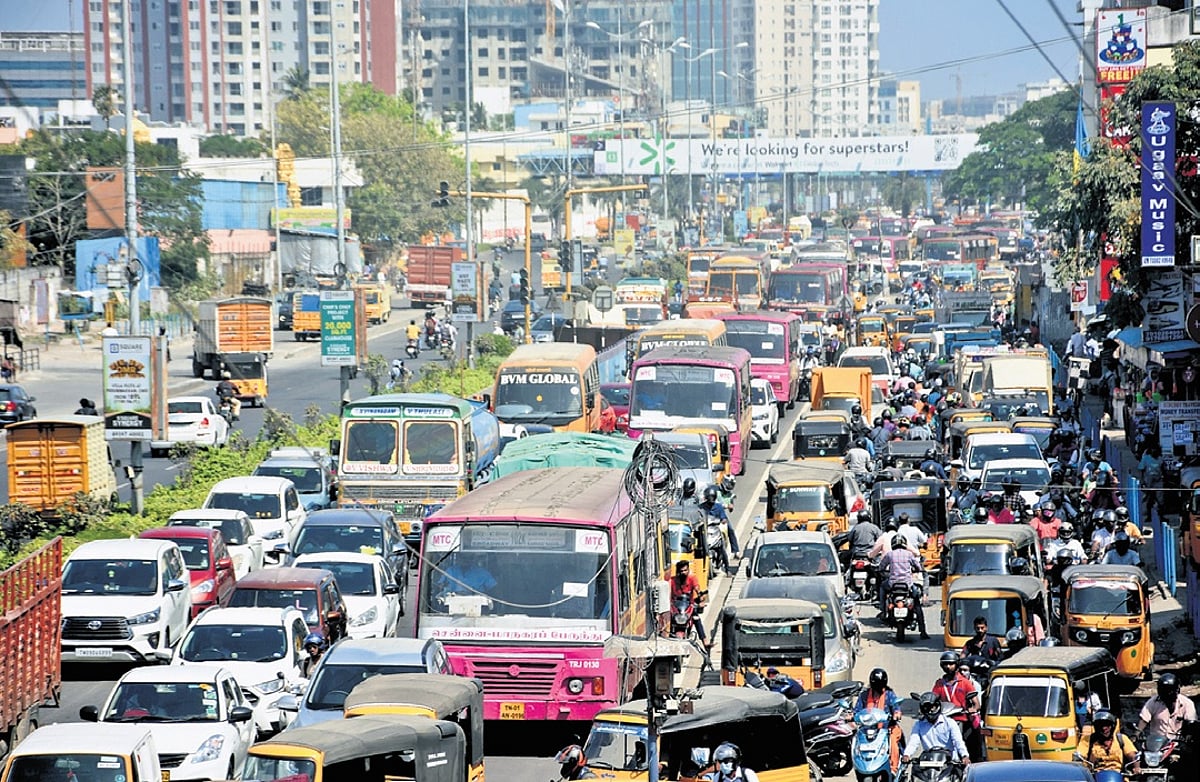
As daily routines resumed across Chennai following a recent electoral cycle, traffic authorities intensified monitoring at key congestion points to manage rising vehicular pressure. The move reflects growing concerns around urban mobility in one of India’s fastest-expanding metropolitan regions, where traffic bottlenecks continue to strain both infrastructure and commuter productivity.
Officials have deployed personnel across critical intersections and arterial roads identified as recurring choke points. These areas, often linked to commercial hubs, transit corridors, and dense residential clusters, experience a sharp surge in traffic volumes during peak hours. The increased presence aims to streamline vehicular movement, prevent gridlocks, and ensure smoother transitions during the post-election return to routine travel patterns.The current focus on Chennai traffic monitoring highlights a broader urban challenge: balancing rapid motorisation with limited road capacity. Over the past decade, Chennai has witnessed steady growth in private vehicle ownership, while public transport systems struggle to keep pace with expanding urban sprawl. As a result, congestion has become a daily reality, affecting commute times, fuel consumption, and overall urban efficiency.Urban planners note that such short-term traffic management measures, while necessary, point to deeper systemic issues.The reliance on manual intervention at intersections underscores gaps in integrated traffic management systems, including adaptive signalling, real-time data analytics, and multimodal transport coordination.
Experts argue that without sustained investment in smart mobility solutions, congestion mitigation will remain reactive rather than preventive.From a sustainability perspective, prolonged traffic congestion carries significant environmental costs. Idling vehicles contribute to higher emissions, worsening air quality in densely populated zones. In a coastal city already vulnerable to climate risks, reducing transport-related emissions is critical to advancing long-term resilience goals.Strengthening public transport networks, encouraging non-motorised mobility, and improving last-mile connectivity are seen as essential steps towards a low-carbon urban future.There is also a human dimension to the issue. For daily commuters, especially those reliant on informal or intermediate transport modes, traffic delays translate into lost time, increased travel stress, and reduced economic productivity. Gender-sensitive mobility planning and safer pedestrian infrastructure remain key gaps in ensuring equitable access to the city’s transport systems.The emphasis on Chennai traffic monitoring in the immediate term may ease congestion at select junctions, but it also underscores the urgency for structural reforms. Integrated urban mobility planning, backed by technology and policy alignment, will be central to addressing the city’s long-standing traffic challenges.
As Chennai continues to grow as a major economic and cultural hub, the effectiveness of its transport systems will play a defining role in shaping its liveability, environmental footprint, and inclusive growth trajectory. The coming months will test whether current interventions evolve into a more comprehensive mobility strategy or remain limited to periodic congestion control efforts.
Also Read:Bengaluru Smart Manufacturing Centre Boosts Industry Innovation
