


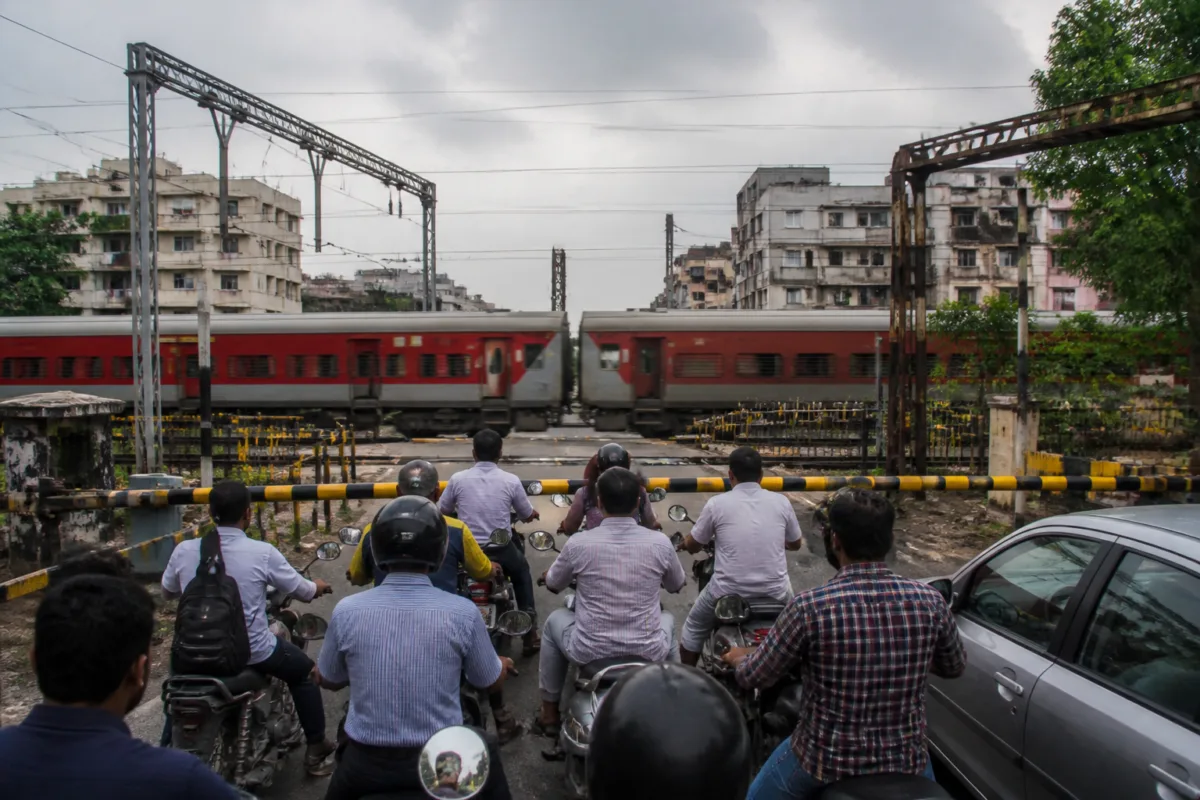
Ahmedabad’s plan to eliminate railway level crossings has run into major infrastructure constraints at nine locations, where narrow roads, limited land, underground utility lines and existing metro corridors are complicating proposals for overbridges or underpasses. The issue affects vehicle movement, waiting times and safety whenever railway gates are closed for passing trains.
The Railway has sent proposals for grade separation at several crossings to the Ahmedabad Municipal Corporation and other concerned authorities. However, the municipal corporation has indicated that some locations do not have sufficiently wide town-planning roads or the space required to build approach roads leading to a bridge.
The constraints vary from one crossing to another. In some areas, underground water and sewerage lines make the construction of an underbridge difficult. In others, the presence of a metro corridor above the railway alignment creates complications for an overbridge. These limitations have resulted in proposals being held up or authorities indicating that the existing arrangement may have to continue at certain locations.
The two crossings where the Railway’s Gati Shakti department has begun the process for overbridges are LC-308 at Maninagar and LC-305 at Vatva-Vinzol. Both are located on the Ahmedabad–Vadodara railway section and experience substantial movement of both trains and road vehicles. When the gates close, motorists must wait until railway traffic has cleared the crossing.
The Maninagar crossing is reported to have particularly high train movement. Despite the need for a grade-separated solution at both locations, narrow roads and insufficient land have been identified as obstacles. The process can move forward after the relevant authorities provide the necessary response and approvals.
At LC-1 in Asarwa on the Ahmedabad–Himmatnagar railway section, the Railway has proposed an overbridge, but the municipal corporation has stated that the town-planning road is narrow and there is not enough space for approach roads. The proposal has therefore not advanced, with the existing arrangement proposed to continue for now. A separate proposal for LC-10 at Naroda GIDC has also stalled after the GIDC did not accept it.
Five crossings on the Sabarmati–Botad railway section within Ahmedabad have also been identified as difficult locations. These are LC-8 Vijaynagar, LC-9 Sanghvi High School, LC-10 Naranpura, LC-12 Navrangpura and LC-18 Bhudarpura. Proposals for overbridges or underpasses have been sent for these crossings, but the process has not progressed because of inadequate responses and site constraints.
The Railway’s gate-free objective is intended to reduce interruptions to train operations, save motorists’ time and improve safety at level crossings. For Ahmedabad, however, the proposals show how existing urban infrastructure, buried utility networks, restricted road widths and overlapping transport corridors can limit the available options. The next step for the Maninagar and Vatva-Vinzol projects will depend on responses and approvals from the concerned authorities, while the other locations require further coordination between the Railway, the municipal corporation and relevant local agencies.

