


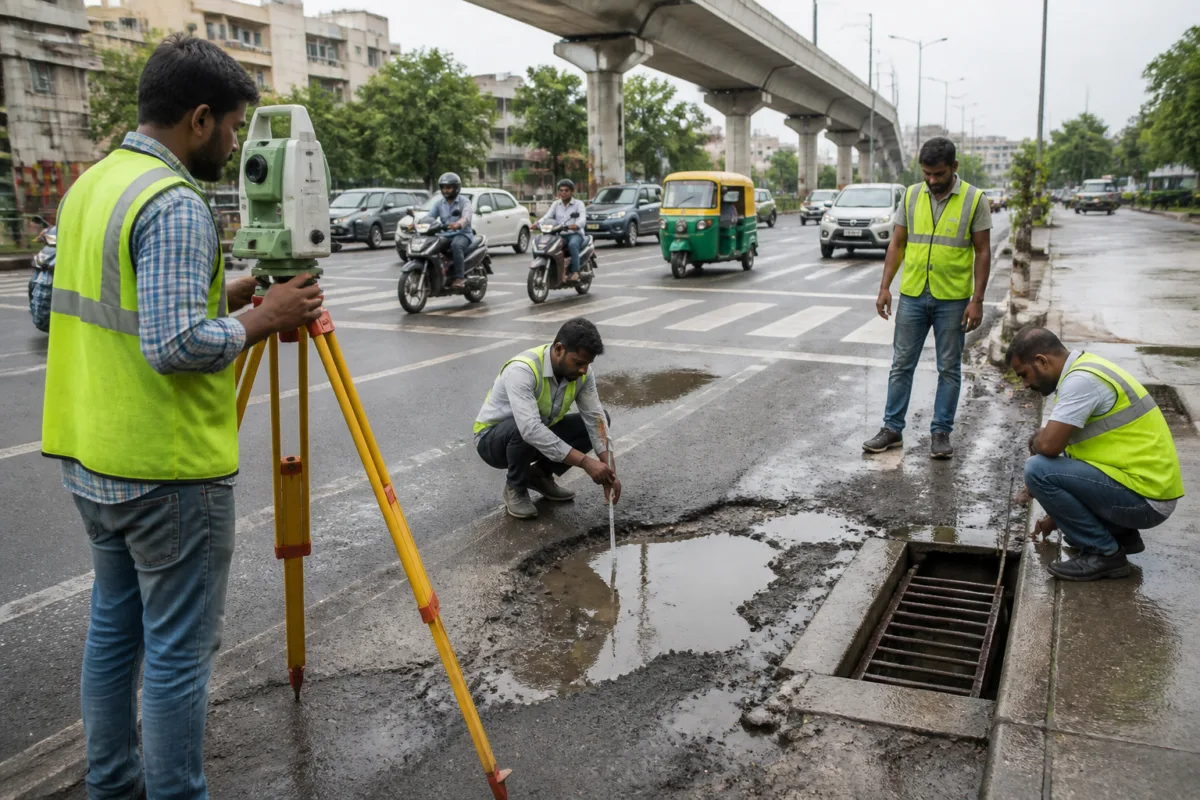
Ahmedabad and other urban local bodies in Gujarat will have to survey every road before and after the monsoon and act on the findings under new state guidelines aimed at improving road quality, safety and infrastructure planning, according to a report by Nav Gujarat Samay citing municipal engineering sources.
The guidelines place particular emphasis on recording the condition of roads before work begins and after the monsoon. Municipal authorities have also been instructed to ensure that manholes are built at the correct level after a road is constructed, addressing a recurring problem in which raised road surfaces leave manholes low or create access and drainage hazards.
The state government’s urban development mission has issued the guidelines covering road construction, street and junction design, signage and related urban infrastructure. The report said some of the practices are already being followed by municipal authorities, while the new directions set out more specific standards for road quality and time-bound repairs.
Under the guidelines, large cracks or joint failures on river bridges, railway bridges and flyovers will require immediate action. Damaged concrete surfaces must be repaired within 15 days, while smaller patchwork repairs must be completed within 30 days. Small potholes on roads are to be repaired immediately, and roads with potholes considered dangerous to citizens must be restored within 48 hours.
The instructions also require municipalities to strengthen repeatedly damaged drainage and storm-water lines, as well as manholes, before a road is rebuilt. Road surveys will have to record the existing surface and the thickness of the underlying layers. Levels near building entrances and residential societies must also be documented so that road resurfacing does not raise the carriageway while leaving homes and societies at a lower level.
The guidelines identify several locations where reinforced cement concrete roads should receive priority. These include areas with weak soil, high groundwater levels or a risk of waterlogging; industrial zones with heavy vehicle movement; bus rapid transit system corridors; roads that repeatedly develop potholes; accident-prone stretches; and locations where frequent repairs have already resulted in high expenditure.
The directions link road maintenance to the condition of supporting infrastructure rather than treating resurfacing as a standalone activity. Repairing or strengthening drainage lines and manholes before road construction is intended to reduce the likelihood of newly laid surfaces being opened again for utility repairs. The report did not specify a single statewide completion deadline for the first round of surveys or identify the municipal roads that will be covered first.

