


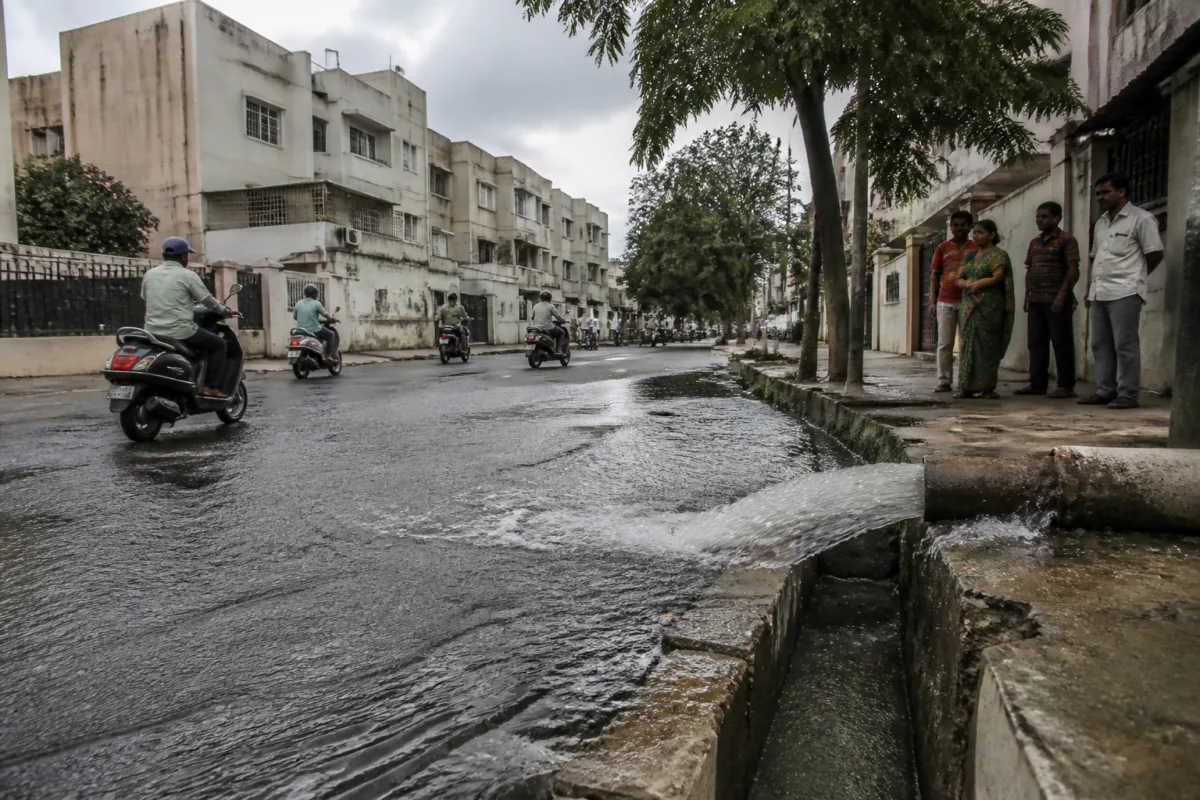
Ahmedabad is facing a damaging water-management contradiction: residents in several areas are receiving water at low pressure during supply disruptions while broken drinking-water pipelines are allowing large volumes of treated water to flow into roads and drains. The reported leakages have continued for days in parts of east Ahmedabad, creating slippery roads and raising concerns about accidents and interrupted daily supply.
Gujarat Samachar – Ahmedabad reported that water cuts were imposed in different parts of the city on October 25, even as pipeline failures were reported in Behrampura, Shahpur Darwaja, Bapunagar and Khokhra. The report said the damaged lines were allowing hundreds or thousands of litres of clean water to be wasted, with water flowing across roads and eventually entering drains.
In Bapunagar, a drinking-water pipeline near Chandodiya Police Chowki and Block No. 25 has reportedly remained damaged for about a week. The leakage has left water flowing continuously onto the road, according to the report. Residents are said to have raised the issue with the municipal authorities, but repair work had not been completed when the report was published.
A similar situation has been reported in Khokhra’s Sarvodaynagar, outside Gujarat Housing Board Block No. 167. The pipeline there has reportedly been leaking for around 20 days. The prolonged flow has created standing water and made the road surface slippery, increasing the risk of two-wheelers and other vehicles losing control.
The leakage is also affecting water availability in surrounding homes. According to the report, residents in the affected areas are receiving water at very low pressure because part of the supply is escaping through the damaged lines before it reaches households. That can disrupt basic activities such as cooking, cleaning and bathing, particularly when scheduled supply cuts are already limiting access.
The report also identified leakage complaints in Danilimda, Amraiwadi and Shahibaug. It said residents in several east Ahmedabad neighbourhoods had repeatedly approached the municipal administration over such failures. The report contrasted the response in these areas with west Ahmedabad, where it said even relatively minor complaints are often addressed more quickly. The municipal corporation’s response to the reported complaints was not included in the supplied material.
The immediate problem is not limited to water loss. Continuous discharge onto public roads can damage road surfaces, obstruct movement and create avoidable safety risks. It also exposes a gap between water-supply operations and pipeline maintenance: a city may impose cuts to manage available supply while treated water is simultaneously lost through unrepaired distribution infrastructure.
The reported incidents highlight the importance of timely detection and repair of failures in local water networks. For residents, the next step is whether the Ahmedabad Municipal Corporation repairs the lines in Bapunagar, Khokhra and the other named neighbourhoods, restores normal pressure and addresses the road conditions created by the leaks.

