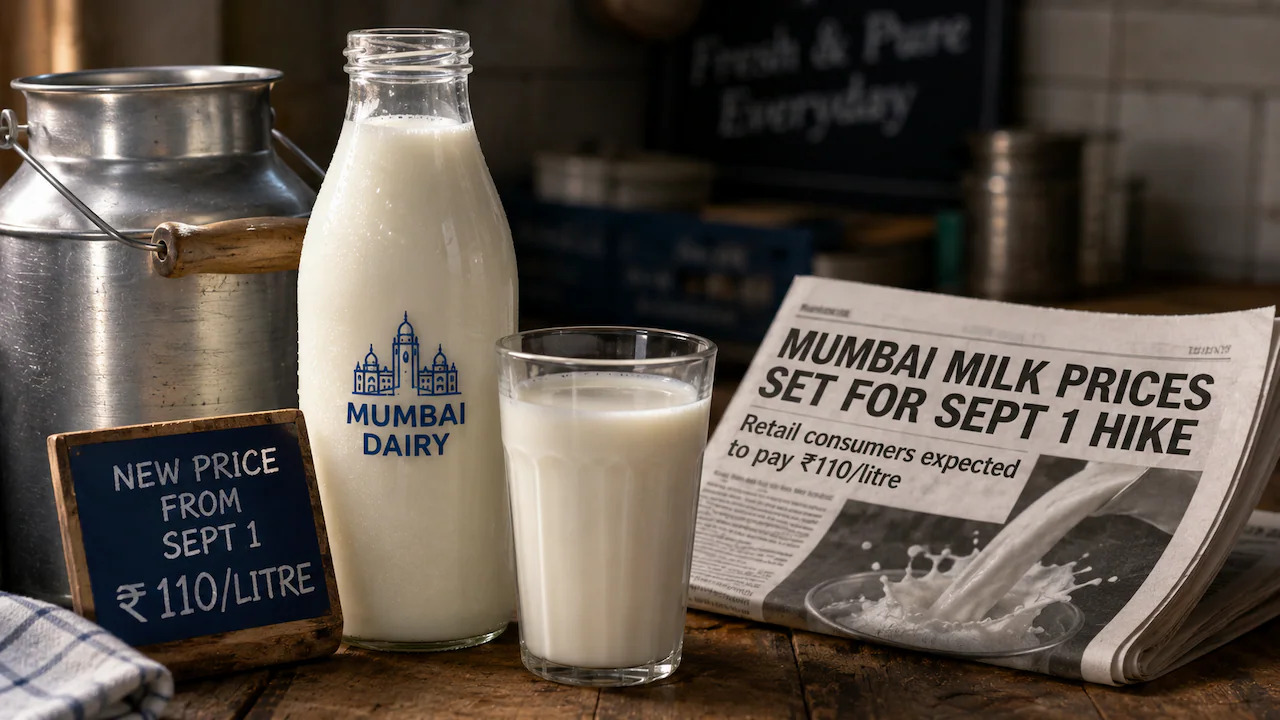
Mumbai households will face a higher daily food bill from September 1, as wholesale prices for milk supplied by dairies and local farms increase by ₹9 a litre. The revised rate will take the wholesale price from ₹93 to ₹102, with direct farm-supplied milk potentially reaching ₹110 a litre. The increase comes ahead of the festive season, when household food spending typically rises. The decision by the Bombay Milk Producers Association (BMPA) reflects mounting costs across the dairy supply chain. Producers have pointed to higher expenditure on cattle feed and animal maintenance as key reasons for the revision. While the increase is at the wholesale level, its effect is likely to move through distributors and retailers before reaching consumers.
For families buying milk every day, even a seemingly modest per-litre increase can accumulate quickly. A household purchasing two litres daily would spend about ₹540 more over a 30-day month at the new wholesale rate, before any additional retail margin is applied. The impact is likely to be more pronounced for larger families, small food businesses and households that use milk extensively in tea, curd and other staples. The Mumbai milk price increase also highlights the pressure facing the city’s informal and fragmented dairy economy. Local farms and smaller suppliers operate alongside large packaged-milk businesses, with costs influenced by feed prices, labour, transport, veterinary care and the availability of cattle. Changes in these inputs can have a direct effect on the price paid by consumers. Industry observers note that dairy pricing also has an urban dimension. Mumbai depends on a steady supply chain that moves perishable products into a densely populated city every day. Higher transport and operating expenses can add to the final cost, particularly when milk is distributed through multiple intermediaries.
For consumers, the immediate concern is affordability. Milk is a regular household purchase rather than a discretionary expense, meaning a price increase can reduce the amount families have available for other essentials. Small eateries, tea stalls, bakeries and sweet shops may also face higher input costs and could eventually adjust their own prices. The Mumbai milk price revision also raises questions about how dairy production can remain financially viable without repeatedly transferring higher costs to urban consumers. Improving feed efficiency, reducing supply-chain losses and strengthening local cold-chain infrastructure could help contain some long-term pressures while supporting producers.
The September increase will therefore be felt beyond the milk packet or daily delivery. Its broader significance lies in the resilience of the food supply chain serving one of India’s largest urban economies. Monitoring retail pass-through, producer costs and consumer affordability will be important as the revised rates take effect.