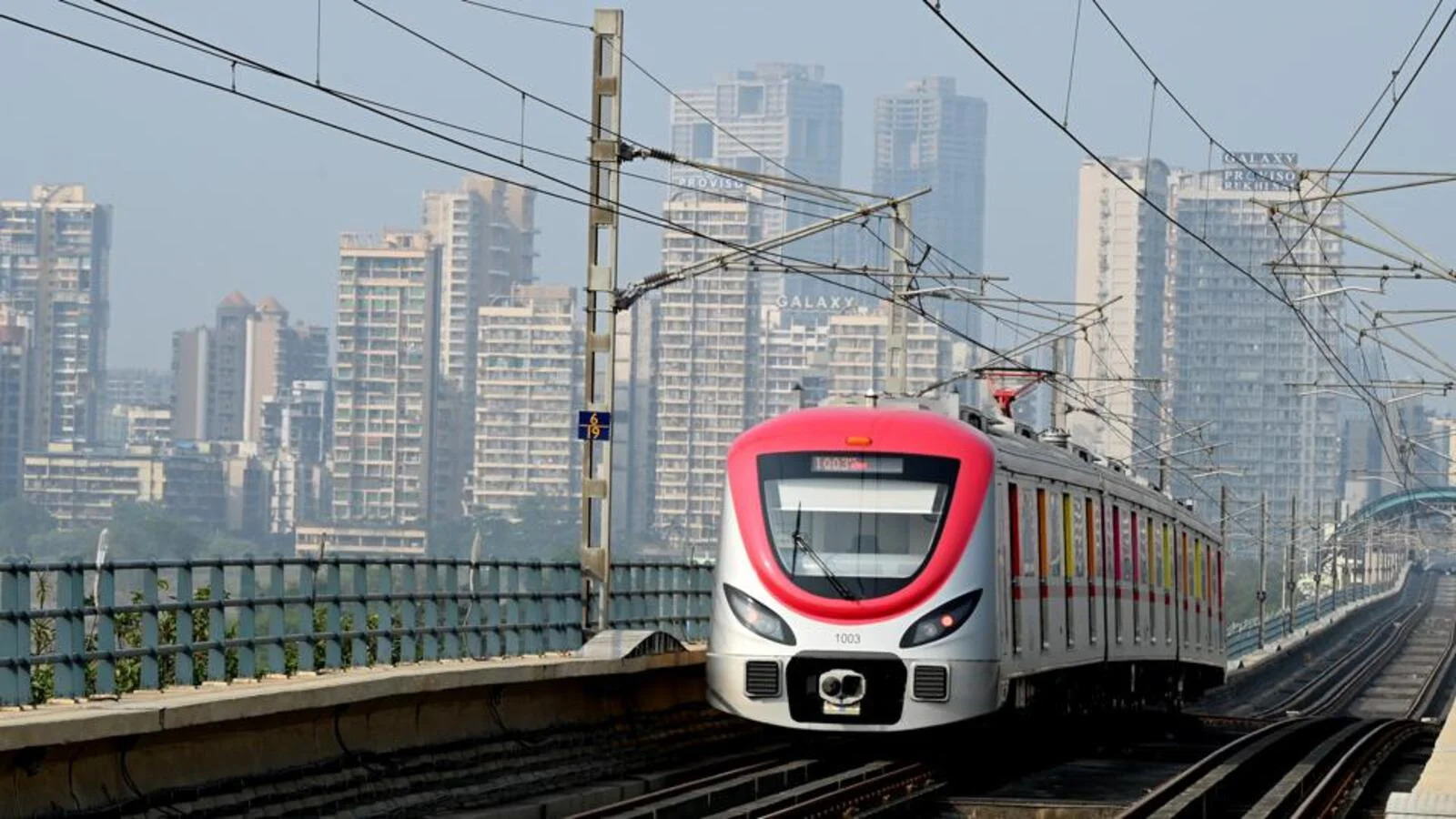
The Centre has cleared revised alignments for the unfinished sections of Mumbai Metro Line 5, opening the way for the corridor to move deeper into Kalyan and Ulhasnagar. The decision could unlock stalled construction across the Thane-Bhiwandi-Kalyan belt, where growing residential and employment clusters have increased pressure on road and suburban rail networks. The approval, issued on August 28, covers three revised stretches: Dhamankar Naka–Durgadi, Durgadi–Kalyan and Bhoirwadi–Ulhasnagar. The Mumbai Metropolitan Region Development Authority (MMRDA) is expected to move towards construction tenders, although ground-level progress will still depend on detailed engineering, land-related clearances and project execution.
The Mumbai Metro Line 5 extension is being developed as part of a wider effort to strengthen eastward connectivity across the metropolitan region. The original corridor is planned to span 24.9 km between Thane and Kalyan through Bhiwandi, with the overall project cost estimated at about ₹8,400 crore. The revised Dhamankar Naka–Durgadi section will run for 10.48 km and include six stations. A further 11.82-km Durgadi–Kalyan section is planned with seven stations. Beyond Kalyan, the approved Bhoirwadi–Ulhasnagar extension will add another 5.27 km to the network. For commuters, the significance is less about the length of the corridor and more about where it connects. Kalyan and Ulhasnagar have expanded substantially as residential markets, while Bhiwandi has developed into a major logistics and warehousing centre. Better mass-transit links could reduce dependence on road-based travel and make cross-region journeys less reliant on private vehicles.
Urban transport specialists, however, caution that a metro corridor alone does not guarantee a shift towards sustainable mobility. Station access, pedestrian infrastructure, feeder buses and safe interchange facilities will determine how easily residents can use the new line. Poor last-mile connectivity can limit the benefits even when the main rail infrastructure is completed. The Mumbai Metro Line 5 extension also has implications for development patterns. Reliable rapid transit can improve access to jobs and services while influencing where new housing and commercial activity becomes viable. That makes coordinated land-use planning important, particularly around future stations, to prevent unplanned growth and pressure on existing civic infrastructure. The first section of Line 5 between Kapurbawdi and Dhamankar Naka is already under construction and is nearing completion. With the revised alignment now cleared, attention shifts towards tendering and construction of the remaining stretches.
The next test will be execution. Timely land coordination, integrated station planning and strong links with existing transport modes will determine whether the approved extension becomes a practical regional mobility network rather than another isolated infrastructure corridor.