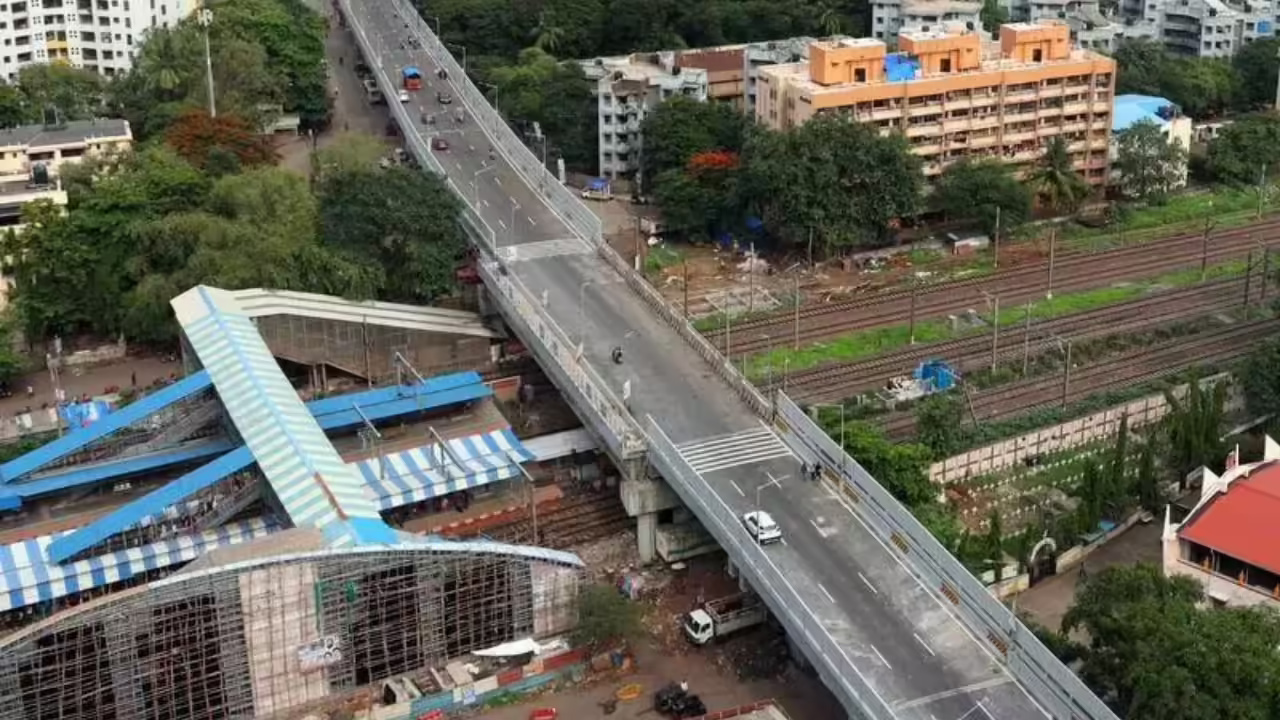
Mumbai Flyover Arm Draws Wet Weather Safety Concerns
A newly opened flyover connection in Goregaon West is facing scrutiny after two-wheeler users reported skidding on its road surface, particularly when the pavement is wet. The complaints on the Relief Road-bound arm of the Mrinaltai Gore Flyover raise a wider question for Mumbai’s road network: whether surface design and maintenance are keeping pace with the safety demands of mixed traffic. The affected structure is a 750-metre, four-lane arm that connects the existing flyover system with Ram Mandir Road and Relief Road. It opened to traffic on June 6 after a prolonged construction period and represents a significant addition to road capacity in western Mumbai. The project cost was reported at around ₹248 crore.
However, road users have since pointed to sections where the surface appears unusually smooth. Some commuters have also reported loose grit, patches and variations in the pavement. For motorcycles and scooters, these conditions can become more problematic during monsoon showers, when water reduces tyre-road friction. The immediate concern is therefore not simply the quality of the finished surface but how it performs under real operating conditions. Flyover road safety depends on factors including skid resistance, drainage, road markings, lighting and the transition between different pavement sections. A surface that performs adequately in dry weather can present a different risk during rainfall. Urban road specialists say two-wheelers deserve particular consideration in Mumbai because they form a substantial share of daily traffic and are more vulnerable to loss of control than enclosed vehicles. On elevated structures, where escape space can be limited, even a relatively minor skid can have serious consequences.
The complaints also highlight the importance of post-opening monitoring. Large transport projects are often assessed through engineering inspections before being opened, but actual commuter behaviour can reveal problems that are difficult to identify during construction. Authorities may need to examine friction levels, drainage performance and the condition of the wearing course before deciding whether corrective treatment is necessary. For Mumbai, this has implications beyond one flyover. The city is continuing to add elevated roads and junction improvements as it attempts to manage congestion and shorten travel times. Yet expanding road capacity without consistently applying people-centred safety standards can shift risk rather than resolve it.
A sustainable urban transport system must account for pedestrians, cyclists, public transport users and two-wheeler riders alongside cars. Flyover road safety should consequently be measured not only by traffic movement but also by how reliably the infrastructure performs during rain and other changing conditions.