


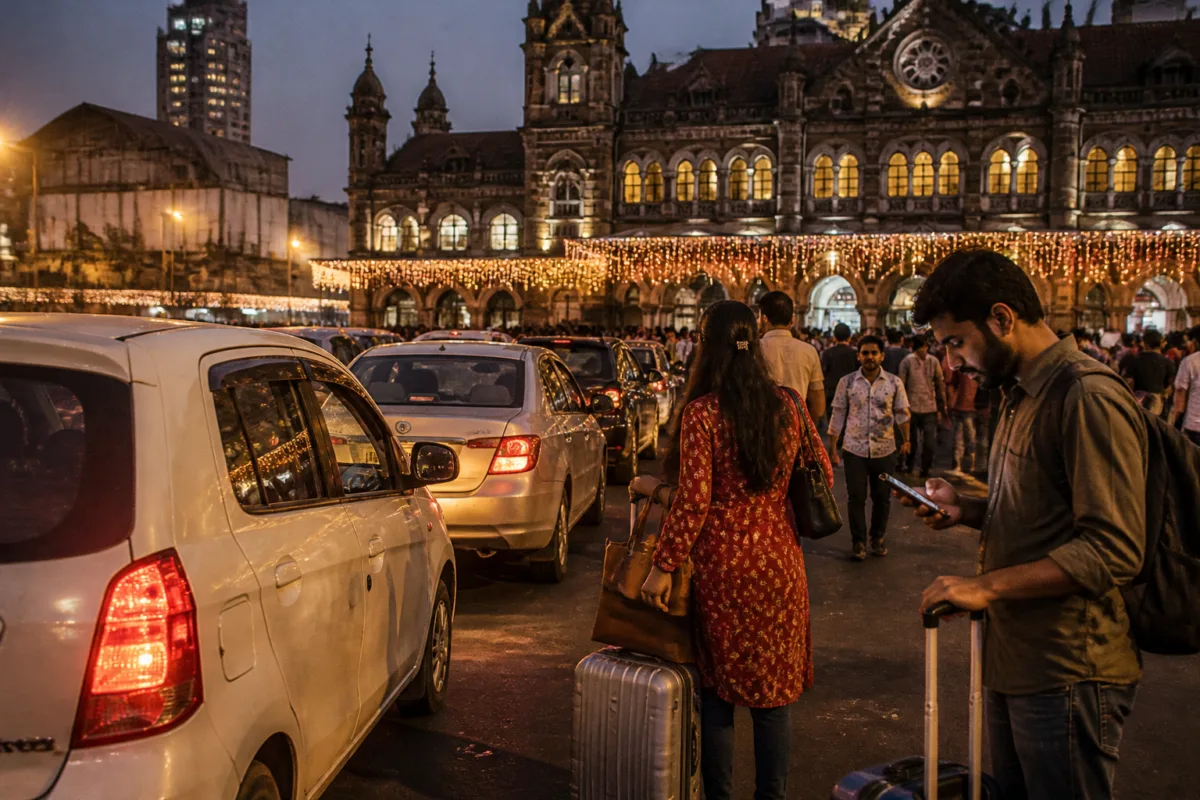
Mumbai app cab drivers are facing growing passenger complaints during Diwali over alleged demands for extra money after accepting rides, with some commuters saying bookings were cancelled when they refused to pay beyond the fare shown on the app.
The issue has been reported during the festive travel rush, when residents are travelling to relatives’ homes, markets, malls, railway stations, airports and tourist locations. Passengers using Ola, Uber and Rapido generally see a fare before booking a ride. However, according to complaints cited in the report, some drivers have asked for an additional tip or payment after accepting the booking.
Passengers said the demand is sometimes made within a few minutes of the ride being accepted. If the commuter declines, the driver allegedly cancels the booking, forcing the passenger to search for another vehicle. The problem is said to be more visible at airports, railway stations, commercial centres and other crowded locations where demand for app-based taxis rises sharply during the festival period.
The cancellations create both financial and operational difficulties for commuters. A passenger who has already waited for a vehicle may not have an immediate alternative, particularly during peak travel hours or in areas where public transport is crowded. Some passengers reportedly agree to pay an additional amount to avoid losing time or facing further difficulty during the festive rush.
The report quoted Bhandup resident Swapnil Shelke as saying that drivers asking for extra money after accepting a ride, and cancelling when passengers do not agree, is wrong. He also said that complaints had not resulted in firm action, which he believed was encouraging such behaviour.
The complaints raise questions about the control that app-based transport companies exercise over the terms displayed to passengers and the conduct of drivers after a booking is accepted. When a rider books a vehicle based on a fare shown on the platform, a subsequent demand for an additional payment changes the conditions of the transaction, according to the concerns raised by commuters.
The report also referred to instructions from the central and state governments stating that drivers should not seek tips before a journey. Tips are described as voluntary and should be offered only after the trip is completed. Under this principle, a passenger should not be required to pay an additional amount to secure or retain a ride.
The reported experience also points to a wider difficulty in Mumbai’s app-based mobility system: passengers may have limited practical choice once a driver accepts a booking. Although a commuter can cancel and search again, the replacement vehicle may not arrive quickly, particularly at locations with heavy demand. This imbalance can leave passengers vulnerable to demands that are not reflected in the original fare displayed by the platform.
The report said that in some cases vehicles were not being booked promptly when the displayed fare was ₹100 higher than the fixed fare for a route. It did not provide details of the affected routes or identify the companies or drivers involved in individual complaints. The immediate responsibility for monitoring such conduct remains with the app-based taxi companies, which are expected to prevent advance tip demands and arbitrary cancellations.

