


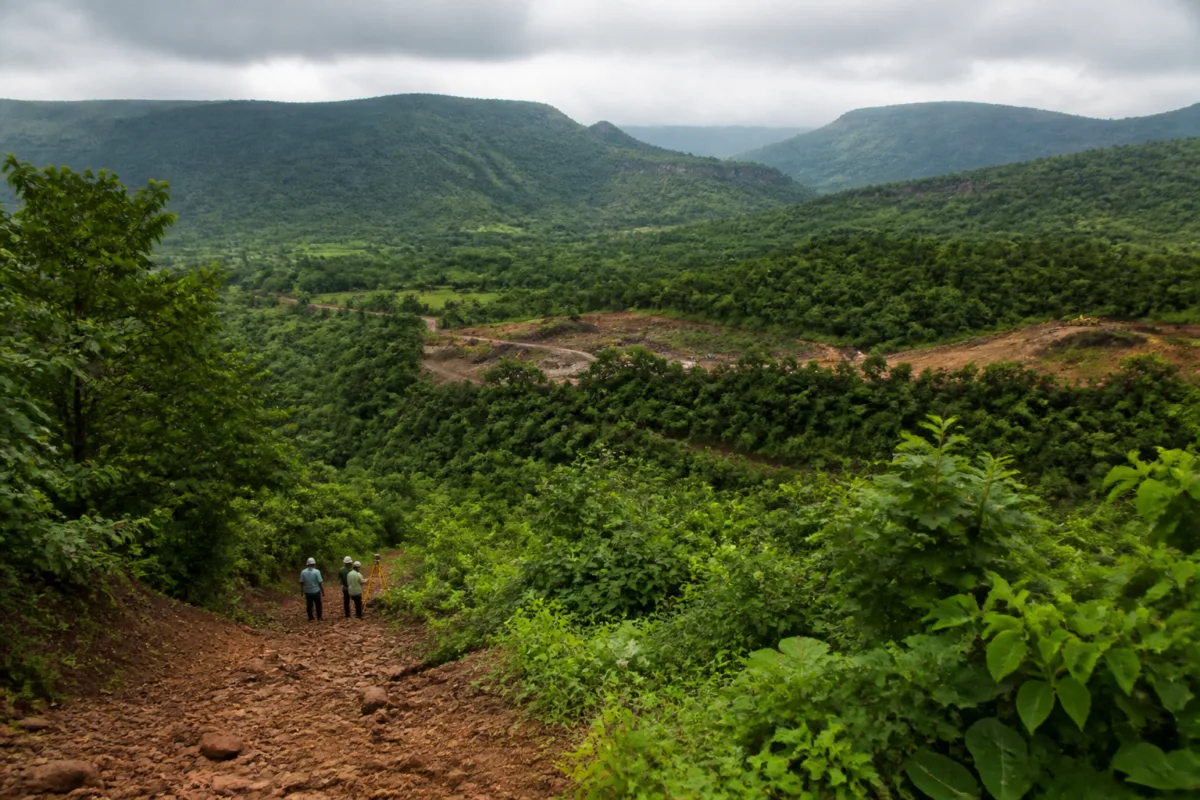
The proposed Adnadi pumped storage project in Maharashtra’s Amravati district has brought a difficult urban-infrastructure question into one of the state’s most ecologically sensitive landscapes: how should large energy projects be assessed when their land requirements overlap with wildlife movement routes and forest ecosystems? The 1,500 MW project, planned in the buffer area of the Melghat Tiger Reserve, involves two reservoirs and approximately 240.61 hectares in the areas of Adnadi, Bhandari and Jamli.
The project is being developed by Adani Hydro Ten Limited under an agreement with the Water Resources Department. The proposed investment is Rs 8,250 crore, while the developer has claimed that the project could create employment for 4,800 people. These figures establish the project’s economic scale. They do not, by themselves, settle the environmental question that has now become central to its public reception: how much forest will be affected, what ecological functions will be disrupted and whether those effects can be adequately mitigated.
Pumped storage projects use two reservoirs at different elevations. In the proposal described by Loksatta, the upper reservoir is planned at Kamapur in Chikhaldara taluka and the lower reservoir at Adnadi village. The installation is expected to include six reversible pump turbines: four units of 300 MW each and two units of 150 MW each, adding up to the planned 1,500 MW capacity.
This configuration means that the project is not limited to a power-generation structure at a single site. It requires reservoirs, water-related infrastructure, access and construction activity across a wider landscape. The proposed area covers parts of the Adnadi, Bhandari and Jamli localities, all identified in the report as being within or connected to the Melghat buffer landscape. The physical spread of such infrastructure is therefore as important as the headline capacity figure when its impact is assessed.
The concern raised by environmentalists is not only that trees may be cut. They have also pointed to the possibility that construction could obstruct wildlife movement routes through the buffer area. The report describes the buffer zone as a movement corridor for wild animals and highlights its biodiversity value. If construction fragments these routes, the effect may extend beyond the land directly occupied by reservoirs or project facilities. Roads, machinery, excavation and other construction activities can alter how animals move through a landscape, although the supplied report does not provide a quantified assessment of those impacts.
That missing assessment is significant. The report states that the Regional Forest Department has granted permission for the project, but it does not provide the text, conditions or scope of that permission. It also does not state the precise number of trees proposed to be felled, the duration of construction, the extent of permanent and temporary land use, or the mitigation measures attached to the approval. These details would be necessary to distinguish the project’s total footprint from the area that may be directly cleared or occupied.
The project’s location creates an institutional tension. Melghat’s core area is treated as a protected space for wildlife, while the proposed project lies in the buffer area. The distinction matters administratively, but it does not automatically mean that ecological effects stop at the boundary between the two zones. Wildlife movement, drainage, vegetation and habitat connectivity can operate across administrative lines. The environmental concern described in the report is therefore about the functioning of the wider landscape, not simply the legal status of one plot.
The issue is especially sensitive because, according to the report, villages in the core area of the Melghat Tiger Project are being rehabilitated for wildlife conservation. That creates an apparent policy contrast: residents are being relocated from the core area to protect habitat, while a major infrastructure project is being considered in the surrounding buffer area. The two processes may be governed by different approvals and objectives, but the contrast raises a question about how conservation priorities are applied across the full ecological system.
The economic case for the Adnadi project rests on its scale. A capacity of 1,500 MW and proposed investment of Rs 8,250 crore place it among major infrastructure proposals in the region. The projected employment figure of 4,800 also gives the project a local development rationale. Yet the report does not clarify whether that employment estimate refers to construction, long-term operations or both. It also does not establish how many jobs would be available locally, how long they would last, or how benefits would be distributed among communities near the site.
These distinctions matter because infrastructure projects generate different kinds of benefits and costs. Investment and employment are measurable economic claims. Forest diversion, wildlife disruption and biodiversity loss require a different assessment framework, including the duration, reversibility and geographic spread of impacts. The available information confirms that these concerns exist, but it does not provide enough evidence to weigh them against the project’s promised benefits.
The project also illustrates why energy infrastructure cannot be assessed only through its generation capacity. The six reversible pump turbines and two-reservoir arrangement point to a storage-oriented system, but the supplied report does not explain its operating cycle, water requirements, transmission arrangements or connection to the wider electricity network. Without those details, the public discussion remains focused on the project’s physical footprint and environmental implications rather than its full operational case.
For the authorities, the next stage should make the approval process legible to the public. The material supplied in the report does not identify the conditions imposed by the Regional Forest Department, the status of any additional environmental clearances, or whether a detailed study of wildlife movement and biodiversity has been completed. Environmentalists have specifically called for careful protection of the forest and an assessment of the damage that could result from the project. Those demands point to the need for evidence on the project’s direct and indirect impacts before construction advances.
The central policy question is not whether Melghat’s buffer area can be treated as identical to its core area. It is whether infrastructure planning recognises that a buffer can perform ecological functions that remain important even when development is legally proposed outside the core. A boundary-based approval may establish administrative eligibility, but it does not, by itself, establish that a project will have no meaningful effect on wildlife movement or biodiversity.
The available figures make the scale of the decision clear. The Adnadi pumped storage project proposes 1,500 MW of capacity, Rs 8,250 crore of investment, 4,800 claimed jobs and a land requirement of about 240.61 hectares. The project would involve two reservoirs and six reversible pump turbines in and around the Melghat buffer landscape. What remains unclear is equally important: the number of trees affected, the precise construction footprint, the conditions of forest permission, the findings of biodiversity studies and the safeguards planned for wildlife corridors.
Until those details are placed in the public domain, the project remains defined by two competing promises: expanded energy infrastructure and local economic activity on one side, and the protection of a forested wildlife landscape on the other. The evidence currently available confirms the scale of the proposal and the seriousness of the concerns, but not whether the proposed safeguards would be sufficient. The next important developments will be the disclosure of the project’s environmental assessments, approval conditions and detailed plans for managing forest diversion and wildlife movement.

