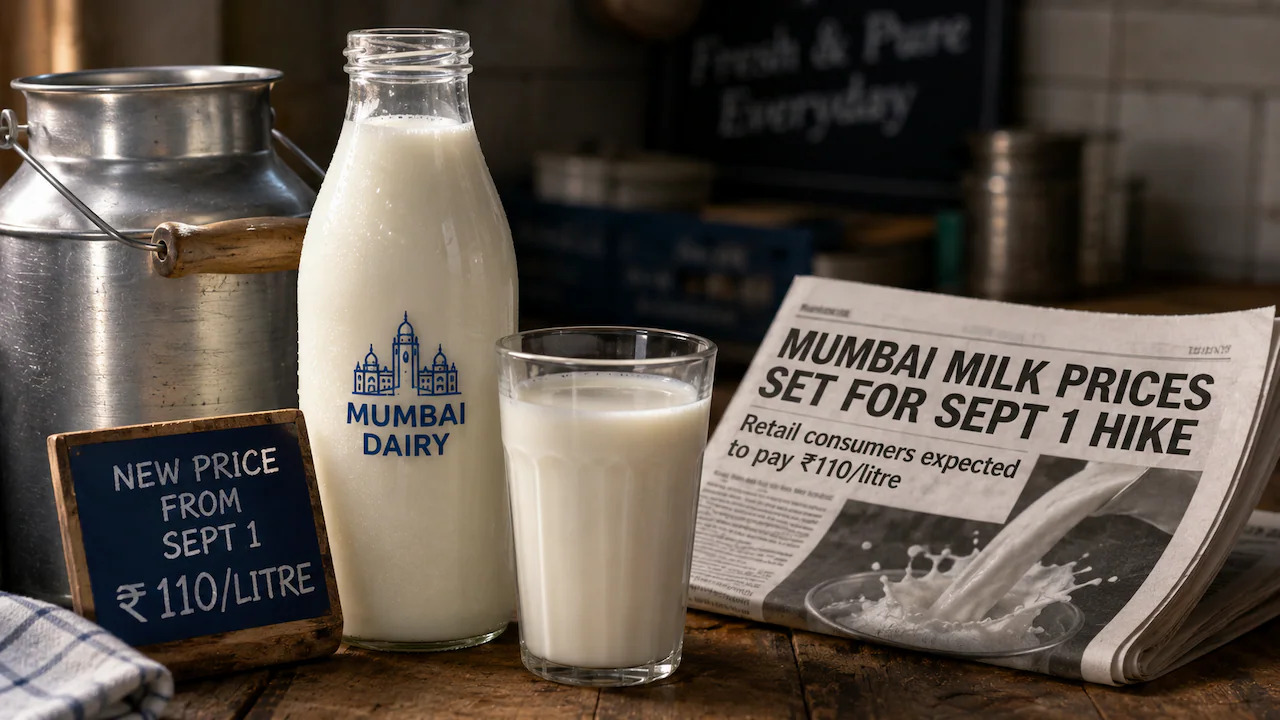
Mumbai households buying milk directly from local cattle sheds are set to face higher prices from September 1, after the wholesale rate for tabela milk was raised by ₹9 per litre. The Mumbai Milk Producers Association has revised the rate from ₹93 to ₹102, with the new price scheduled to remain until February 28, 2027. The increase comes as producers face higher feed, livestock and transport expenses ahead of the festive demand cycle. The wholesale revision could push retail prices towards ₹110 per litre, compared with roughly ₹100 currently. However, consumers may see different prices depending on individual suppliers, neighbourhood vendors and distribution costs. The distinction is important because the announced rate is a wholesale benchmark rather than a uniform retail price.
For producers, the main pressure is coming from the cost of maintaining cattle. Prices of several feed components, including green fodder, chuni, grain husks and oil cakes, have reportedly increased by up to 25% over the past year. Feed is a recurring operating expense for dairy businesses, meaning sustained increases can quickly reduce margins when retail prices remain unchanged. Transport and livestock maintenance have added to the pressure. Mumbai’s urban dairy network relies on regular movement of milk from cattle sheds to consumers, making fuel, logistics and animal-care costs relevant to the final price. Unlike packaged milk supplied through larger processing networks, Mumbai tabela milk operates through a more fragmented chain of producers and local sellers. The timing of the increase could also affect household budgets. Milk is a daily staple, so even a relatively small per-litre increase becomes more significant when multiplied across monthly consumption. The impact may be sharper for lower-income households and small food businesses that use substantial quantities of milk for tea, sweets and other products.
The latest decision is separate from Maharashtra’s recent statewide increase of ₹2 per litre for cow and buffalo milk. That revision followed discussions involving dairy producers and processors and applies through a different pricing mechanism. The Mumbai tabela milk adjustment therefore reflects a distinct local wholesale market rather than a direct extension of the state-level increase. There is also a wider urban sustainability question around Mumbai’s traditional dairy economy. Local milk production reduces some distribution distances but operates within a highly constrained metropolitan environment where cattle sheds, waste management, water use, fodder supply and animal welfare intersect with land-use pressures. Agricultural and dairy-sector analysts say sustained price increases need to be considered alongside productivity and supply-chain efficiency. Better feed management, local sourcing, improved cold-chain practices and more efficient transport could help producers control costs without placing the entire burden on consumers.
For now, the Mumbai tabela milk market is entering a new pricing period. With the revised wholesale rate in force from September, the next few months will show how much of the increase reaches consumers and whether higher input costs continue to reshape Mumbai’s everyday dairy market.