


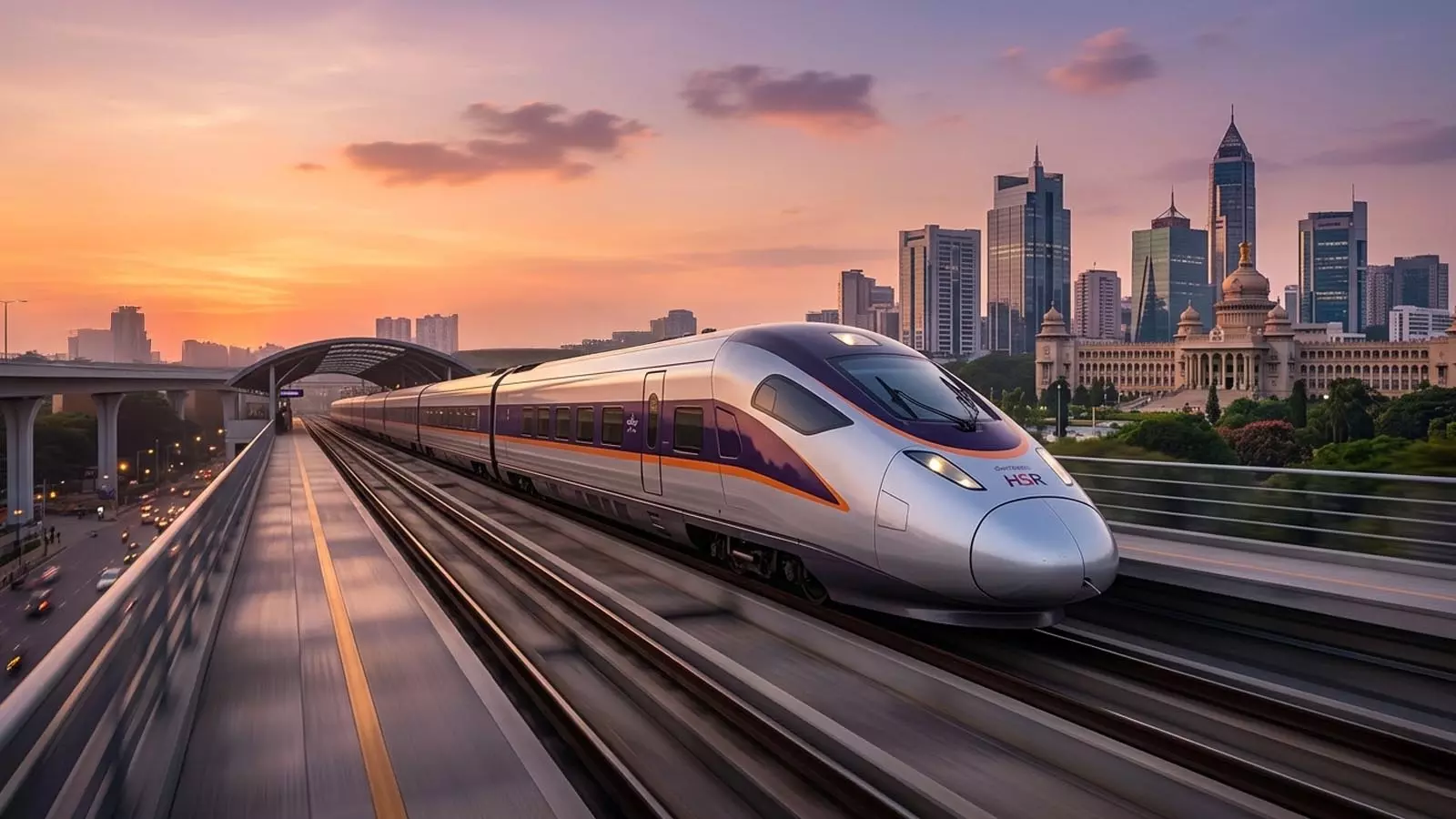
Strong passenger demand on the Vande Bharat Express route connecting Bengaluru and Chennai is highlighting shifting intercity travel patterns in southern India, even as newer premium rail corridors receive uneven commuter response.Railway officials and transport analysts say the Bengaluru-Chennai sector has emerged as one of the more successful high-speed daytime rail links due to sustained business travel, education movement, and growing economic integration between the two metropolitan regions.
The corridor connects major technology, manufacturing, logistics, and services hubs, creating strong year-round passenger demand.The performance of the Bengaluru Chennai Vande Bharat route is increasingly being viewed as evidence of rising preference for faster rail connectivity over conventional road travel on dense urban corridors. Mobility researchers note that premium rail systems can reduce travel uncertainty, improve productivity for business commuters, and offer lower-emission alternatives to short-haul aviation and highway traffic.At the same time, newer rail services introduced on less-established routes are reportedly seeing mixed occupancy levels, reflecting how passenger demand depends heavily on regional economic patterns, travel frequency, and urban connectivity ecosystems.Transport economists say premium rail infrastructure succeeds most effectively where strong commercial and demographic linkages already exist between cities.Bengaluru and Chennai share deep economic interdependence across technology services, electronics manufacturing, automobile supply chains, healthcare, and higher education networks, helping sustain high passenger movement throughout the year.
The Bengaluru Chennai Vande Bharat corridor also underscores broader changes underway in India’s mobility landscape. Expanding semi-high-speed rail systems are increasingly positioned as strategic tools to strengthen regional integration while reducing pressure on highways and airports facing rising congestion.Urban planners believe improved intercity rail can influence future metropolitan growth by encouraging more distributed economic development patterns. Faster connectivity may support satellite business centres, regional labour mobility, and balanced investment flows between neighbouring urban economies.However, sustainability experts caution that rail modernisation must remain integrated with wider public transport systems to maximise environmental and social benefits.Seamless last-mile connectivity, affordable fare structures, and multimodal integration are considered essential to ensuring premium rail services remain accessible beyond high-income business travellers.The varying response to newly introduced routes has also prompted discussion around long-term infrastructure planning priorities. Analysts argue that future rail investments should align closely with demographic trends, economic geography, and commuter behaviour rather than focusing solely on network expansion targets.
For Bengaluru, the continued popularity of the Chennai route reflects the city’s growing dependence on fast regional mobility networks that support its role within southern India’s broader economic ecosystem.As India accelerates investments in modern rail infrastructure, the challenge for policymakers will be balancing speed and expansion with affordability, sustainability, and regional inclusiveness across an increasingly interconnected urban landscape.
Also Read:Bengaluru Civic Infrastructure Gaps Frustrate Commuters
