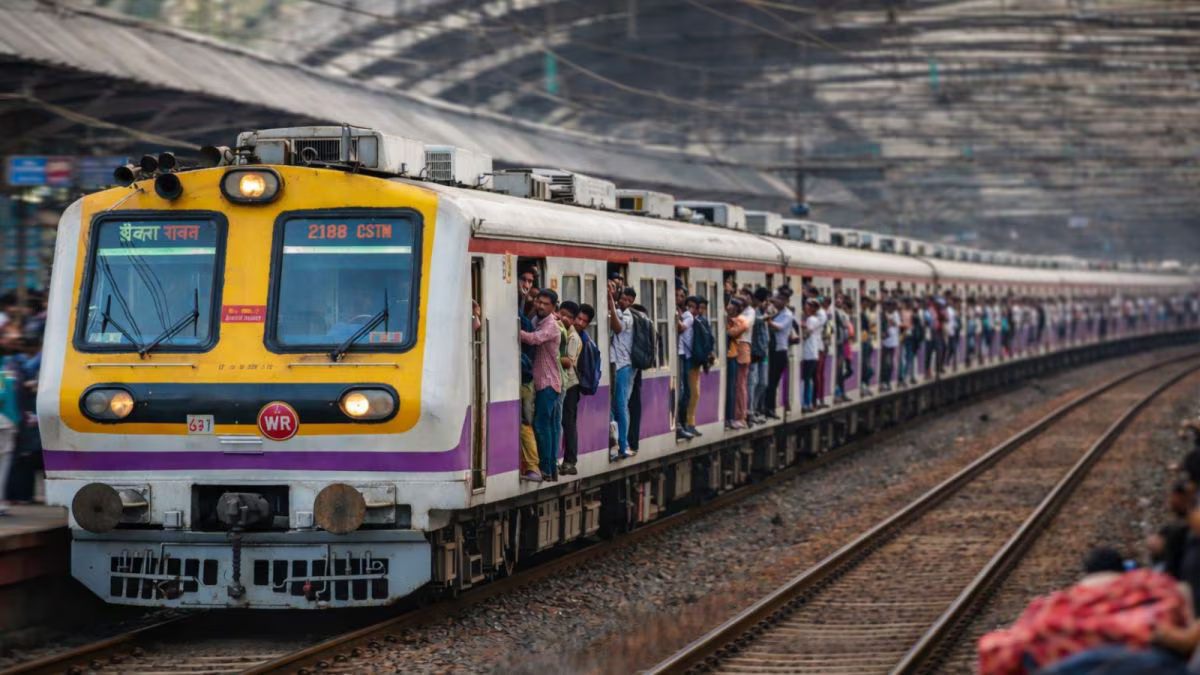
Mumbai’s suburban railway network witnessed temporary service disruptions this weekend as Central Railway implemented scheduled power and traffic blocks across key sections of the metropolitan transit corridor to carry out infrastructure maintenance and operational upgrades. The maintenance exercise affected local train operations between Asangaon and Kasara on the Central line, with several suburban and long-distance services either short-terminated, rescheduled or regulated during the block period. Railway authorities stated that the intervention forms part of ongoing efforts to improve operational reliability and safety across one of the world’s busiest commuter rail systems.
Transport planners say periodic maintenance blocks have become increasingly necessary as Mumbai’s rail infrastructure handles rising passenger density, ageing assets and expanding operational complexity. The suburban railway network remains the primary mobility backbone for millions of daily commuters across the Mumbai Metropolitan Region. The Mumbai rail maintenance programme included temporary suspension of suburban train movement on select sections during afternoon hours to facilitate electrical and technical works near Kasara station. Multiple intercity and long-distance services were also regulated at intermediate stations to manage operational flow during the disruption. Railway officials advised commuters to rely on revised schedules and alternative train timings during the block window. Analysts note that although maintenance blocks cause short-term inconvenience, they are critical for ensuring long-term network safety, especially on heavily utilised suburban corridors operating at high frequency throughout the day. In parallel, infrastructure works were also undertaken on fast corridor sections between Matunga and Mulund, along with maintenance activity on the Trans Harbour line connecting Thane, Vashi and Nerul. These interventions are part of broader system upgrades aimed at maintaining track integrity, signalling performance and electrical infrastructure reliability ahead of the monsoon season.
Urban mobility experts argue that preventive rail maintenance is becoming increasingly important for climate-resilient public transport systems in coastal megacities like Mumbai. Heavy rainfall, waterlogging and infrastructure stress during monsoon months can severely impact rail operations if maintenance cycles are delayed or insufficient. The Mumbai rail maintenance exercise also highlights the challenges of balancing infrastructure modernisation with uninterrupted commuter movement in high-density transit systems. With suburban trains carrying millions of passengers daily, even short-duration disruptions can affect workforce mobility, local business activity and regional productivity. Transport analysts further point out that Mumbai’s suburban railway system requires sustained investments in signalling upgrades, track modernisation and operational automation to manage growing commuter demand while improving safety standards. Recent initiatives involving digital signalling systems and intelligent train operations are part of this broader transition. Commuters travelling toward Kasara and adjoining semi-urban regions experienced service adjustments during the block period, particularly on afternoon suburban routes. Railway authorities indicated that operations would gradually return to normal following completion of the scheduled infrastructure work.
As Mumbai continues expanding outward into peripheral growth corridors, experts believe maintaining reliable suburban rail connectivity will remain central to the city’s economic resilience and sustainable mobility strategy. Long-term improvements, however, will depend on continued infrastructure investment, integrated planning and regular maintenance across the metropolitan rail network.