Ulhasnagar Metro Corridor Cleared For Regional Connectivity
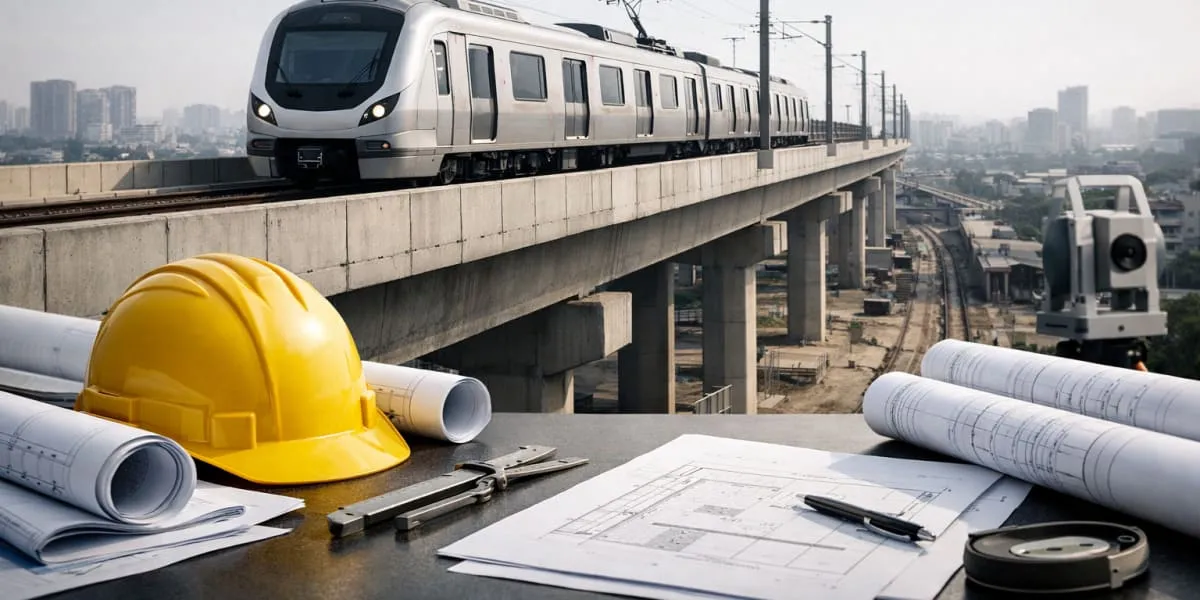
The Maharashtra government has cleared a major expansion of the Mumbai Metropolitan Region’s rapid transit network with approval for the Metro Line 5A extension connecting Ulhasnagar to Sindhu Nagar, a project estimated to cost INR 4,063 crore. The decision is expected to strengthen mobility across the eastern suburban belt and improve integration with the region’s expanding metro infrastructure. Urban transport planners say the Metro Line 5A extension could significantly reshape commuter movement in Ulhasnagar and adjoining urban clusters that have long depended on overcrowded suburban rail services and congested road corridors. The project forms part of broader efforts to improve public transport accessibility across fast-growing peripheral regions within the metropolitan area.
Officials involved in the planning process indicated that the corridor will include elevated metro infrastructure, passenger stations, signalling systems and associated transit facilities designed to support future commuter demand. The planned Sindhu Nagar station is expected to function as an important interchange point within the wider Metro Line 5 network connecting Thane, Bhiwandi and Kalyan. The Metro Line 5A extension arrives at a time when the Mumbai Metropolitan Region is witnessing rapid outward urban expansion driven by rising housing demand and industrial growth. Urban analysts note that transit infrastructure is increasingly shaping the economic geography of peripheral suburbs, influencing residential development patterns, employment access and land utilisation. Transport experts believe the corridor could reduce dependency on private vehicles and shared road-based transport, particularly for daily commuters travelling between Ulhasnagar and key commercial zones across the region. Improved mass transit systems are also viewed as essential for lowering traffic congestion and reducing transport-related emissions in high-density urban environments.
The Mumbai Metropolitan Region has prioritised metro expansion as part of its long-term mobility strategy, with multiple corridors under construction or in planning stages. Infrastructure economists say integrated metro connectivity is becoming critical for sustaining economic productivity in large urban regions where population growth continues to outpace road infrastructure capacity. The Metro Line 5A extension is also expected to support transit-oriented development along the corridor. Real estate observers suggest areas surrounding future stations may witness increased redevelopment activity, mixed-use projects and higher land values as connectivity improves. However, urban planners caution that infrastructure-led growth must be balanced with affordable housing access, environmental safeguards and inclusive urban planning measures. Sustainable transport advocates argue that expanding metro systems in suburban regions can play a central role in building lower-carbon cities by encouraging public transport adoption and reducing long-distance road commuting. Efficient rail-based transit networks are increasingly viewed as necessary infrastructure for climate-resilient urbanisation. Industry experts additionally point out that metro connectivity can improve access to education, healthcare and employment opportunities for residents in underserved suburban areas, strengthening social and economic integration across metropolitan regions.
With project approvals now in place, the next phase will involve execution planning, land coordination and infrastructure development timelines. Once operational, the Metro Line 5A extension is expected to become a key mobility link connecting Ulhasnagar more directly with the wider Mumbai metropolitan transit network.