


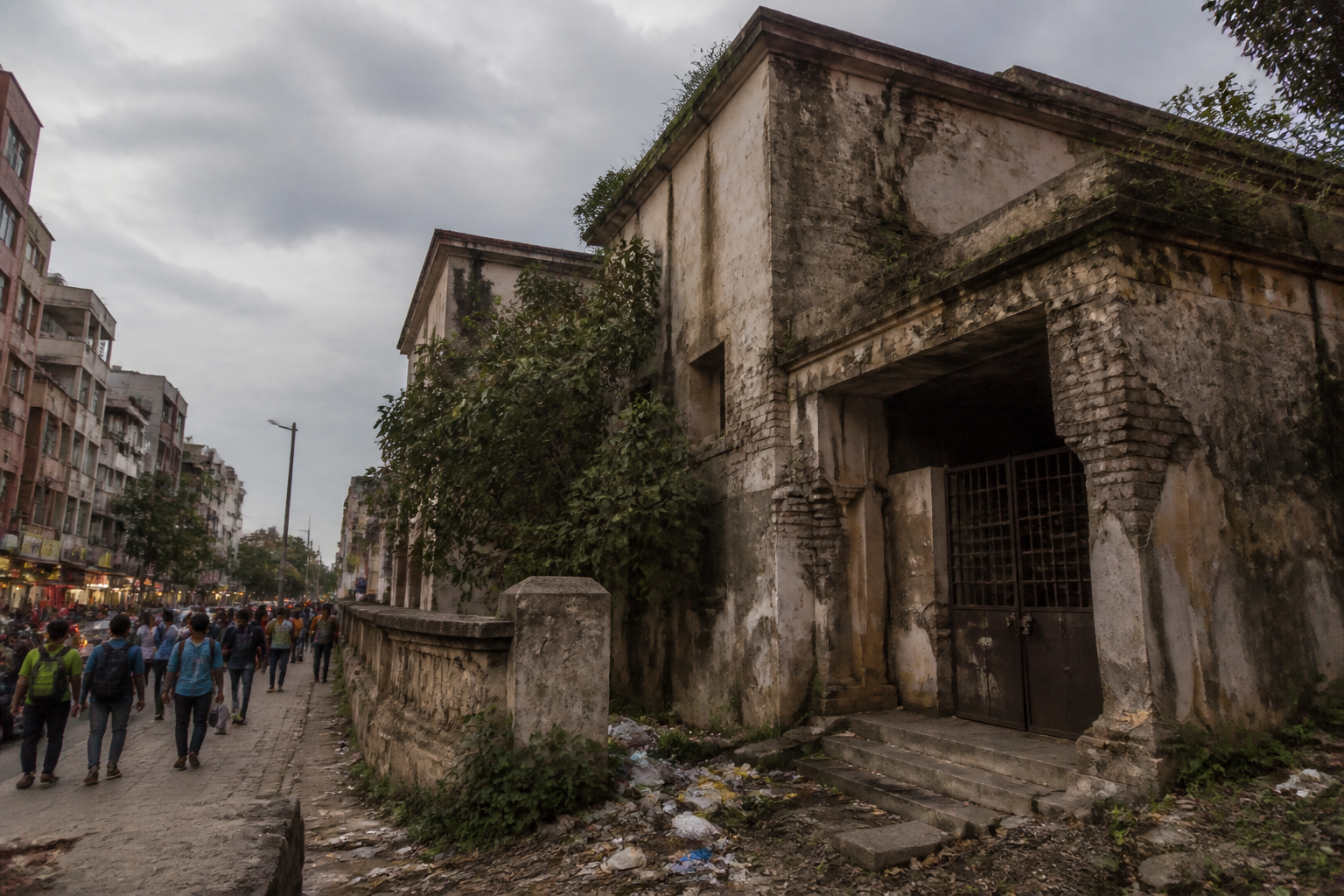
Delhi’s vacant MCD properties are revealing a problem larger than a collection of locked buildings: the Municipal Corporation of Delhi is holding valuable urban land that is either deteriorating, unsecured or disconnected from current public needs. The civic body’s latest data shows that 126 of its properties are vacant across the capital, including 67 classified as dilapidated and 95 unused for more than three years. A ground check of sites in Bungalow Road, Gulabi Bagh and Turkman Gate found buildings surrounded by garbage, overgrown vegetation and signs of prolonged neglect.
The significance of these properties lies in where they are located. They are not abandoned assets on the urban periphery. Several occupy prominent sites in busy neighbourhoods, where land is scarce and public facilities compete with commercial activity, housing and transport demand. Along Bungalow Road in Kamla Nagar, close to Delhi University, neglected MCD properties sit beside shops, students, pedestrians and heavy traffic. The contrast is visible at street level: a crowded neighbourhood with little open space on one side, and locked civic land with damaged buildings on the other.
This is an urban governance problem because the question is not only whether a structure is being maintained. It is also whether a public authority has a functioning system to decide what each property should become after its original use ends. The MCD sites include officers’ bungalows, staff quarters, a maternity-home building, schools and open plots. Their condition suggests that the transition from one institutional purpose to another has often not been completed, leaving public land in administrative limbo.
The data points to several different categories of failure. Of the 126 vacant properties, 19 are reported to be in good condition, 12 in average condition and 67 in dilapidated condition. Three have already been demolished, 19 are open plots and six are involved in court cases. The figures show that vacancy is not a single problem with a single remedy. Some properties may require repair, others may need redevelopment, and some may remain unavailable because of legal disputes. But the common issue is that the civic inventory has not been converted into a transparent, actively managed public-asset system.
The ground situation in Kamla Nagar illustrates how quickly unused buildings can become safety and maintenance concerns. At least four properties visited on Bungalow Road were found in severely deteriorated condition, with damaged facades, exposed brickwork, broken doors and windows and vegetation covering sizeable portions of the premises. Garbage had accumulated around entrances and inside the sites. One building contained bedding and personal belongings, suggesting that the unused structure may have been accessed as a shelter, although the report does not establish who used it or how often.
The absence of visible security at some locations adds another layer to the problem. The report found premises that could be entered without authorisation, while an MCD official said most municipal properties have security arrangements. The differing observations underline the need for property-level information rather than broad assurances. A statement that most sites are secured does not explain which properties lack guards, how often they are inspected, whether access is recorded or who is responsible for emergency repairs.
Gulabi Bagh shows how a stalled civic facility can become an urban liability. A large MCD property intended for a maternity home was found unused, with no security guard present and an open main entrance. The building appeared to have deteriorated over time, while the surrounding space showed signs of turning into a wasteland. The report does not establish why the maternity home was never operationalised or whether the site has been reassigned, but its condition raises a basic administrative question: how long can a public facility remain outside active service without a documented decision on its future?
Schools form another important part of the vacant-property picture. Their status complicates any assumption that every unused building is simply a derelict asset. At School Ward No. 5 on Turkman Road No. 1, behind the MCD headquarters, a primary school building was locked but relatively well maintained and clean. Residents said enrolment had declined over the years and that students were shifted to another nearby school. The building is now occasionally used for election-related purposes, including as a polling station, but remains closed outside those periods.
This example demonstrates the difference between physical maintenance and functional utilisation. A building can remain structurally usable while still failing to serve a regular public purpose. Occasional use for elections preserves some civic value, but it does not resolve whether the property should house another school, a different municipal service or a community facility. Without a publicly explained decision, the building remains an asset in suspension.
The MCD’s own classification also indicates that the corporation has enough information to begin a more precise assessment. The 126 properties have been identified, and their broad condition is known. Yet the available data, as reported, does not indicate the intended next step for each site, the estimated repair cost, the ownership or title status of every property, the duration of individual vacancies or the authority responsible for approving reuse. Those missing details matter because a vacant property register is useful only when it leads to decisions and accountability.
The six properties under court cases represent a legitimate constraint on immediate reuse. Legal proceedings can delay construction, demolition, leasing or transfer. However, litigation does not automatically explain the condition of every other site. The 19 properties in good condition, the 12 in average condition and the 19 open plots appear to require different administrative treatment from severely damaged buildings. Grouping all vacant properties together can obscure which delays are legal, which are financial and which result from institutional inaction.
The land-use dimension is especially important in dense parts of Delhi. Bungalow Road’s crowded movement environment shows how public land can remain physically present but functionally absent. The sites do not necessarily need to be converted into commercial property to become useful. The report establishes that some were meant for housing municipal staff, one for a maternity home and others for education. The immediate issue is not to prescribe a new use without assessment, but to ensure that each property has a current, documented purpose consistent with its condition and location.
Responsibility is also distributed inside the municipal system. Property management, engineering maintenance, education services, health facilities, security and legal administration may each affect the fate of a vacant site. If no single unit is accountable for the complete life cycle of a property, buildings can remain trapped between departments. A school may be closed after enrolment falls, but the education department may not control redevelopment. A maternity-home site may require health-department decisions, engineering work and budget approval. A court case may further restrict action. The result is a familiar governance gap: responsibility exists in parts, while accountability for the whole asset is unclear.
The report’s findings also raise questions about how public assets are monitored between formal inspections. Overgrown vegetation, broken walls, exposed brickwork and accumulated waste develop over time. These are not conditions that appear overnight. Their presence indicates that maintenance schedules, security checks or escalation processes have either not prevented deterioration or have not produced timely intervention. The MCD official’s response that most properties have security arrangements addresses only one aspect of the issue; it does not resolve the evidence of poor upkeep at several inspected locations.
The most consequential distinction is therefore between vacancy and abandonment. A vacant building can be temporarily unavailable while a decision is pending. An abandoned-looking property reflects a breakdown in that decision-making chain. Delhi’s 95 properties unused for more than three years suggest that the problem is not limited to short administrative gaps. Long periods of inactivity increase the likelihood of structural deterioration, unauthorised access, waste accumulation and higher eventual repair costs, although the supplied report does not quantify those costs.
The evidence confirms that MCD owns or controls a substantial set of underused urban properties, but it does not establish a single cause for their condition. Declining enrolment explains the closure of at least one school, while court cases affect six properties. Other sites may involve security, maintenance, budget or planning decisions, but those reasons are not detailed in the report. The next meaningful step would be for the civic body to clarify the status, responsibility and proposed use of each vacant property, particularly those in good or average condition and those located in heavily used neighbourhoods. Until then, Delhi’s public land will continue to occupy valuable space without reliably serving the public that owns it.
