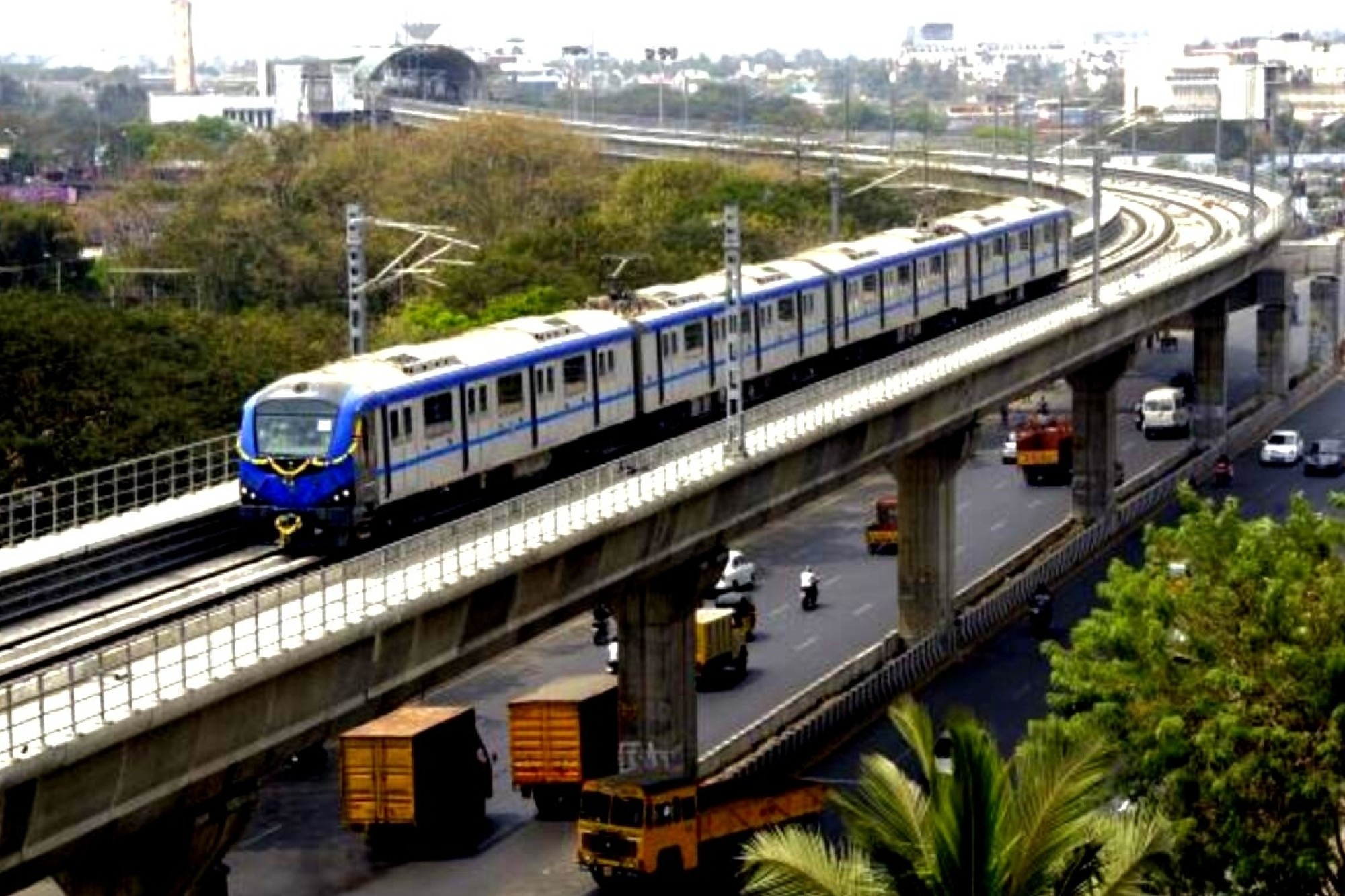
Mumbai’s east–west mobility ambitions have moved a step closer to reality with a critical engineering breakthrough on a key metro corridor. Authorities have successfully placed a major steel structure over an operational suburban railway section, marking progress in one of the most complex phases of the Mumbai Metro Line 6 project. The installation, carried out near Jogeshwari, involved positioning a long-span steel girder across active railway tracks without disrupting daily train services beyond scheduled shutdown windows. The achievement highlights the intricate coordination required between urban transit agencies and railway operators in a city where infrastructure upgrades must coexist with dense, continuous usage.
Constructing support infrastructure in this location posed significant challenges. Engineers had to work within narrow time blocks, often at night, while ensuring compliance with stringent safety protocols. Limited space between tracks and the need to maintain uninterrupted rail operations demanded precise planning and execution. Industry experts note that such projects represent a shift towards more complex urban engineering, where new systems must be layered onto already saturated networks. The newly installed span is part of the elevated alignment of Mumbai Metro Line 6, a corridor designed to improve cross-city connectivity between the western suburbs and the eastern business districts. Once operational, the line is expected to reduce travel times significantly, particularly for commuters currently reliant on congested arterial roads such as the Jogeshwari–Vikhroli Link Road. From a broader urban perspective, the corridor reflects Mumbai’s push towards expanding mass transit capacity to address congestion and environmental pressures. Public transport investments are increasingly seen as central to reducing dependence on private vehicles, thereby lowering emissions and improving air quality. Metro systems, in particular, are viewed as essential to achieving more sustainable and equitable urban mobility.
The project is already at an advanced stage, with most of the civil construction completed. In addition to its elevated alignment, the corridor will feature multiple interchange points with existing metro lines and suburban rail networks, enhancing network integration. Such connectivity is expected to create a more seamless commuting experience, allowing passengers to switch between modes with greater efficiency. Urban planners emphasise that the success of projects like Mumbai Metro Line 6 lies not only in engineering execution but also in operational integration. Efficient last-mile connectivity, station accessibility, and fare coordination will play a decisive role in determining commuter adoption. The corridor also carries economic implications. Improved east–west connectivity can reshape travel patterns, influence commercial activity, and unlock new development opportunities in under-connected areas. However, these benefits will depend on how well infrastructure expansion is aligned with sustainable land use planning.
As construction progresses towards completion, the focus is likely to shift to phased operations and system readiness. For Mumbai, the milestone represents more than a technical achievement—it underscores the city’s ongoing transition towards a more resilient, transit-oriented urban future.