


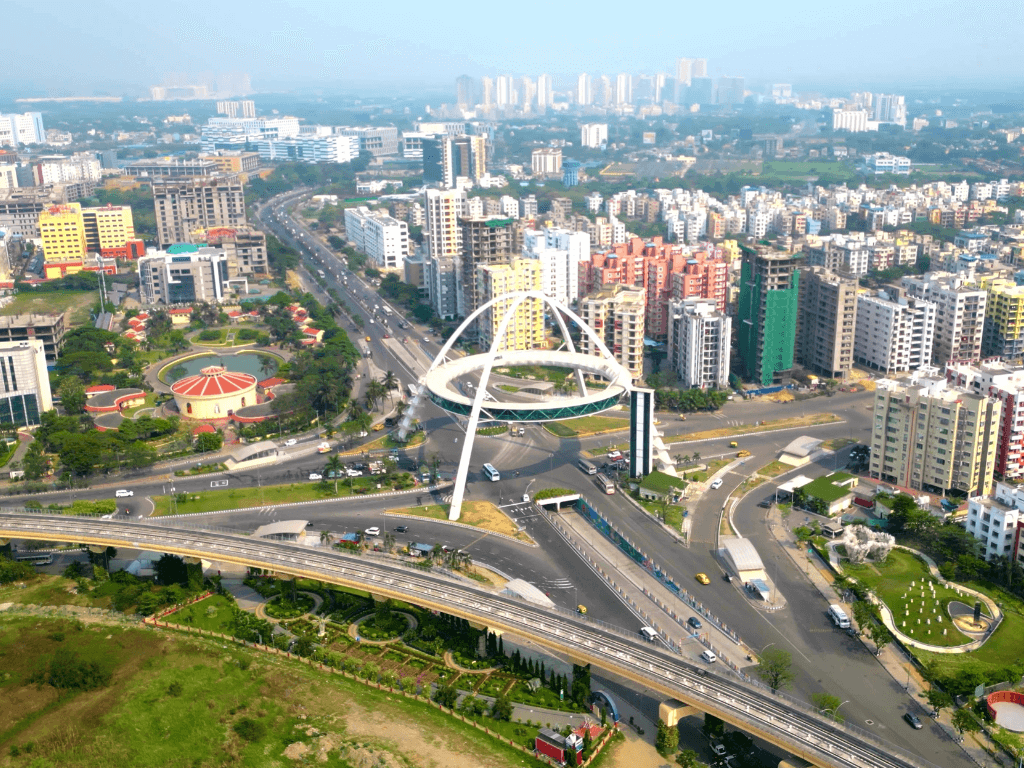
Kolkata’s New Town, envisioned as a high-growth urban extension, is witnessing rising concerns over gaps in basic services even as real estate activity accelerates. The imbalance between rapid development and lagging infrastructure is drawing attention from policymakers and urban planners, highlighting the risks of uneven urban expansion in one of eastern India’s fastest-growing corridors.
As residential and commercial projects multiply across New Town, the demand for essential civic services—ranging from waste management and water supply to last-mile connectivity—has begun to outstrip existing capacity. While the township continues to attract investments and homebuyers, the pace of infrastructure provisioning has not kept up with the intensity of construction activity, creating what urban experts describe as a “service deficit zone”.The emerging New Town infrastructure gap is particularly visible in newly developed pockets where residents report inconsistent access to utilities and limited public transport options.Urban planners note that such gaps often arise when development is driven by market demand rather than synchronised with long-term infrastructure planning. This disconnect can affect not just liveability but also the long-term economic viability of such urban clusters.Officials indicate that efforts are underway to address these shortfalls through coordinated interventions involving local authorities and planning agencies. These include proposals to strengthen waste segregation systems, expand road networks, and improve public transport integration.
However, experts caution that reactive measures may not fully resolve structural inefficiencies unless backed by integrated urban planning frameworks.From an economic standpoint, the New Town infrastructure gap could influence investor sentiment if not addressed in time. Real estate markets thrive on predictability and quality of life indicators, and persistent service challenges may slow absorption rates or shift demand to better-serviced areas. At the same time, there is an opportunity for the city to recalibrate its growth model by aligning infrastructure rollout with sustainability benchmarks.Environmental considerations also come into play. Unplanned expansion without adequate drainage, green cover, or waste systems can increase urban vulnerability to flooding and heat stress. Climate-resilient planning, including decentralised infrastructure and resource-efficient design, is increasingly seen as essential for emerging urban zones like New Town.
The situation underscores a broader urban challenge across India’s growing cities—how to balance speed with sustainability. As New Town continues to evolve, its trajectory will depend on how effectively authorities can bridge infrastructure deficits while maintaining momentum in development. For residents and investors alike, the focus is shifting from just availability of space to the quality and resilience of urban living.
Also Read:
