


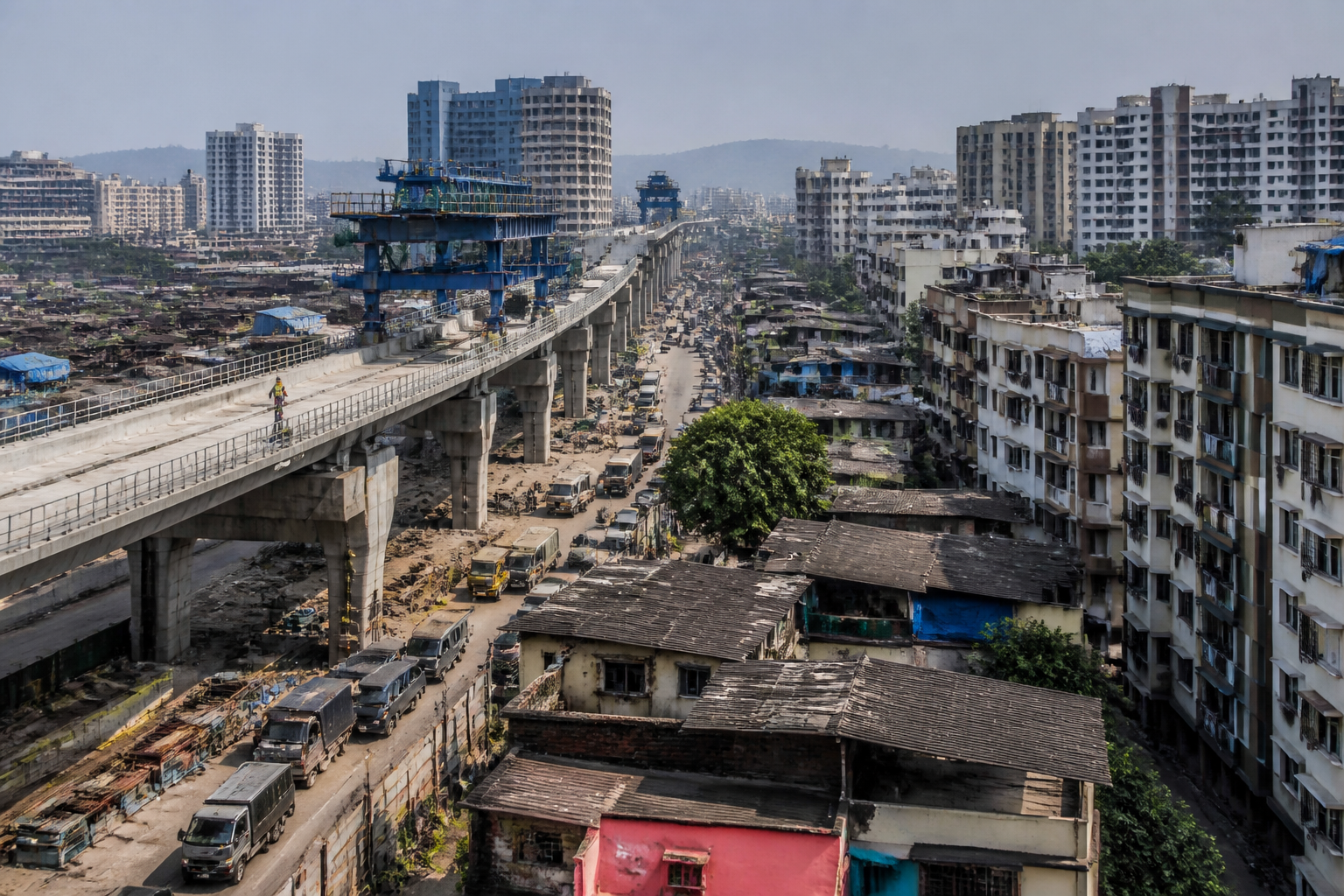
Thane’s proposed internal circular metro project came under scrutiny at a meeting held at the Thane Municipal Corporation headquarters on Friday, with elected representatives seeking clarity on the rehabilitation of residents, route planning, land acquisition and the number of families likely to be displaced.
The meeting was convened to present details of the project being developed by the Thane Municipal Corporation and MahaMetro to address traffic congestion on the city’s internal roads. MahaMetro Managing Director Shravan Hardikar made the presentation before representatives, while Transport Minister Pratap Sarnaik, Member of Parliament Naresh Mhaske and legislators including Jitendra Awhad, Sanjay Kelkar, Niranjan Davkhare, Madhavi Naik and Ravindra Phatak were present along with municipal representatives.
According to information presented by MahaMetro, the proposed corridor will be approximately 30 kilometres long, of which around 70% of the required land is currently available. Land acquisition for the depot is under way. The authorities also said efforts were being made to minimise the project’s impact on defence land.
Rehabilitation emerged as the central concern during the meeting. Hardikar said between 1,400 and 1,500 families could be affected by the project. However, when Mhaske sought details of the affected households, officials said the final number had not yet been established. The confirmed figure will be determined after surveys and biometric registration are completed.
Representatives questioned how the project could be planned without a final assessment of the people and structures located along the proposed route. They also asked whether the survey had been completed and how rehabilitation would be carried out when construction permissions for cluster redevelopment projects were still pending in several areas.
The administration said an attempt would be made to rehabilitate affected residents through cluster redevelopment in Lokmanya Nagar, Azad Nagar and Manoramanagar. Kelkar said a clear rehabilitation plan and survey of affected residents should be prepared before project permissions are granted. He also called for residents to be informed about where they would be relocated and what support would be provided by the municipal corporation.
The project has faced opposition from several social organisations over possible tree felling and displacement. A civic meeting held in Thane a few days earlier also saw objections, with some participants describing the proposed metro as a potential financial burden. During Friday’s meeting, Sarnaik said the metro project should be completed but stressed that its impact on densely populated areas such as Lokmanya Nagar would need to be considered. He suggested examining underground construction in stretches where displacement could be extensive.
Awhad raised the question of when metro connectivity would reach Kalwa and Mumbra and alleged that the project could be benefiting a particular developer. The project administration said the metro was being planned to connect Kalwa, Mumbra and Diva, and that work on a detailed project report for this extension was under way. It also said the internal metro was being planned for a connection with the bullet train project.
Municipal Commissioner Saurabh Rao said land acquisition required for the project was the municipal corporation’s responsibility and was progressing. He added that the final list of affected residents would be prepared soon.
