


Telangana is considering a package of urban infrastructure projects estimated at Rs 20,000 crore, including drainage upgrades in Warangal, wastewater reuse, municipal energy-efficiency measures and new waste-processing facilities. Chief Minister A Revanth Reddy reviewed the proposals on Friday, November 20, according to a report by Siasat.
The proposals were presented by the state’s Municipal Administration Department. The department said the programme could be supported by international financial institutions, including the World Bank, Asian Development Bank, Asian Infrastructure Investment Bank and Germany’s KfW, along with domestic financial institutions. The report did not specify how much funding each institution may provide, or whether financing agreements have been signed.
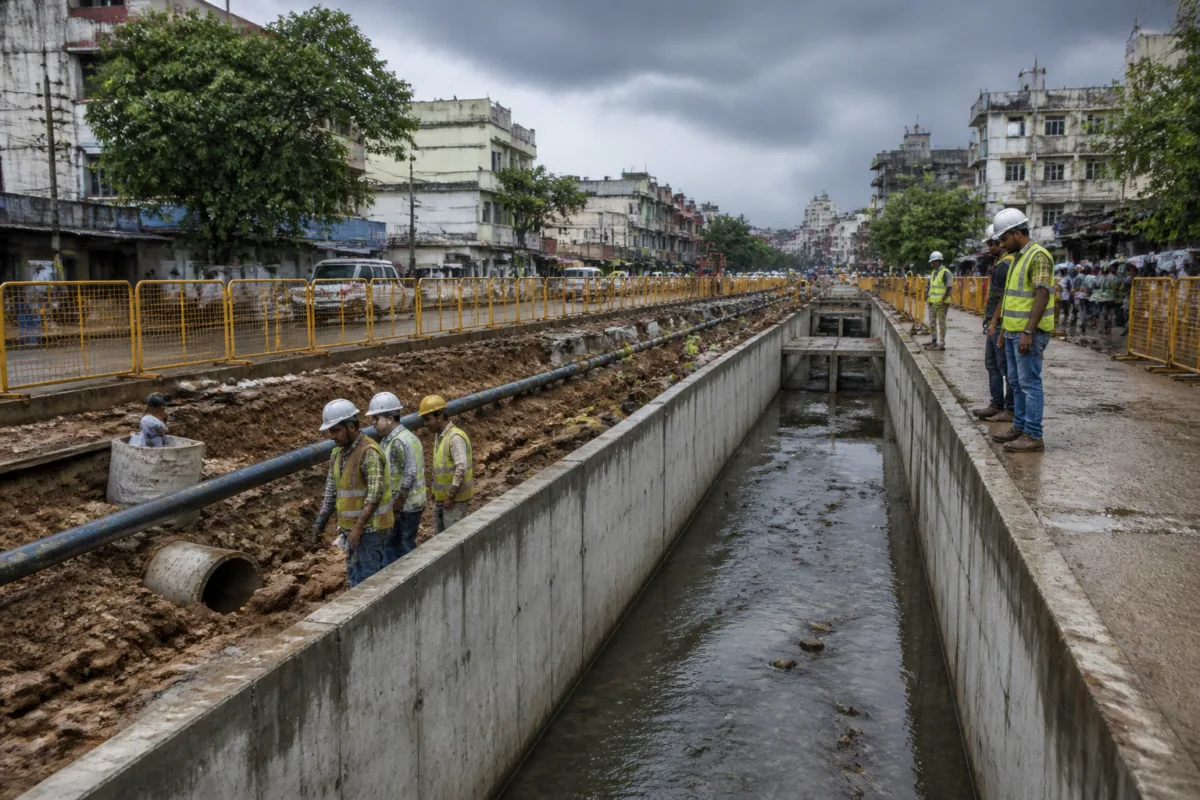
Among the projects discussed was an underground drainage system and a stormwater drainage network for Warangal. The proposals also include restoration of the moat around Warangal Fort and the development of a Central Business District in Hanamkonda.
The drainage components are significant for two linked urban problems: wastewater management and flood risk. However, the report provides no project-wise cost, design capacity, implementation schedule or details of the agencies that would execute the works. At this stage, the proposals should therefore be treated as projects under consideration rather than sanctioned construction programmes.
The state is also formulating a dedicated policy for treating and reusing wastewater. Reddy said treated water could be supplied to industries, particularly textile parks, to reduce pressure on freshwater resources. Such a policy would connect municipal sewage treatment with industrial water demand, although the report does not set out proposed treatment standards, supply arrangements or monitoring mechanisms.
The review also covered ways to reduce electricity consumption in urban drinking-water supply, treatment and distribution systems. The proposals include integrating renewable energy sources into these operations. The report does not identify the technologies, target municipalities or expected energy savings, but the focus indicates an attempt to address the operating costs of water utilities alongside their infrastructure needs.
Waste management formed another part of the package. The government discussed a waste-to-energy plant with a proposed generation capacity of 10 to 12 megawatts in the Warangal Mega City Economic Region, as well as units for bio-CNG production and plastic recycling. No information was provided on the quantity or composition of waste to be processed, the proposed sites, or the safeguards for emissions and residual waste.
Reddy said the projects are intended to reduce carbon emissions, conserve water, mitigate flood risks and lower municipal operating costs. These objectives bring together several infrastructure functions that are often planned separately: stormwater and sewage systems, water supply, industrial water use, energy, solid waste and urban development.
The immediate public significance will depend on how the proposals move from review to approvals, financing and implementation. The available account does not provide a timeline, a final project list, land requirements or details of public consultation. Until those elements are disclosed, the Rs 20,000-crore figure represents the estimated scale of the proposed programme rather than committed expenditure.

