


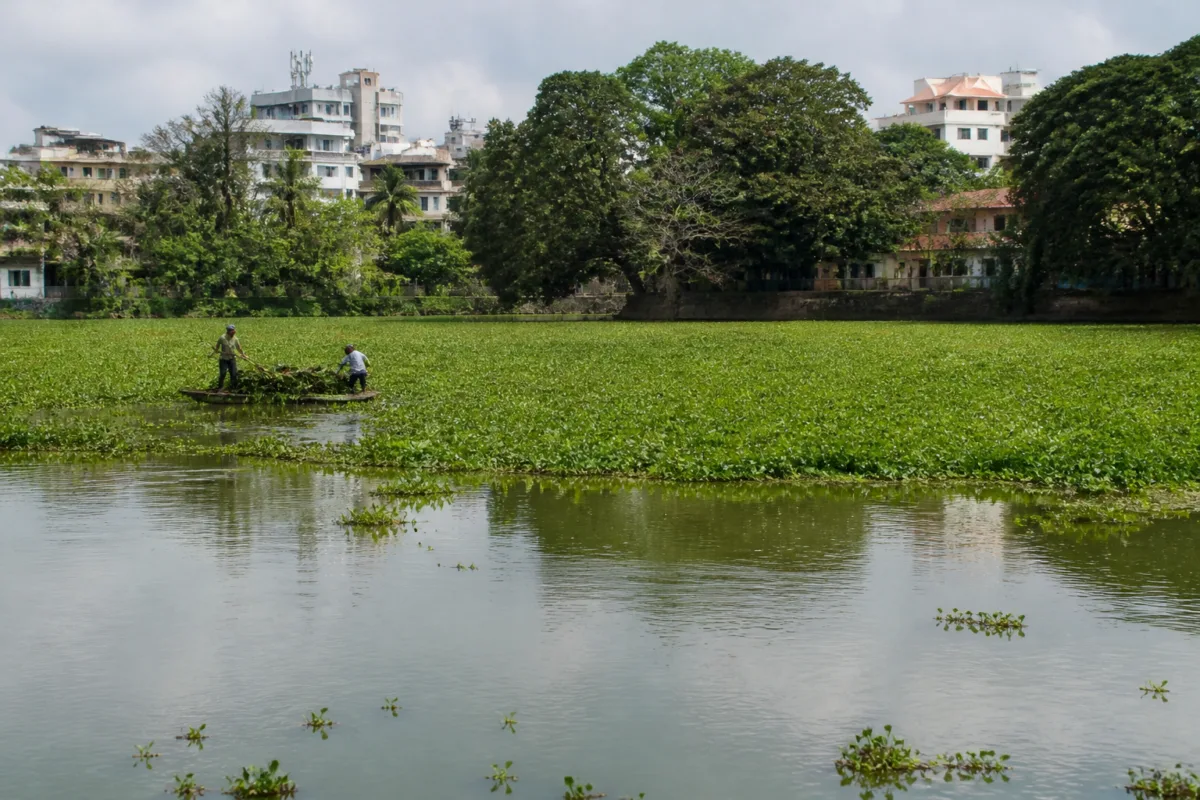
More than 80% of Pashan Lake in Pune has reportedly been covered by invasive water hyacinth, renewing concerns about the condition of one of the city’s older waterbodies and the timing of municipal removal work.
Residents have questioned the Pune Municipal Corporation’s response, saying that large-scale removal begins too late in the season and is not completed before the monsoon. Sameer Uttarkar, a resident, said only 20–30% of the work was completed in previous efforts before rain caused the growth to spread again.
“Water hyacinth has covered over 80% of the lake, reducing it to a small pond for the viewer,” Uttarkar said, according to the report. He added that starting work earlier could improve water quality, support migratory birds and aquatic life, and reduce mosquito breeding.
Pashan Lake has a catchment area of 40 sq km. The British-era lake once supplied water to establishments in Kirkee and what is now Savitribai Phule Pune University, before the PMC stopped using it as a water source.
The lake’s present condition comes amid wider concerns over water scarcity. Extensive hyacinth growth can limit the visible water surface and has become a recurring focus of civic and resident concern at Pashan Lake. The report does not provide an independent assessment of the lake’s water quality or confirm the precise area covered by the plant.
PMC environmental department head Madhav Jagtap said action to remove the hyacinth was already under way. He also said arrangements were being made to treat incoming wastewater, including a plan to construct a stop dam.
The proposed wastewater treatment measures indicate that removing the visible plant is only one part of the lake’s management challenge. The PMC’s stated plans link the immediate clean-up effort with controlling pollution entering the waterbody. However, the report does not specify the project cost, construction schedule, treatment capacity or completion date for the proposed stop dam.
For Pashan Lake, the effectiveness of the response will therefore depend on both the removal of the existing hyacinth and the implementation of measures intended to address incoming wastewater. Until those details are established, the extent to which the current intervention can protect the lake’s ecological functions remains unclear.

