


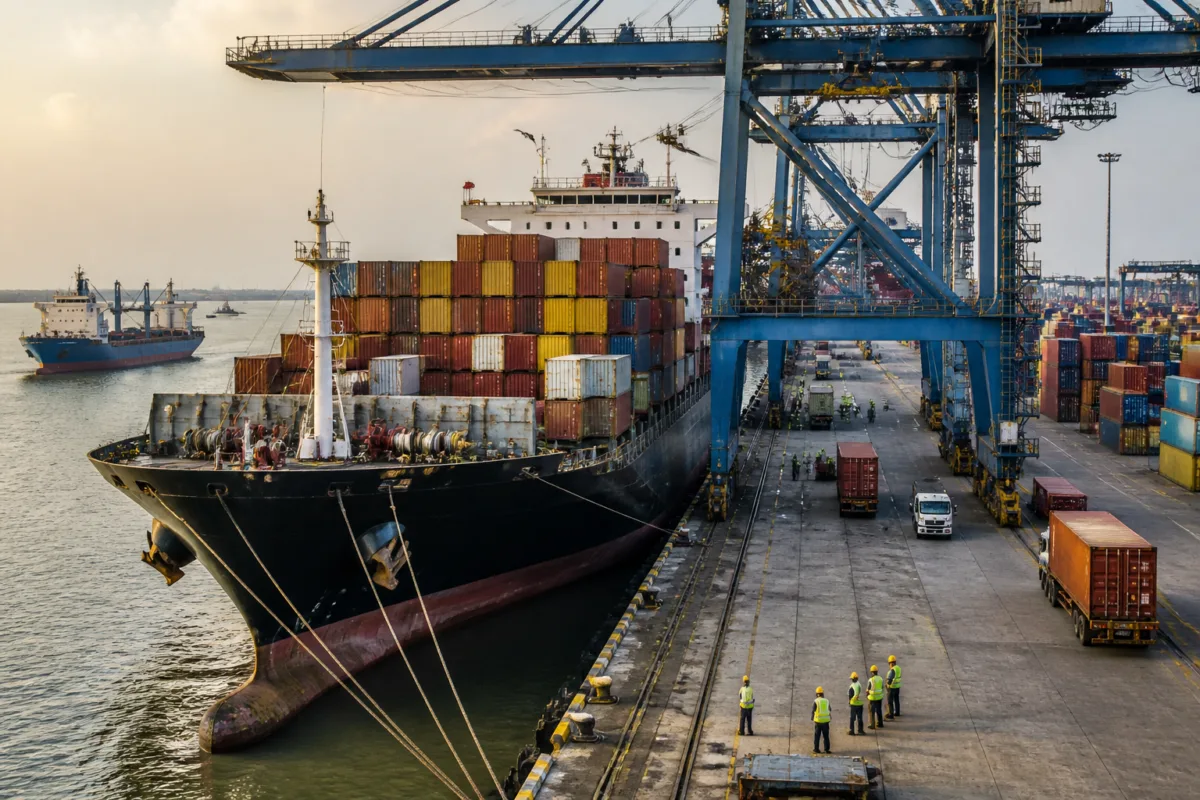
India’s port cargo volumes rose 18.7 per cent year-on-year in October, with coastal shipments and overseas trade driving the increase, according to a JM Financial sector report cited by The Hindu BusinessLine. The trend points to stronger demand for port and freight infrastructure as engineering, electronics and capital goods move in greater volumes.
Major and minor ports together handled 18.7 per cent more cargo in October than in the same month a year earlier, compared with 6.3 per cent growth in September, the report said. The increase was supported by a 50.9 per cent rise in aggregate coastal cargo and a 10.1 per cent increase in overseas volumes.
Major ports handled 93.6 million metric tonnes of cargo during the month, up 22.5 per cent year-on-year. Coastal cargo at these ports reached a record 31.6 million metric tonnes, an 80.8 per cent increase from October a year earlier. Minor ports handled 68.4 million metric tonnes, recording 13.8 per cent growth, supported by petroleum, oil and lubricants, as well as coal shipments.
The figures suggest that coastal shipping is becoming a more significant component of India’s freight network. Coastal movement can shift some cargo away from roads and rail, but sustained growth also depends on port connectivity, cargo-handling capacity and reliable links between terminals and industrial centres. The available report does not provide a breakdown of capacity utilisation, berth expansion or hinterland connectivity at individual ports.
Trade in capital goods was a major contributor to the increase. Imports of capital goods rose 36 per cent year-on-year in October, while exports grew 44 per cent, according to the brokerage. Core exports, excluding petroleum products, gold, silver and other precious metals, increased 33.5 per cent. Core imports rose 32.1 per cent.
The report also identified a divergence between the growth in trade value and the growth in cargo handled. Core export-import trade increased 32.7 per cent, while aggregate container volumes by tonnage rose 10 per cent. The brokerage linked this gap to higher prices, particularly for electronic and engineering goods, and to increased transhipment activity.
Container volumes rose 26.8 per cent year-on-year, but container tonnage increased by 11.8 per cent. This indicates that the number of containers moving through the system grew faster than their aggregate weight, although the report’s explanation remains an assessment by the brokerage rather than an independently confirmed operational finding.
Bulk commodities also recorded growth. Coal volumes across major and minor ports increased 15.2 per cent to 37.5 million metric tonnes, while iron ore volumes rose 7.8 per cent to 9.4 million metric tonnes. The increases indicate broader cargo growth beyond containerised trade.
For port planners and logistics operators, the data highlights two parallel requirements: handling rising coastal and container activity while accommodating changes in the composition and value of cargo. The report suggests that India’s port cargo momentum may remain supported by external trade and capital-goods movement, but it does not establish how long the current growth rates will continue or whether existing terminals can absorb them without new investment.

