


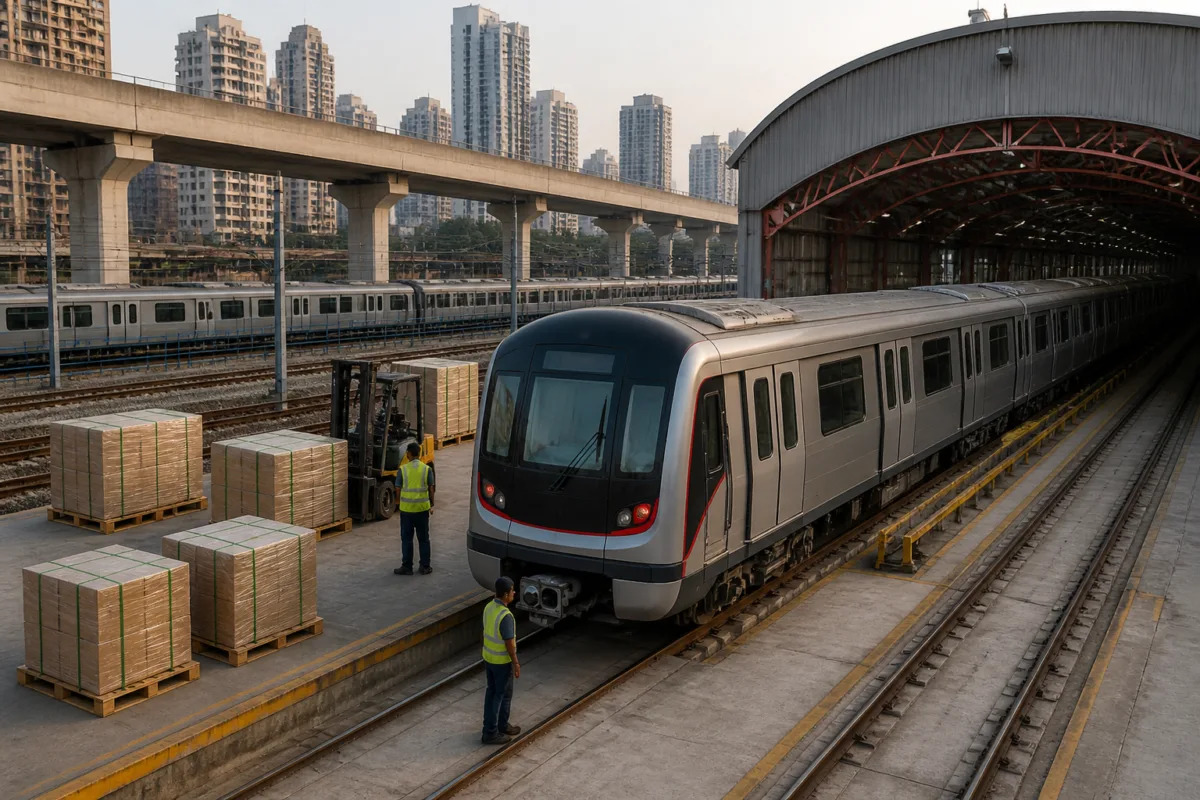
The Goods and Services Tax Network (GSTN) has added metro rail as a mode of transport in the e-way bill system, enabling goods to be moved through metro networks in Indian cities under the existing GST documentation framework.
The change follows a recommendation by the GST Council at its meeting last month and a subsequent notification, according to a report by The Hindu BusinessLine. Necessary arrangements have now been made on the e-way bill system.
The inclusion addresses an operational difficulty faced by metro operators, including the Delhi Metro Rail Corporation (DMRC). Although GST rules refer to goods transported by “railways”, metro rail systems are legally distinct from Indian Railways. The report said the earlier e-way bill system was designed specifically for Indian Railways and did not adequately accommodate goods moved through metro networks.
An official cited in the report said DMRC plans to begin a pilot for depot-to-depot cargo movement through Urban Freight Services, using the metro network for middle-mile connectivity. Metro systems in other cities could also benefit from the regulatory change.
The amendment does not remove existing e-way bill requirements. Under Rule 138 of the Central Goods and Services Tax Rules, 2017, registered persons generally need to generate an e-way bill when moving goods with a consignment value of more than ₹50,000, although the threshold can be lower for intra-state movement. Existing exemptions and conditions continue to apply.
The report cited Rajat Mohan, Managing Partner at AMRG Global, as saying that the facility is live for web users, while application programming interface (API) users remain in a sandbox environment pending production rollout. Businesses using integrated logistics or accounting software may therefore need to use the web portal until the production API is announced.
The amendment also extends to metro rail operators the restriction on delivering goods unless the required e-way bill is produced at the time of delivery. Transport Document Number reporting will remain an implementation issue until there is clarity on the documents that metro operators must issue and the formats that businesses must report.
Mohan said the initiative’s practical effectiveness would depend on coordination among GSTN, metro operators and logistics stakeholders. He also called for standardised documentation guidelines and a clear timeline for the API production rollout.
The development comes as India’s metro rail network has expanded to around 1,170 km across 26 cities, according to the report. By formally recognising metro rail in the e-way bill framework, the change creates a regulatory basis for integrating urban rail networks into goods movement, although the scale of such operations will depend on operator readiness, cargo processes and digital-system integration.

