


A new study on Telangana heat and humidity presents a climate risk that is more complicated than hotter afternoons. Across Telangana and other parts of South Peninsular India, rising heat-humidity stress is occurring alongside longer dry spells, creating a combined pressure on cities, water systems, agriculture and the people who depend on them.
The study, titled ‘Evolution of Climate Extremes Over the Indian Subcontinent Using a Revised CEI’, was published in the peer-reviewed International Journal of Climatology in July 2026. Its findings are based on 52 years of observational data from 1971 to 2022 and were produced by scientists from the India Meteorological Department and the National Centre for Medium Range Weather Forecasting.
Its significance for urban policy lies in the interaction between two climate signals that are often discussed separately. The first is heat stress, particularly the combination of high temperatures and humidity. The second is drought-related stress, reflected in longer gaps between rainfall and increases in consecutive dry days. The study indicates that both are intensifying across Telangana and Andhra Pradesh.
For Hyderabad and Warangal, the heat signal is not limited to daytime temperature. The study draws attention to the Heat Index, which measures how hot conditions feel when relative humidity is included. In dry heat, sweating can cool the body more effectively. When humidity rises, that cooling mechanism becomes less efficient, making the same air temperature more difficult for the human body to tolerate.
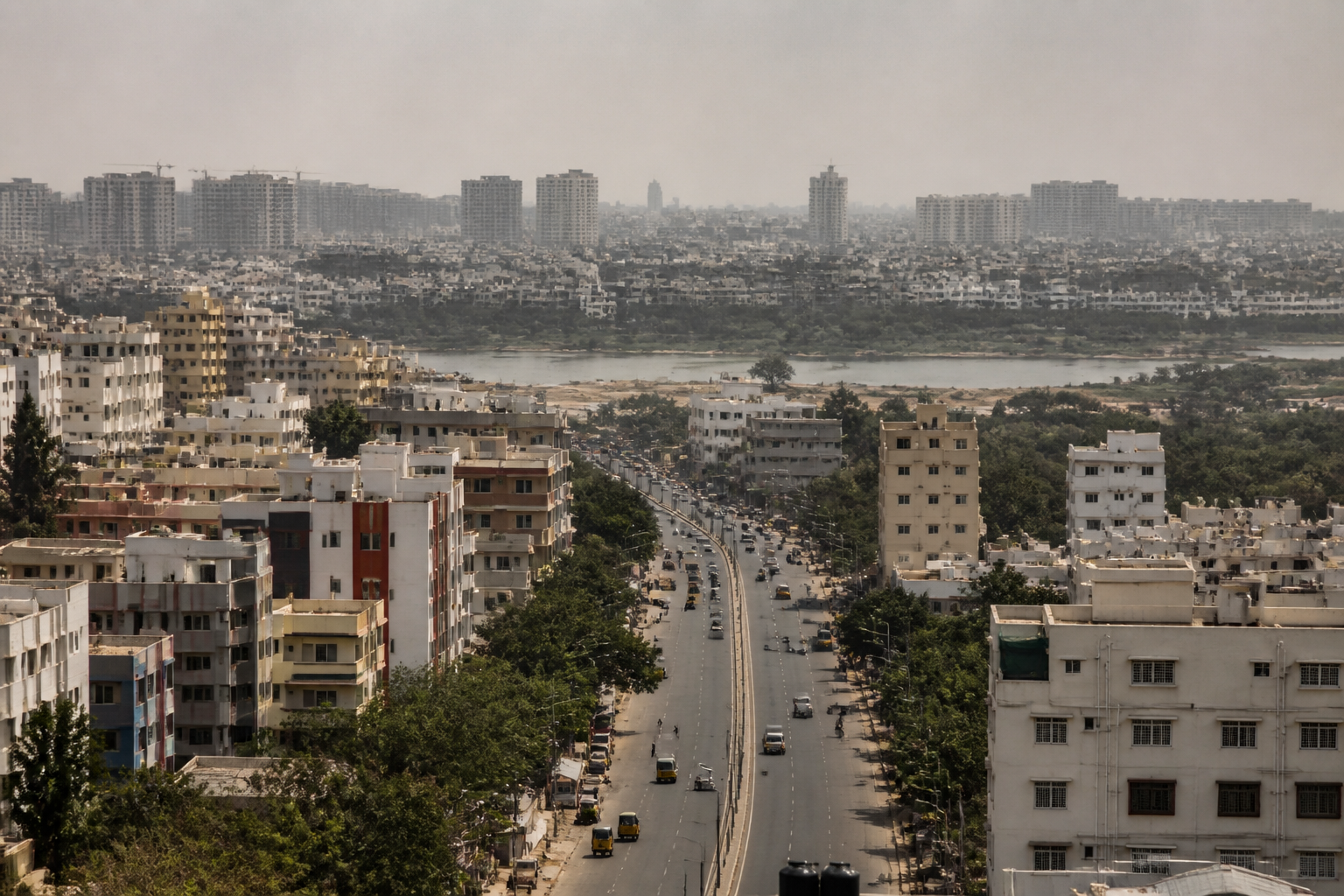
The study also links the urban experience to changes in the physical form of cities. Rapid urban expansion, loss of green cover, shrinking water bodies and the spread of concrete have contributed to an Urban Heat Island effect in Hyderabad, according to the report as described by Telangana Today. These changes can cause built-up areas to retain and re-radiate heat, extending uncomfortable conditions beyond the hottest part of the day.
That evening dimension matters for how cities function. If heat and humidity remain elevated after sunset, homes and workplaces have less opportunity to cool naturally. Outdoor workers, commuters, street vendors and residents in poorly ventilated housing can face prolonged exposure rather than a short afternoon peak. The supplied study report does not quantify these groups’ health outcomes, but its description of heat extending into nights identifies a direct challenge for urban planning and building design.
The geographical pattern described in the study is also changing. Weather extremes that appeared as scattered hot pockets in the 1980s had developed into broader, continuous zones of heat stress by the 2010s across central and southern regions. This shift suggests that climate risk is becoming less localised. It is no longer only a matter of isolated heat events affecting particular neighbourhoods or districts; the reported pattern covers wider urban and regional systems.
The dry-spell findings add another layer. Telangana is described as experiencing longer intervals between rainfall events, followed by erratic and intense downpours. Farming districts including Nalgonda, Khammam, Karimnagar and Adilabad are identified as facing longer gaps between spells of rain. In such a pattern, a high total of seasonal rainfall would not necessarily translate into reliable water availability if rainfall arrives in short, intense bursts separated by extended dry periods. The supplied report does not provide district-level rainfall totals or groundwater measurements, but it states that rural groundwater tables and irrigation tanks are under pressure.
This has an institutional consequence: cities and rural areas cannot be planned as separate climate systems. Hyderabad’s heat exposure is shaped partly by land cover, water bodies and construction patterns within the metropolitan area. At the same time, the wider region’s water security depends on rainfall timing, storage capacity, groundwater conditions and irrigation infrastructure. A climate pattern that combines heat, humidity and dry spells therefore crosses the boundaries of municipal administration.
The study’s use of a revised Climate Extremes Index is important because it attempts to examine multiple forms of climate stress rather than relying on a single temperature measure. The reported findings bring together heat, humidity, drought indicators and consecutive dry days. That approach is better suited to cities where risk is experienced through interacting systems: thermal comfort, water supply, electricity demand, public space, housing quality and work conditions.
Yet the supplied report also indicates the limits of what can be concluded from the findings. It establishes a long-term pattern in the observational record and identifies locations and types of extremes that are increasing. It does not, in the material available here, provide a detailed ward-level map of Hyderabad’s heat exposure, quantify the contribution of each land-use change, or measure the effects on hospital admissions, household expenditure or electricity consumption. Those questions would require additional city-level datasets.
The policy response identified in the study is correspondingly broad. For urban areas, it points towards cool roofs as a way of reducing heat exposure. A cool-roof strategy would relate directly to the built environment because roof materials and surface treatment influence how much solar heat buildings absorb. However, the supplied material does not establish a citywide implementation programme, funding arrangement, target coverage or enforcement mechanism for Hyderabad or Warangal.
For rural areas, the study highlights water security. The pressure on groundwater and irrigation tanks raises questions about storage, recharge and the reliability of local water infrastructure under longer dry periods. The study report, as supplied, does not specify which agency should lead these measures or how water-security interventions would be financed. That institutional detail remains necessary if the findings are to move from climate diagnosis to implementation.
The evidence nevertheless points to a clear planning problem. Telangana’s risk is not simply that temperatures are rising or that rainfall is becoming irregular in isolation. The more consequential pattern is the overlap between hotter, more humid urban conditions and longer periods without rain. Cities may face rising cooling stress at the same time as water systems confront greater uncertainty. Rural districts may experience dry spells followed by intense rainfall that is difficult to store or absorb.
This overlap also exposes the limits of infrastructure designed around historical averages. A road, building, drainage system, water body or irrigation tank may perform adequately under familiar seasonal conditions but face greater stress when rainfall becomes more erratic and heat persists into the night. The supplied study does not assess individual infrastructure assets, yet its combined climate indicators make clear why single-hazard planning can miss the way risks accumulate.
For Hyderabad, the central urban question is whether expansion continues to reduce the very features that moderate heat and support water resilience. The report specifically identifies green-cover loss, shrinking water bodies and concrete sprawl as part of the city’s changing microclimate. That makes land-use decisions relevant not only to planning aesthetics or environmental conservation, but also to daily thermal exposure and the duration of heat stress.
The study confirms a long-term shift in Telangana and South Peninsular India towards combined heat-humidity and drought-related extremes. It also shows that urban and rural impacts are connected through regional climate and water systems. What remains less established in the supplied material is the precise neighbourhood-level distribution of risk, the quantified health and economic costs, and the administrative pathway for implementing cool-roof and water-security measures. Those are the next evidence gaps for policymakers and city agencies to address.

