


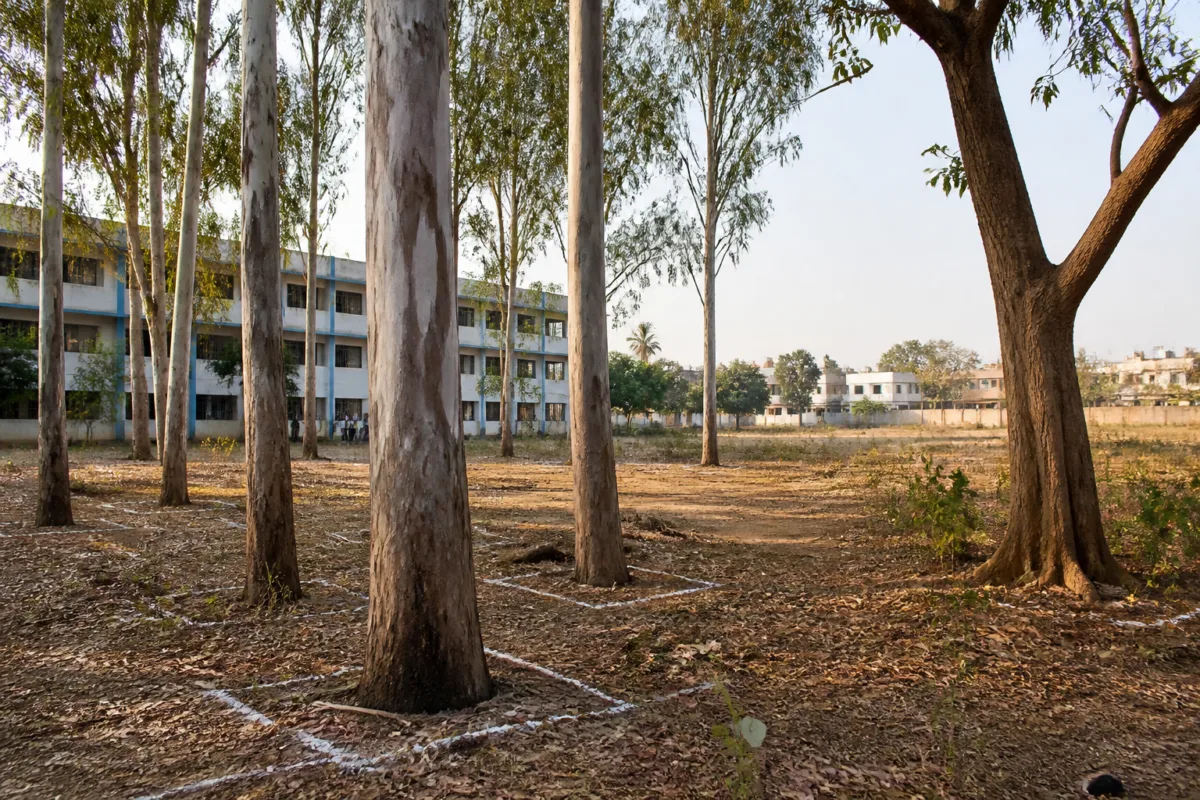
The proposed Daltonganj girls hostel has become a test of how public institutions balance access to education, safe accommodation and environmental safeguards. Ganesh Lal Agarwal College plans to build a 100-bed facility, but 118 trees have been identified for felling at the proposed site, and the project cannot proceed until a high-powered committee in Ranchi decides whether the loss of green cover is acceptable.
The conflict is not simply between construction and conservation. It is also about how public projects are planned, how land is assessed before designs are finalised, and whether environmental permissions are treated as an early planning input or as a final administrative hurdle. In this case, the forest division has asked the authorities to examine whether the hostel can be realigned to save trees, creating a second question alongside the request for permission to fell them.
The hostel is being proposed for a college under Nilamber Pitamber University. Vice-chancellor Dinesh Kumar Singh said the Jharkhand State Building Construction Corporation Ltd would construct the three-storey facility under the Pradhan Mantri Uchchatar Shiksha Abhiyan, or PM-USHA, scheme. The proposed building would have 50 rooms, with two beds in each room, providing accommodation for 100 students.
The need for such a facility is linked to a shortage of suitable accommodation in Daltonganj. According to the report, women from outside the town who enrol in undergraduate and postgraduate courses face difficulty finding safe accommodation because the town lacks private girls’ hostels and paying guest facilities. This gives the project a clear public-service purpose: it is intended not merely to add a building to the campus, but to address a barrier faced by students who do not live locally.
That need, however, does not automatically settle the question of site selection. The proposed hostel would occupy land containing 118 trees, according to an inspection by the Kundri range office. The inspection report identified one teak tree and 117 eucalyptus trees. The trees were assessed as fit for felling and unsuitable for replantation. The finding matters because it narrows the immediate mitigation option presented in the report: the trees would not be shifted elsewhere, while compensatory afforestation would be required if permission is granted.
The sequence of events also reveals how the number of affected trees changed during the project’s assessment. In July 2026, then professor in-charge Jasbir Bagga sought permission from Medininagar divisional forest officer Satyam Kumar to remove 275 trees from the proposed hostel site. A survey conducted by the forest team in August identified 118 trees. The difference does not by itself establish why the numbers changed, but it shows why site surveys and land records are important before a project reaches the approval stage. The current decision will be based on the later assessment, along with other documents to be submitted by the authorities.
The project has therefore entered a permissions process rather than a construction phase. The college and the building corporation have separately sought permission for felling. Forest officials have said the proposal must go before a high-powered committee in Ranchi. The forest division is expected to submit land records, relevant documents and an assessment of the minimum green cover loss before the committee considers the request.
This arrangement places several institutions in the same chain of responsibility. The college is the project location and an applicant for permission. The university is responsible for the broader higher-education project. The building corporation is the proposed implementing agency. The forest division must assess the trees and environmental implications, while the high-powered committee will determine whether felling can be permitted. The PM-USHA scheme provides the programme context, but the scheme does not remove the need to comply with local permissions and forest-related safeguards.
The case also demonstrates why compensatory afforestation is not the same as preserving the existing site. Compensatory planting may be required if the trees are felled, but it does not retain the mature vegetation currently occupying the hostel site. The source material does not establish the scale, location, timing or survival arrangements for any compensatory plantation. Those details will be relevant to the final environmental accounting, but they have not yet been provided in the reported decision-making process.
The forest division’s suggestion that the project be realigned is consequently significant. It introduces the possibility that the choice is not limited to either abandoning the hostel or removing all 118 trees. A redesigned building footprint, a different orientation or a revised use of the available land could potentially alter the number of trees affected, although the report does not say whether such alternatives have been technically prepared or assessed. The immediate administrative task is to determine whether the project can meet its accommodation objective while reducing the minimum green cover loss.
The 100-bed capacity provides a useful measure of the project’s intended output. With 50 rooms and two beds in each room, the proposal has a defined accommodation target. But the source does not provide the number of students currently seeking hostel accommodation, the size of the college’s enrolment from outside Daltonganj, or the extent of the town’s accommodation shortage. Without those figures, it is not possible to establish how much of the demand the facility would meet or whether a larger or smaller building would be appropriate.
That missing demand assessment is important for land-use decisions. A public institution deciding where to place a hostel needs to consider not only the number of beds, but also the duration of demand, access to classrooms and services, safety, transport within the campus or town, and the possibility of future expansion. None of these factors is detailed in the available report. The known facts establish a genuine accommodation problem and a defined construction proposal, but they do not yet show whether the proposed site is the only feasible location.
The same limitation applies to the environmental side of the decision. The inspection has identified the species and number of trees and found them suitable for felling but unsuitable for replantation. The report does not provide the age, canopy coverage, ecological value or precise location of the trees, nor does it describe the existing green-cover requirement for the campus. The forest division’s planned assessment of minimum green cover loss is therefore an important part of the next stage, because the number of trees alone does not fully describe the environmental impact of removing them.
Opposition from student and non-student organisations has added a public dimension to the permission process. Their concern is the loss of green cover. At the same time, the reported shortage of safe accommodation affects students, particularly women from outside Daltonganj, who may otherwise struggle to find suitable places to stay. Both concerns are connected to the functioning of the town and campus: one relates to the quality of the institutional environment, while the other relates to whether students can realistically access higher education away from home.
The dispute is therefore best understood as a planning question rather than a simple approval contest. A hostel can expand educational access, but the location and design of that hostel determine its environmental cost. Likewise, retaining trees can protect campus green cover, but an alternative site would need to remain practical, affordable and available within the project’s funding and construction framework. The supplied information does not establish whether other campus land parcels were examined, so that remains an unresolved part of the planning record.
The decision-making process now has a clear sequence. The authorities must provide land records and supporting documents, the forest division must assess the minimum green cover loss, and the high-powered committee must consider the request. The committee will also have to weigh the forest officials’ suggestion that the building be realigned to save trees. Until that approval is granted, construction of the three-storey hostel cannot begin.
What the Daltonganj case confirms is that the most consequential decision may have been made before construction was proposed: the selection of a site containing 118 trees. The hostel’s public purpose is established, as is the reported need for safe student accommodation. What remains uncertain is whether the current design represents the least damaging way to deliver 100 beds. The committee’s decision, the documents submitted by the college and corporation, and any evidence of a realignment study will determine whether the project becomes an example of accommodation expansion with environmental safeguards or a conventional building proposal followed by compensatory planting.

