


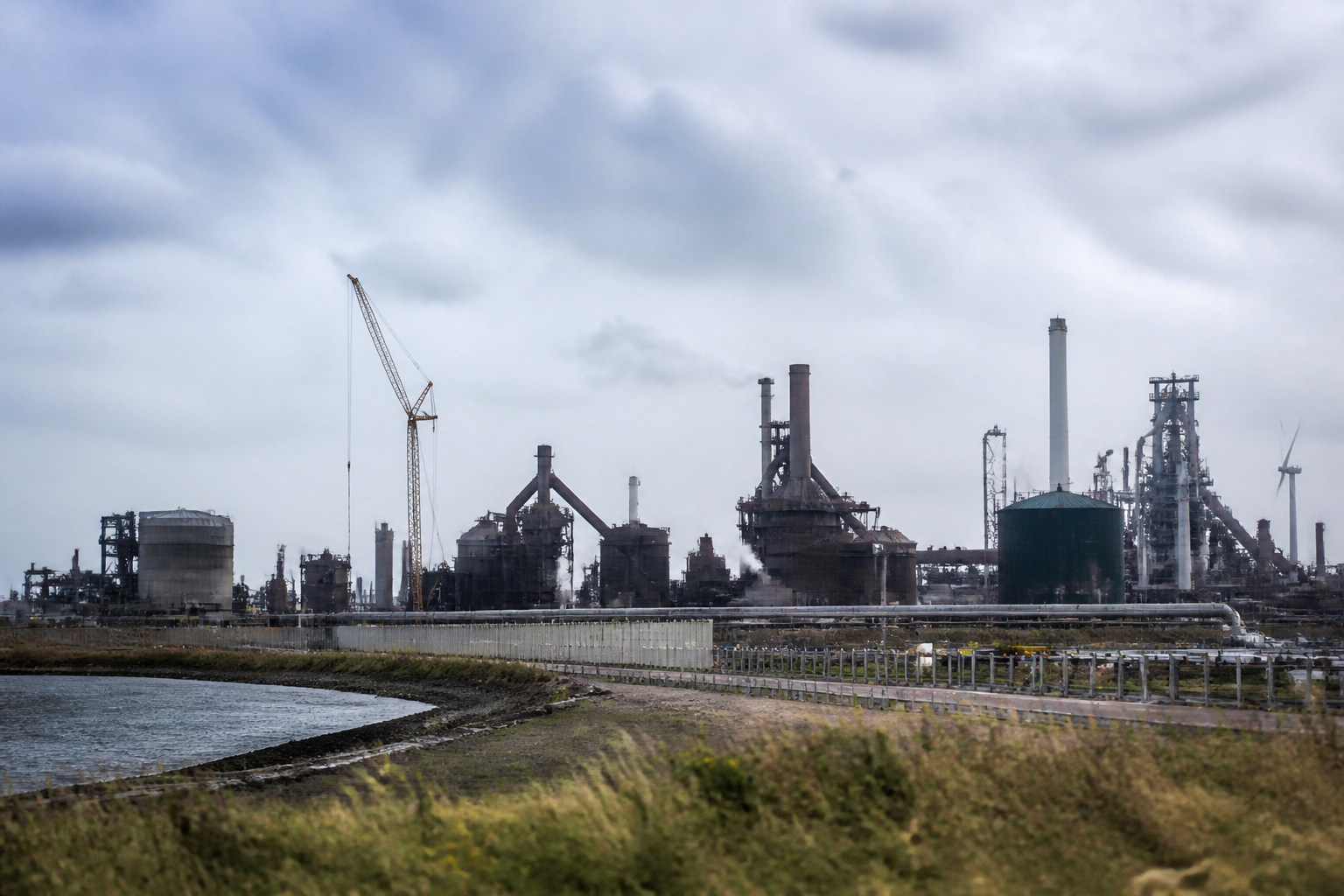
Tata Steel’s green steel project in the Netherlands has been given five more months to clear unresolved financial, regulatory and operational issues, revealing how difficult it is to move an industrial decarbonisation plan from political agreement to a final investment decision. Tata Steel, the Dutch government and the Province of North Holland have extended their non-binding Joint Letter of Intent (JLoI) until March 1, 2027.
The extension does not cancel the project or change the parties’ stated ambition. It does, however, confirm that the conditions required for a final tailor-made agreement remain unsettled. Tata Steel said the additional time would allow the parties to address recently changed circumstances and work towards an integrated health and decarbonisation project for its Netherlands operations.
That distinction matters because the project is not only an industrial investment. It combines the future of steel production at IJmuiden with the environmental performance of the site, the safety and closure of existing coke and gas plants, the regulation of steel by-products, infrastructure costs and the quality of the surrounding living environment. The extension therefore places the project’s institutional negotiations, rather than only its engineering plan, at the centre of the next phase.
The original JLoI was signed in September 2025. It included potential state backing of up to 2 billion euros and recognised the economic importance of steelmaking to the Netherlands. Tata Steel has described the Green Steel Project as an effort to deliver sustainable, healthier, cleaner and future-proof steel production at IJmuiden while improving the local living environment.
But the agreement was non-binding. That means the 2025 announcement established a shared framework and ambition rather than a final funding commitment or investment approval. The latest extension keeps negotiations alive while the parties work through the conditions needed before Tata Steel can reach a final investment decision.
The unresolved matters show why large industrial transitions cannot be assessed only through headline investment figures. Tata Steel said several issues affecting the project’s long-term financial and operational viability are still being addressed. These include network tariffs, changing regulatory and market conditions, and the European Commission’s revision of the timetable for phasing out free carbon dioxide allowances.
Each of these issues can affect the economics of a lower-carbon industrial plant. Network tariffs influence the cost of using essential infrastructure and energy networks. Market conditions affect the commercial environment in which future steel production would operate. Changes to carbon-allocation rules can alter the financial assumptions attached to moving away from existing production systems. The company has not disclosed a final investment decision or a final agreement in the supplied statement.
The project is also tied to the future of existing high-emission facilities. Tata Steel Nederland is engaging with the Province of North Holland and the Environmental Agency to explore options for the safe, responsible and controlled closure of both its coke and gas plants. The wording indicates that closure is being considered as part of the transition, but that the process requires coordination with provincial and environmental authorities.
This makes the project a governance exercise as much as a technology programme. The Dutch government, the province, the environmental regulator and the company each have different responsibilities and interests. Tata Steel needs a financially workable investment pathway. Public authorities must address environmental risks, regulatory compliance and the economic role of steelmaking. Communities around IJmuiden are directly concerned with the health and living-environment consequences of industrial operations.
The company has separately identified steel slag as a source of regulatory uncertainty. Tata Steel said the Dutch framework governing the production, storage and transportation of steel slag has become increasingly complex, with implications for steelmaking. It is seeking a sustainable and workable solution that provides the regulatory certainty needed for future investment decisions.
This issue illustrates a less visible part of industrial decarbonisation. A new production system must comply not only with rules governing emissions and energy use, but also with rules governing the materials produced, stored and moved during the process. If the legal status or handling requirements for a by-product remain uncertain, that uncertainty can affect plant design, operating costs, logistics and permitting.
Permitting has begun for several elements of the project, including the wind barrier, coverages and the Green Steel Project installations. The initiation of permits indicates that the project has moved beyond a purely conceptual stage. It does not establish that all approvals have been secured, nor does it remove the financial and regulatory questions that have led to the extension.
Tata Steel said the basic engineering phase is approaching completion. At the same time, Tata Steel Nederland is working on the optimisation and prioritisation of spending and execution in response to changed circumstances. The combination of engineering progress and spending review suggests that technical planning is advancing while the company and authorities continue to reassess the sequence and affordability of implementation.
The revised timeline therefore reflects a project being recalibrated rather than simply abandoned or completed. The parties’ shared ambition remains unchanged, but the route to implementation is being adjusted around questions of cost, regulation, infrastructure charges, market conditions, permitting and the management of existing plants.
The health dimension is particularly significant. Tata Steel has framed the project as an integrated health and decarbonisation programme and has referred to the objective of improving the living environment around IJmuiden. The supplied statement does not provide health measurements, emissions data or a quantified timetable for improvements. It does establish, however, that the project’s public justification extends beyond industrial competitiveness to local environmental and health concerns.
The company’s cultural transformation programme and efforts to improve management, governance and compliance functions form another part of the transition. Tata Steel said these measures are being implemented alongside the project work. Their inclusion indicates that the company sees internal governance and compliance capacity as relevant to delivering the industrial change, although the statement does not provide details of the programme’s targets or outcomes.
The five-month extension also raises a broader question about how governments structure support for industrial decarbonisation. Potential state backing of up to 2 billion euros can create a foundation for investment, but it does not by itself settle the detailed conditions under which the money would support construction and operations. Those conditions must align with regulatory approvals, infrastructure costs, market rules, plant closures and environmental obligations.
For local authorities, the project requires coordination across economic development, environmental regulation, land and industrial operations. For the company, the challenge is to ensure that the future production system is technically feasible and financially viable. For residents, the relevant measure is not simply whether the project receives a final approval, but whether it produces a safer and healthier living environment as promised.
The information currently available confirms that the project remains under active discussion and that key preparatory work has progressed. It also confirms that a final tailor-made agreement and final investment decision have not yet been reached. The next important developments will be the resolution of the outstanding regulatory and financial matters, progress on the identified permitting procedures, decisions on the coke and gas plants, and the outcome of the extended JLoI period ending on March 1, 2027.
