


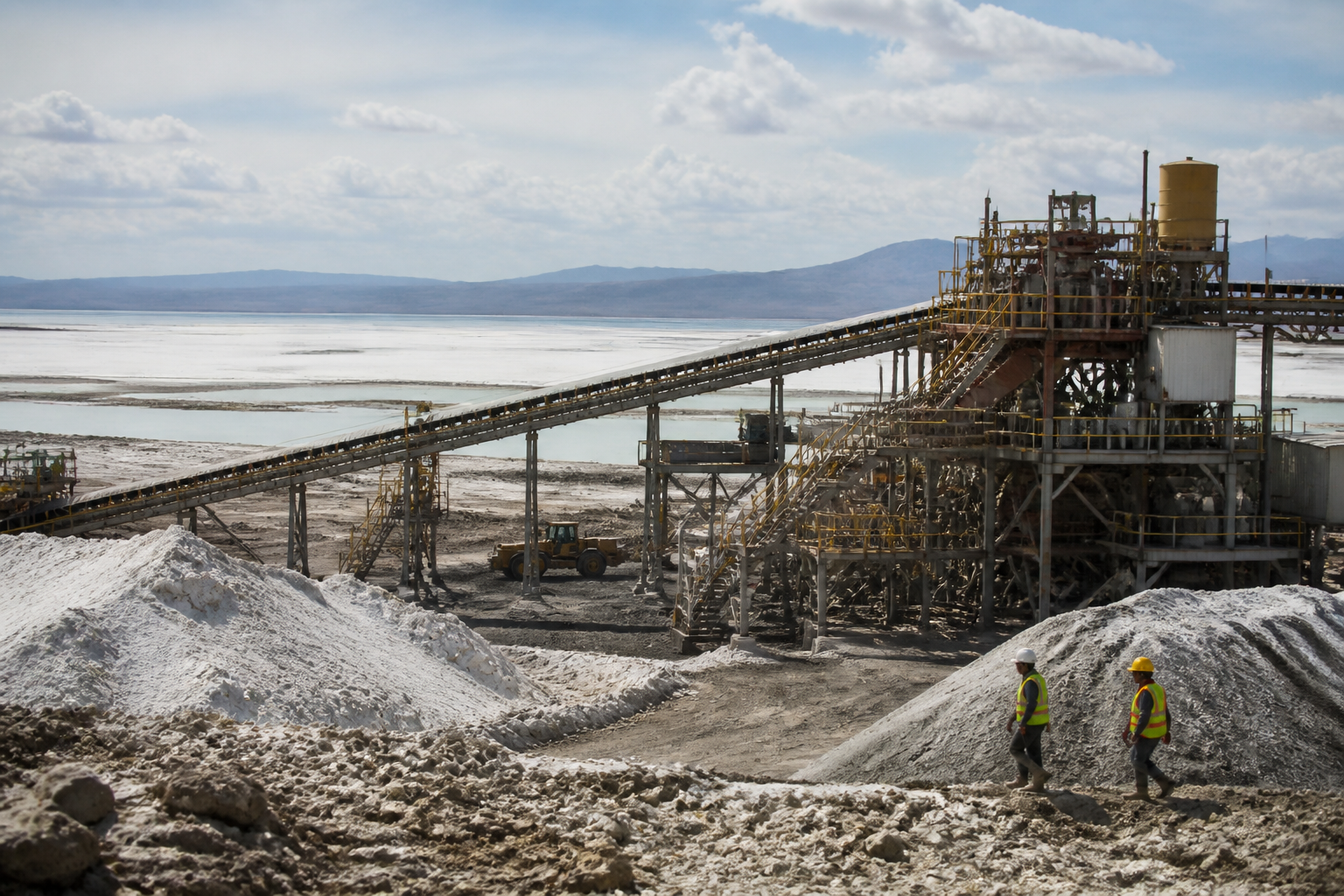
Tata Chemicals Kenya dispute has moved from a regulatory disagreement over mining operations to a wider argument about who benefits from natural resources. Kenya’s President William Ruto has called for Tata Chemicals to stop operating in the country and said the business had failed to create enough local economic value. Tata Chemicals, whose Kenyan subsidiary operates the Magadi soda ash business in Kajiado County, says it has submitted the documents requested by the government and remains compliant with applicable regulations.
The immediate confrontation is taking place around Tata Chemicals Magadi Limited, or TCML, but the underlying question is broader: can an extraction-led industrial operation retain its licence to operate if the host government believes it has not delivered enough manufacturing, jobs, local procurement and community development? In Kenya, the answer is now being tested through regulatory orders, court proceedings and a presidential demand for replacement companies.
Ruto’s latest position goes beyond asking Tata Chemicals to resolve outstanding compliance issues. During a visit to Kajiado, he said the company had held a 100-year contract but had not built a factory in the county. He said Kenya should not remain dependent on the export of raw or minimally processed natural resources and proposed bringing in two companies to replace Tata Chemicals: one to establish a large glass manufacturing business in Kajiado and another to produce chemicals locally.
That framing places the Magadi operation within Kenya’s attempt to secure more value from its mineral resources. Soda ash is used in glass, detergents, other chemicals and water treatment. Tata Chemicals produces it from trona, a naturally occurring mineral found at Lake Magadi. The company says its Kenyan business exports more than 350,000 tonnes of soda ash annually to markets in Southeast Asia, India, the Middle East and Africa.
The operation is therefore not simply a local mine. It is an industrial facility linked to international supply chains, transporters, contractors and overseas markets. At the same time, its physical presence is concentrated in Magadi, where the effects of a shutdown are felt through employment, supplier activity, public services and community relationships. The dispute demonstrates the tension between the scale of a globally connected business and the expectations of the county and communities where its raw material is extracted and processed.
The current crisis began on July 28, when Kenya’s Mining Cabinet Secretary Hassan Joho ordered Tata Chemicals Magadi to suspend all mining operations. The government identified several unresolved areas, including royalty reconciliation and payments, export reporting, mineral beneficiation and value addition, community development agreements, employment and skills transfer for Kenyan citizens, local procurement and environmental compliance.
The ministry said it had been engaging with Tata Chemicals for years over statutory obligations. It required the company to submit documents demonstrating full compliance and address outstanding liabilities before operations could resume. Tata Chemicals carried out the shutdown but said it was fully compliant with relevant regulations and would work with authorities to reach an amicable and speedy solution. The suspension also affected soda ash exports from the facility.
The disagreement is significant because the government’s list combines financial, environmental, labour and industrial-policy concerns. Royalties and export reporting relate to the state’s fiscal oversight. Employment, skills transfer and local procurement concern how much economic activity remains in Kenya. Beneficiation and value addition ask whether the country is receiving more than the proceeds associated with extracting and exporting a mineral. Community development agreements and environmental compliance address the local and ecological consequences of operating near Lake Magadi.
Tata Chemicals has presented a different account of the operation’s local role. In an August 17 statement, the company said roughly 500 employees and their families, along with contractors, suppliers, transporters and local businesses, depend directly or indirectly on economic activity generated by the business. It also said around 30,000 people in the Magadi community directly benefit from support in water, healthcare, education, infrastructure and community development.
Those claims do not resolve the regulatory dispute, but they show why an extended shutdown would have consequences beyond the company’s export figures. A large industrial operation creates a network of economic relationships that may not be visible in its formal headcount. At the same time, the existence of jobs and community programmes does not by itself answer questions about royalties, licensing, environmental obligations or whether local residents receive an adequate share of the value generated by nearby resources.
The operation’s history adds another layer. Soda ash production at Lake Magadi began in 1911 under the Magadi Soda Company. Tata Chemicals acquired the Magadi business in 2005. The long operating history is central to the political argument: the Kenyan president has used the duration of the company’s presence to question whether the economic transformation expected from a century-old industrial activity has occurred in Kajiado.
For Tata Chemicals, the acquisition and subsequent operation represent a continuing business with established infrastructure, employees and export relationships. For the Kenyan government, the same history can be viewed as evidence that the country has had a long opportunity to demand greater local processing and investment. These positions are not necessarily mutually exclusive, but the dispute shows that a company can contribute to employment and community services while still facing pressure over the structure and distribution of value.
The legal record also indicates that the conflict is not confined to the latest presidential statement. Tata Chemicals challenged the July suspension in Kenya’s High Court, seeking relief against the decision. The court declined to lift the suspension, holding that the July 28 decision had already taken effect when Tata went to court. The government had also argued that the company had received earlier notices concerning its obligations and did not have a current mining licence because its application was still being processed.
A Kenya Gazette notice recorded Tata Chemicals Magadi’s application for a mining licence covering about 63.5 square kilometres in Kajiado County for soda ash. The licence issue is separate from, but connected to, the wider compliance questions. Without a current licence or a completed regulatory review, the future of mining operations remains tied to administrative and legal processes rather than only to the president’s public demand.
In another matter disclosed by Tata Chemicals in 2025, Kenya’s Court of Appeal ruled in the company’s favour in a dispute over land rates imposed by the Kajiado County government. The court held that the demand was arbitrary and illegal and that TCML was not required to pay the claimed land revenue arrears in the absence of an open and accountable framework for determining the rates. That ruling does not decide the current mining dispute, which involves a wider set of obligations, but it forms part of the institutional context in which the company and Kenyan authorities are negotiating control, revenue and accountability.
The policy question now facing Kenya is whether replacement companies would address the concerns identified by the government or simply change the operator. Ruto’s proposal for a glass manufacturer and a chemical producer points to a desired industrial chain: extraction at Lake Magadi, processing in Kajiado and more manufacturing employment near the resource. The supplied material does not establish whether those companies have been identified, whether agreements exist or how a transition would be financed and regulated.
That uncertainty is important. Replacing an established operator would involve questions about employees, contractors, suppliers, export contracts, community services, environmental responsibilities and the continuity of industrial infrastructure. The report provides no confirmed timeline for such a transfer. It also does not establish whether Tata Chemicals has accepted the presidential order as final. The company’s latest statement instead says it is waiting for the Kenyan government’s review of its submissions and remains willing to engage through legal and regulatory channels.
The Magadi dispute consequently sits at the intersection of resource governance and local development. Kenya is seeking greater value addition, stronger domestic manufacturing and more visible benefits for communities near extraction sites. Tata Chemicals is emphasising its regulatory submissions, economic contribution and support for residents and local institutions. The government’s suspension and the company’s court challenge show that these positions are being tested through formal institutions, not only public statements.
What the evidence confirms is that the conflict is no longer limited to whether mining operations can resume. It now concerns the conditions under which a long-established industrial business can continue operating, the obligations attached to a mining licence and the meaning of local economic benefit. What remains uncertain is whether the government and Tata Chemicals can resolve the outstanding issues, whether operations will restart, and whether Kenya’s proposed manufacturing alternatives will move beyond political declarations. The next significant developments will be the government’s review of Tata Chemicals’ submissions, further legal proceedings and any formal decision on the company’s licence and future in Magadi.
