


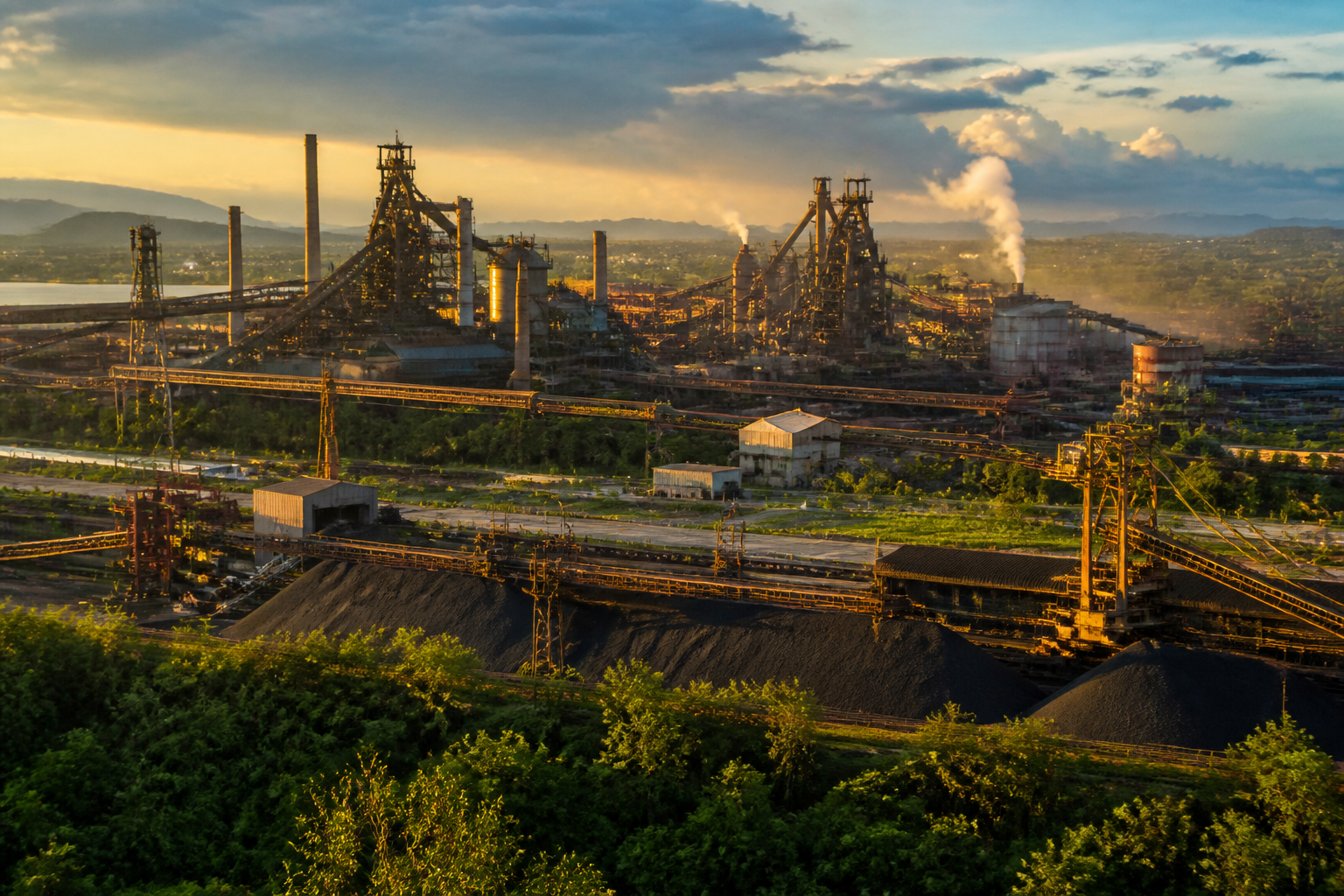
ArcelorMittal’s planned Brazil steel investment is more than a corporate expansion story. It is a sign of how trade policy, industrial capacity and the cost of construction materials are becoming closely linked in one of the world’s largest emerging markets. The Indian-controlled steelmaker is preparing a new investment cycle of more than R$10 billion, as Brazil’s share of imported steel has declined after a series of trade-defence measures.
The immediate change is visible in the import mix. According to Folha de S.Paulo, imported steel’s share of Brazil’s domestic market has fallen from around 25 per cent to 16 per cent. ArcelorMittal Brazil President Jorge Oliveira has said that a level closer to 10 per cent would be more appropriate for the company.
That target is significant because steel is not only an industrial commodity. It is a core input for construction, machinery, transport equipment and household appliances. A larger domestic manufacturing base can alter the availability of particular steel products, while import duties can change the relative cost of locally produced and imported material. The supplied evidence does not establish how these changes will affect consumer prices or project costs, but it shows that the supply structure is already shifting.
The planned projects are concentrated in facilities that can produce more specialised products. At the Tubarão unit in Serra, Espírito Santo, ArcelorMittal has confirmed an investment of between R$4 billion and R$5 billion. The project includes a Cold Strip Mill and a Continuous Coating Line, intended to increase production of higher-value steel for the automotive, construction and home-appliance sectors.
This is an important distinction from simply adding bulk steel capacity. Cold-rolled and coated products serve manufacturing and building applications that require specific performance and finishing characteristics. The investment therefore points to an attempt to deepen the domestic value chain, rather than only increase the volume of basic steel available in Brazil.
The second major proposal is still at an earlier stage. ArcelorMittal is considering an investment of around R$5 billion to expand its Pecém plant in Ceará with a new hot-rolled coil production line. Bloomberg reported that the final investment decision is expected by the end of 2026. Until that decision is made, the Pecém expansion should be treated as a proposal rather than a committed project.
Together, the Tubarão and Pecém plans show two different parts of the company’s strategy. Tubarão has a confirmed investment range and is aimed at higher-value downstream products. Pecém could add hot-rolled coil capacity, but remains subject to a final investment decision. Keeping that distinction clear matters for assessing how much new capacity will actually enter the market and when.
Brazil’s trade policy is central to the shift. The government has introduced anti-dumping measures against specific Chinese steel products. In February, it imposed definitive anti-dumping duties for up to five years on cold-rolled flat steel products from China. Similar measures were also adopted for certain coated flat steel products.
These measures are designed to change the competitive conditions facing domestic producers, but they also create a policy trade-off. Protection can give local plants greater room to invest and supply domestic manufacturers. At the same time, industries that use steel must operate within the new pricing and sourcing environment. The supplied material does not provide enough evidence to determine the net effect on downstream costs, but the policy clearly links trade decisions with industrial investment.
The scale of import dependence remains substantial despite the decline in market share. ArcelorMittal said Brazilian imports of rolled steel reached 5.7 million tonnes in 2025, an increase of 20.5 per cent from the previous year. Imported products accounted for 21 per cent of the market, according to the company. The difference between the 16 per cent share cited by Folha de S.Paulo and the 21 per cent figure from ArcelorMittal may reflect differences in product coverage, measurement or timing; the supplied reports do not explain the variation.
That discrepancy is a reminder that steel-market data must be read carefully. Market share can vary according to whether the calculation covers all steel, rolled products or specific categories affected by trade measures. For policymakers and industrial buyers, the relevant question is not only how much steel is imported, but which products are imported and whether domestic facilities can produce the grades and finishes required by users.
The company’s investment cycle also extends beyond finished steel. In March, ArcelorMittal inaugurated a R$2.5 billion iron ore processing plant in Serra Azul, Minas Gerais. The project adds another element to the group’s Brazilian production network, connecting raw-material processing with steelmaking and downstream manufacturing capacity.
Brazil is already ArcelorMittal’s second-largest market. The company reported revenue of about $3.15 billion from Brazil in the second quarter of 2026. The market’s importance helps explain why the company is responding to changes in imports and domestic demand with investments across several facilities rather than relying on a single plant expansion.
The urban relevance lies in the way these industrial decisions feed into the built environment. Construction companies, appliance manufacturers and automotive producers are among the sectors identified as users of the planned Tubarão output. In construction, the availability of domestically produced steel can influence procurement choices, delivery arrangements and exposure to exchange-rate or trade-policy changes. However, the available evidence does not establish whether the proposed investments will reduce construction costs or speed project delivery.
The projects also reveal the limits of a protection-led industrial strategy. ArcelorMittal continues to cite high energy and natural gas costs, along with Brazil’s broader “Cost of Brazil”, as competitiveness challenges. Trade measures may reduce pressure from selected imports, but they do not by themselves resolve energy prices, logistics costs, taxation, regulatory complexity or the other operating conditions that affect domestic production.
This is why the investment should be understood as a test of industrial policy rather than as a guaranteed solution to Brazil’s steel-market concerns. The government’s measures have helped create more favourable conditions for local producers, while the company’s proposed spending could increase capacity and product sophistication. The outcome will depend on whether the new facilities can remain competitive after accounting for the wider operating costs identified by the company.
The next important milestone is the final investment decision on the proposed Pecém hot-rolled coil line, expected by the end of 2026. Until then, the confirmed Tubarão project, the existing trade measures and the company’s continuing concerns over energy and business costs provide the clearest evidence of where Brazil’s steel strategy is heading: towards greater domestic supply, more specialised production and a closer relationship between trade policy and the material foundations of urban growth.
