


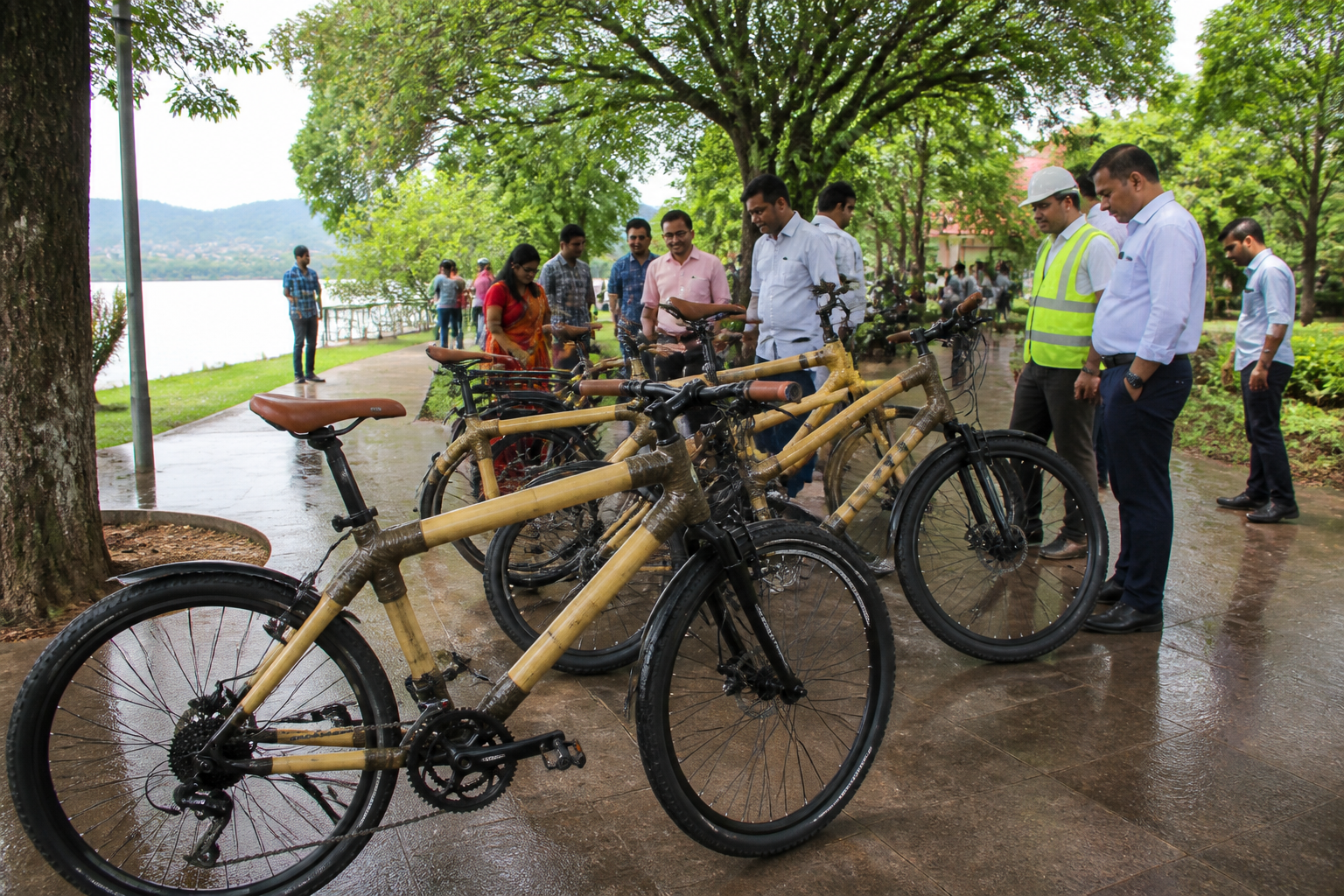
Assam has launched a bamboo bicycle manufacturing initiative backed by an investment of approximately Rs 15 crore, with production planned at the Bamboo Technology Park in Chaygaon and a target of 1,000 bicycles a month.
Chief Minister Himanta Biswa Sarma launched the project at Sati Radhika Shanti Udyan in Uzanbazar, Guwahati, as part of the state’s effort to promote bamboo-based mobility and develop local manufacturing around the material. The initiative is being undertaken by Pune-based Bamboo India Private Limited in partnership with the Assam government.
The bicycles will use frames made entirely from locally sourced Assam bamboo and have received certification from the Bureau of Indian Standards, according to the report. Officials and the company have claimed that the bamboo frames are stronger than steel, although the project’s immediate focus is on public testing and market response.
Bamboo India plans to manufacture single-gear, geared and battery-powered bicycles, as well as children’s models. Depending on demand, the product range could later expand to road, mountain and hybrid bicycles. The company has said production may eventually increase to 5,000 units a month.
The initiative is expected to create between 50 and 100 direct jobs in its first year. It is also intended to support employment across the supply chain, including bamboo harvesting, processing and bicycle assembly. The project positions Assam’s bamboo resources as an input for contemporary mobility products rather than only traditional and household goods.
Sarma said the bicycles would be made available at parks across Guwahati in the coming days so residents could ride them and provide feedback before a wider launch. If the response is positive, the state government may extend further support, including possible procurement of the bicycles.
The project has received backing from the Assam Industrial Development Corporation, Guwahati Smart City Limited and the Guwahati Municipal Corporation. Their involvement links the manufacturing initiative to the city’s wider efforts around public spaces, local economic activity and sustainable transport.
Speaking at the launch on Gandhi Jayanti, Sarma highlighted the wider industrial potential of bamboo, which he said has more than 800 byproducts. He referred to possible applications ranging from methanol and aviation turbine fuel to reinforced structures, and credited the Centre’s classification of bamboo as a grass with opening new opportunities for the sector.
Bamboo India has previously used Assam bamboo to make products such as toothbrushes and combs. The company proposed the bicycle project after being invited by the state government, which is seeking to build Assam into a centre for bamboo bicycle manufacturing and green mobility solutions.
The next step is the planned public testing of the bicycles in Guwahati parks. The government’s decision on further support and possible procurement will depend on the feedback gathered during that phase.
