


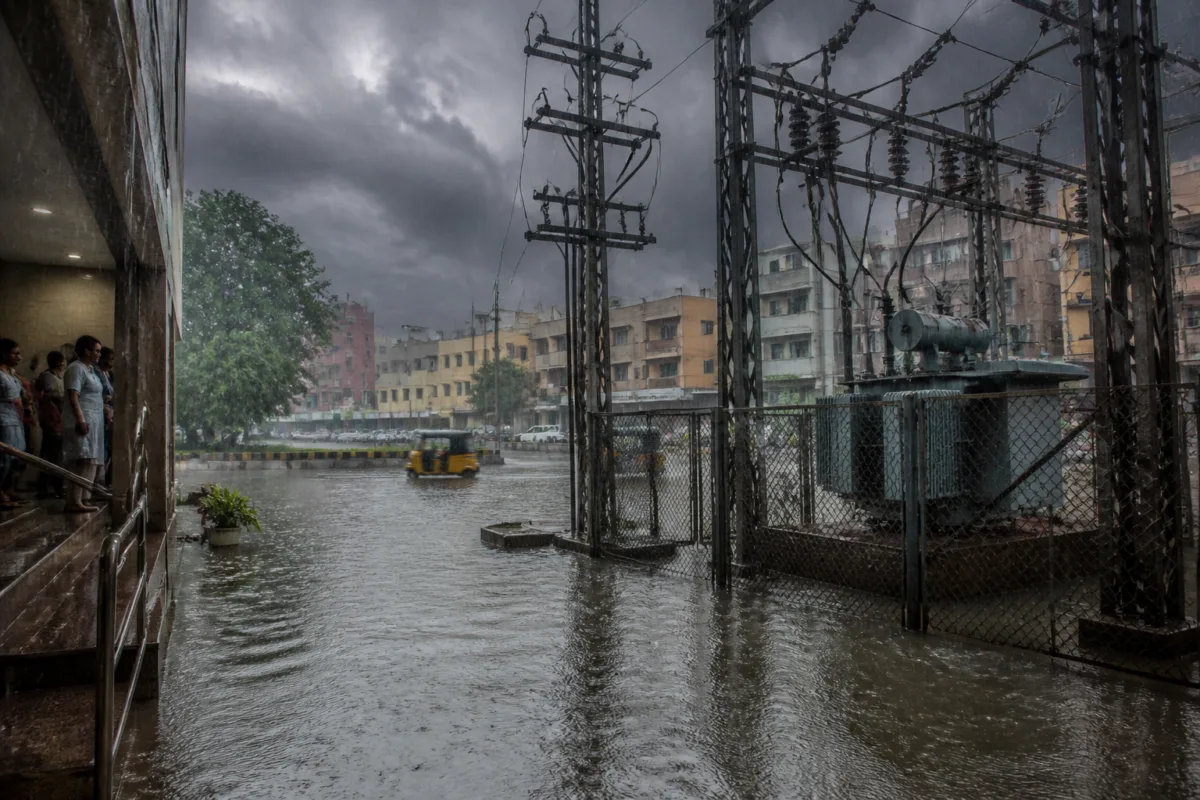
Tamil Nadu’s electricity department has issued a monsoon safety advisory asking residents to stay away from snapped electricity wires, waterlogged electrical areas, electric poles and transformers, while taking precautions during lightning and thunderstorms.
The department’s guidance, issued through a press note, asks people not to approach or touch snapped conductors lying on the ground, streets or in stagnant water. Residents have been asked to inform the electricity board immediately if they find a snapped wire and alert neighbours, while keeping away from the affected area.
The advisory also warns people against standing in open spaces, under trees or near windows during lightning. Residents have been asked to switch off electrical appliances and wired telephones during lightning and thunder, and not to operate electrical equipment with moist hands.
People have also been told to avoid waterlogged areas near pillar boxes and electrical switchboards. The department asked households to ensure that the main power supply can be switched off quickly and to turn off the mains in case of a short circuit.
During lightning and thunder, residents should seek shelter inside a large building or a metal-topped vehicle such as a car or bus, according to the advisory. If no shelter is available, they should move to a low spot away from trees, power lines, poles and metal fences.
The department specifically advised people to close windows located near plug points during showers and not to stand near open windows or doors during thunder or lightning. The guidance also recommends installing switches and plug sockets at heights inaccessible to children.
Other instructions address electrical safety inside homes and around public infrastructure. The department advised residents not to install switches inside bathrooms or other wet places, and not to tie livestock to electric poles. People were also asked to avoid transformers, pillar boxes, electrical poles, stay wires and fencing.
The advisory highlights the risks created when monsoon conditions bring together lightning, wet surfaces and exposed electrical infrastructure. In urban areas, stagnant water can make it harder for residents to identify electrical hazards or safely move around affected streets, making the department’s instruction not to approach suspected live wires particularly important.
The department’s immediate request is for residents to report snapped conductors to the electricity board, warn others nearby and keep away from the site until it is made safe. The advisory does not announce a new response mechanism or provide a separate timeline for inspections or repairs.

