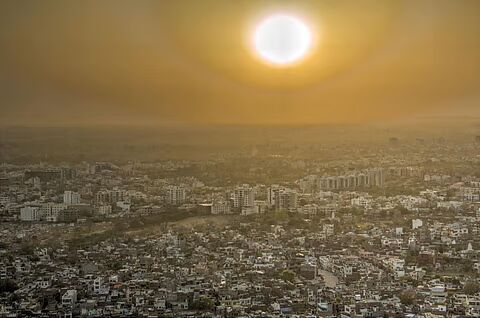
Rajasthan is witnessing one of its most intense early-summer heat episodes, with Sri Ganganagar recording temperatures of 44.5°C—making it the hottest location in the country. The surge, several degrees above seasonal norms, is not only disrupting daily life but also exposing deeper vulnerabilities in urban infrastructure and climate preparedness across the state. Across multiple districts, daytime temperatures have crossed 40°C, with several cities hovering in the 42–44°C range.
Meteorological assessments indicate that dry weather conditions and clear skies are intensifying heat accumulation, while minimum temperatures remain elevated, offering little overnight relief. The persistence of such conditions is placing stress on water supply systems, electricity demand, and public health services. Authorities have already begun adapting to the extreme conditions. In several districts, school timings have been revised to avoid peak afternoon exposure, reflecting the growing need for institutional responses to climate extremes. However, these short-term adjustments also highlight the absence of long-term heat mitigation strategies in rapidly expanding urban centres. The current Rajasthan heatwave is particularly significant as it arrives early in the summer cycle, suggesting a lengthening of high-temperature periods. Urban planners warn that such extended heat durations can amplify the urban heat island effect—where built-up areas retain more heat due to dense construction, limited green cover, and heat-absorbing materials. This not only raises ambient temperatures but also increases cooling demand, straining already stretched power infrastructure.
Water scarcity is emerging as another critical concern. With temperatures rising sharply, consumption levels typically surge, especially in arid districts. Yet, erratic rainfall patterns and declining groundwater levels limit replenishment, creating a mismatch between supply and demand. Experts argue that without decentralised water management systems—such as rainwater harvesting and wastewater reuse—cities may face recurring seasonal stress. The economic implications are equally pronounced. Outdoor labour productivity declines significantly during extreme heat, affecting sectors such as construction, agriculture logistics, and informal urban services. This disproportionately impacts low-income workers who lack access to cooling infrastructure or flexible work arrangements. As a result, heatwaves are increasingly being viewed not just as environmental events but as economic disruptors. Forecasts suggest that temperatures may rise further in the coming days, with isolated regions likely to experience even more severe heat conditions before any temporary relief from weather disturbances.
The intensifying Rajasthan heatwave underscores a broader shift in India’s climate reality—where extreme weather is becoming more frequent and less predictable. For cities, this signals an urgent need to integrate heat resilience into urban planning, from building design and green cover expansion to public cooling infrastructure and adaptive governance systems. As temperatures continue to climb, the challenge for Rajasthan—and similar climate-vulnerable regions—will be to move beyond reactive measures and build cities that can withstand prolonged and intensifying heat stress.