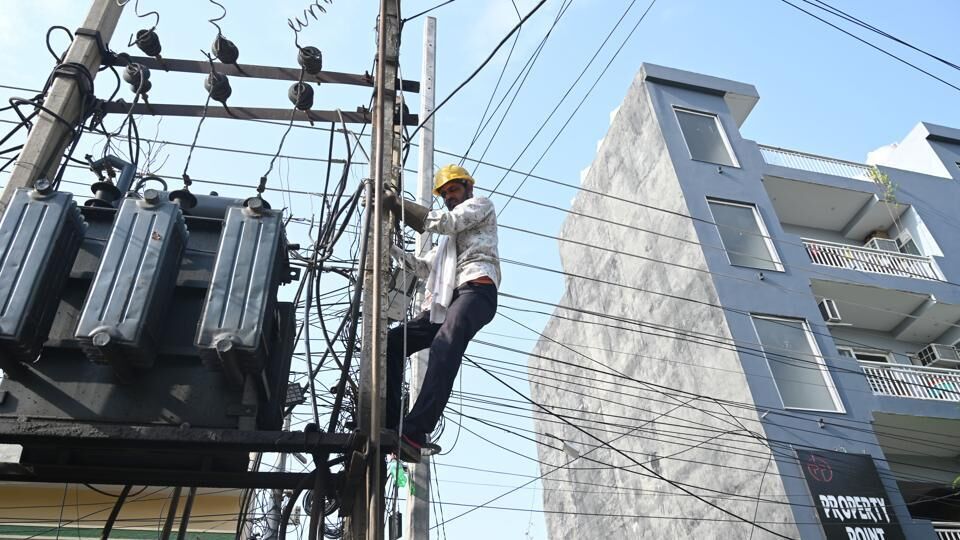
Gurugram Housing Clusters Face Prolonged Power Disruption
A prolonged power outage lasting nearly 30 hours in Gurugram’s Sector 37D has exposed critical vulnerabilities in urban utility infrastructure, disrupting daily life for hundreds of households and raising concerns about the resilience of rapidly expanding residential clusters. The disruption, triggered by damage to a high-tension electricity line, left multiple housing societies without reliable power supply, forcing residents to depend on limited backup systems.
The incident affected both premium and affordable housing complexes, underscoring how infrastructure failures cut across income segments. While some societies relied on diesel generators, others—particularly those under affordable housing schemes—faced near-total outages due to the absence of adequate backup systems. For many residents, the outage meant disruptions to water supply, elevator services, and essential home-based work, exposing the cascading impact of electricity failures in high-density urban living environments. Officials initiated restoration efforts soon after the fault was identified, but the extended downtime has raised questions about response capacity and preventive maintenance practices. The incident also tested the effectiveness of “quick-restore” strategies often cited by utilities, revealing gaps between policy intent and on-ground execution. This is not an isolated occurrence. Gurugram’s newer residential sectors, particularly along growth corridors such as the Dwarka Expressway, have repeatedly faced disruptions in essential services—from electricity outages to water supply failures—often linked to infrastructure strain or construction-related damage.
These recurring breakdowns point to systemic issues in planning, coordination, and long-term asset management within fast-urbanising zones. Urban infrastructure experts note that the city’s expansion has outpaced the strengthening of core utility networks. As residential density increases, especially in peripheral sectors, the load on ageing or insufficient power infrastructure intensifies. High-rise developments, which depend heavily on uninterrupted electricity for lifts, water pumping, and safety systems, are particularly vulnerable to such disruptions. The reliance on diesel generators during outages also raises environmental and economic concerns. Backup systems contribute to local air pollution and increase energy costs for residents, highlighting a contradiction between urban growth and sustainability goals. Experts argue that decentralised renewable energy systems, such as rooftop solar with battery storage, could provide partial resilience against such failures if integrated at the planning stage.
The outage further underscores the need for better coordination between developers, utility providers, and civic agencies. In many cases, infrastructure provisioning lags behind occupancy, leaving residents exposed to service gaps. Strengthening regulatory oversight and enforcing infrastructure readiness before habitation could help mitigate such risks. As Gurugram continues to expand as a key urban and economic hub, ensuring reliable and climate-resilient utility systems will be central to sustaining its growth. The Sector 37D disruption serves as a reminder that urban infrastructure must evolve in tandem with real estate development—not as an afterthought but as a foundational priority.